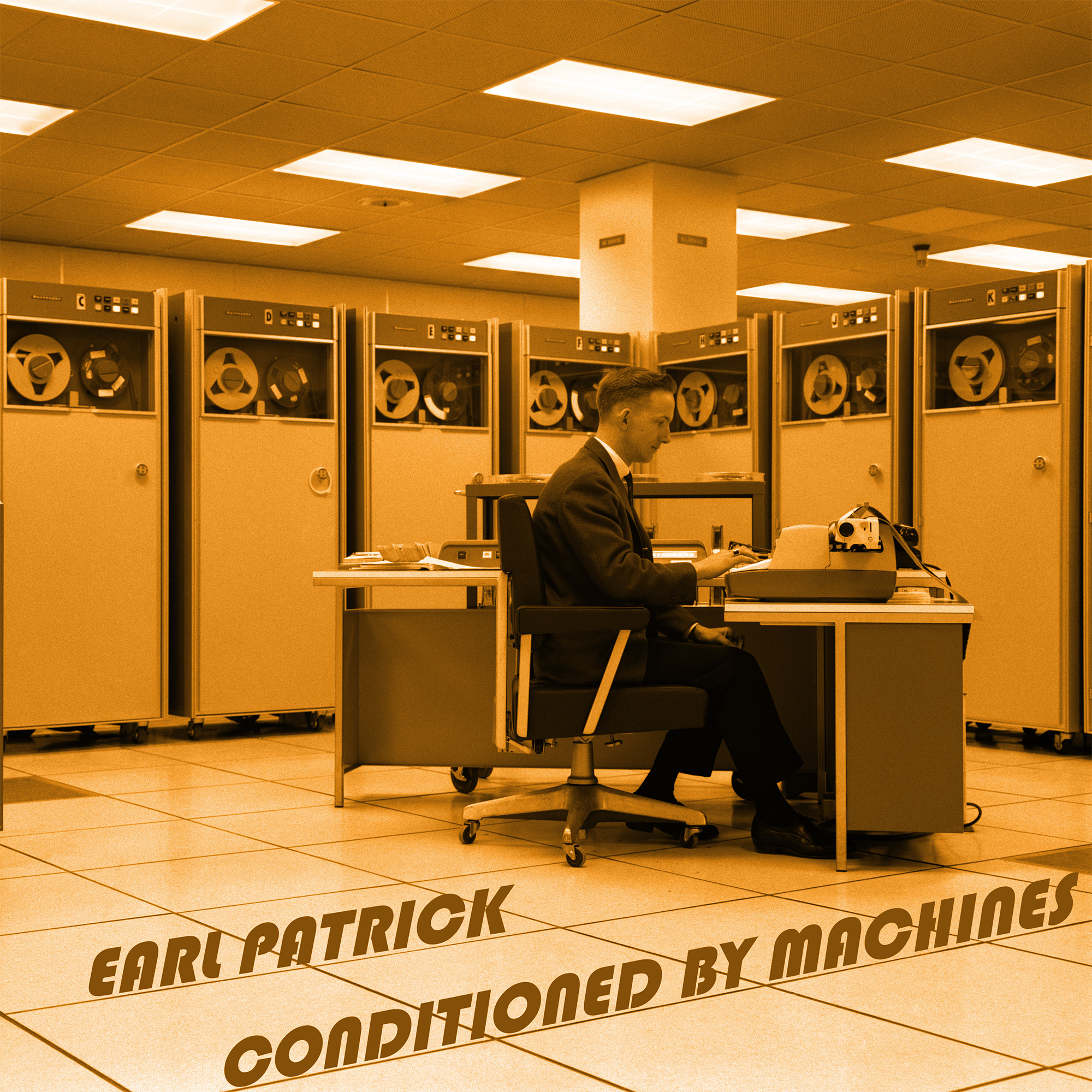
The conceptual premise alone is audacious to the point of mild impudence. The standard classical flute repertoire, Patrick argues — and his argument carries conviction — has grown gestural and harmonically timid, too preoccupied with avant-garde posturing to bother with the ancient obligations of melody. His answer is not a retreat into pastoralism but an advance into entirely stranger territory: a record that places composed works for flute and piano inside the sonic architecture of DJ Shadow, Guru, Steve Reich and Philip Glass, all at once, without apology. It should not work. The seams should show. They do not.
The ghost of Reich haunts the album's closing track most visibly — a minimalist composition for six flutes laid over a drum loop, its title a direct nod to *Different Trains*, Reich's 1988 masterwork in which spoken-word samples are absorbed into the compositional fabric until the voices themselves become instruments. Patrick has absorbed this lesson deeply. Across the album, crackling dialogue from decades-old television programmes and the measured cadences of public domain audiobook narrators are not ornamental; they are structural, load-bearing, as purposeful as any notated phrase.
The recording process is, characteristically, stripped to essentials. No hired hands, no outside ears: Patrick composed, performed the flute, produced, engineered and mixed everything himself, capturing the flute through a hand-wired Delphina microphone built by Ear Trumpet Labs here in Portland. The intimacy is audible. The flute never sounds like a soloist performing at you; it sounds like someone thinking aloud in a room you've wandered into uninvited.
"What's the Matter with New York Police" remains the album's most concentrated demonstration of method — hip-hop drums and bass anchoring composed flute and piano lines while plundered dialogue from some forgotten public domain source floats above, moody and film-noir adjacent. The resulting atmosphere is that of a late-night radio broadcast from a city you can almost but not quite name. The title track itself lands like a brief detonation of space disco and retro-futurist synth-pop, its mathematically quantised patterns articulating, with unexpected wit, the creeping absurdity of automation. And "A Big Light Comes" dispenses with samples entirely, letting the flute's natural vibrato carry the record's emotional weight alone — a moment of unexpected openness that recontextualises everything on either side of it.
Patrick has said he wants this record to bring classical and flute music to a more modern audience. The ambition is honourable, but the achievement is something rather richer than mere accessibility. *Conditioned By Machines* does not condescend to its listeners, does not paste hip-hop aesthetics onto classical structures as a marketing gesture. The integration is complete. The hip-hop and the minimalism and the film-noir and the pure melodic composition have been through the same fire and come out fused.
He does not tour. He prefers, he says, to write and record rather than perform. One listens to this album and understands completely. These are not songs built for stages; they are built for close, solitary listening, for the particular attention of someone who has agreed, however temporarily, to let a stranger's sonic logic reorganise the furniture of their mind. Portland's best-kept secret has made something genuinely strange, genuinely rigorous, and — this is the part that catches you off guard — genuinely moving.