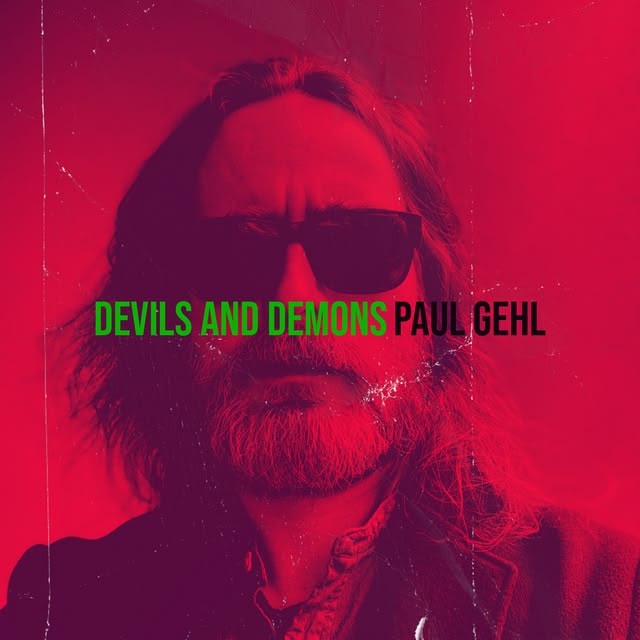
Gehl has done everything here himself — written, recorded, mixed, mastered — and the decision to work alone is not merely logistical. It is philosophical. This is music about the interior life, about the experience of carrying a brain that wages war on its own host, and it makes a particular kind of sense that no outside hand has touched it. The result is intimate to the point of discomfort, which is precisely where the best confessional art tends to live.
The single draws directly from Gehl's experience of living with bipolar disorder, and it would be easy — lazy, even — for a lesser artist to lean on that subject matter as a crutch, to let the biographical weight do the heavy lifting. Gehl does not make that mistake. The music earns its emotional authority through craft rather than confession alone. His melodies carry that particular quality of things half-remembered: they resolve when you least expect resolution and destabilise when you thought you were on solid ground. It is, structurally, a piece of music that enacts its own subject matter, which is a considerably harder trick to pull off than it sounds.
The lyrics invite listeners into the particular rhythm of a life measured not in ordinary weeks but in the rare good ones — those brief windows where creation feels possible, where the fog clears long enough to get something down. There is a hard-won pragmatism to his worldview that stops the song from sliding into self-pity. The small things, he suggests, might be all there is. Acceptance — not resignation, not defeat, but genuine acceptance — threads through the work like a low, sustaining note. It is a remarkably mature philosophical position for a piece of music to hold without moralising.
Sonically, *Devils and Demons* sits in a space somewhere between the introspective singer-songwriter tradition and something with slightly darker edges — think early Elbow before the orchestras arrived, or Mark Lanegan at his most stripped and searching. The production, for a solo home effort, is impressively considered. Nothing clutters. The space around the instrumentation is used with the discipline of someone who understands that silence is as much a compositional tool as sound.
What Gehl has understood — and this is the mark of someone with a genuine artistic instinct rather than merely a therapeutic impulse — is that the most universal music tends to come from the most specific places. A song about his disorder is also, by necessity, a song about time, about scarcity, about the strange discipline that limitation can impose on a creative life. Every artist works within constraints; Gehl's constraints happen to be neurological, and he has made of them something genuinely affecting.
The single is not without rough edges. Moments of the arrangement feel underdeveloped, as though a second or third listen reveals corners that a collaborator might have pushed him to inhabit more fully. And yet those rough edges are also, arguably, part of the honesty. This is not a product. It is a document.
"Just do it," Gehl says when asked for a memorable quote about his journey, and one suspects he means it not as glib defiance but as hard-earned instruction — advice addressed as much to himself as to any listener. On the evidence of *Devils and Demons*, it turns out that doing it, really doing it, yields something worth hearing.