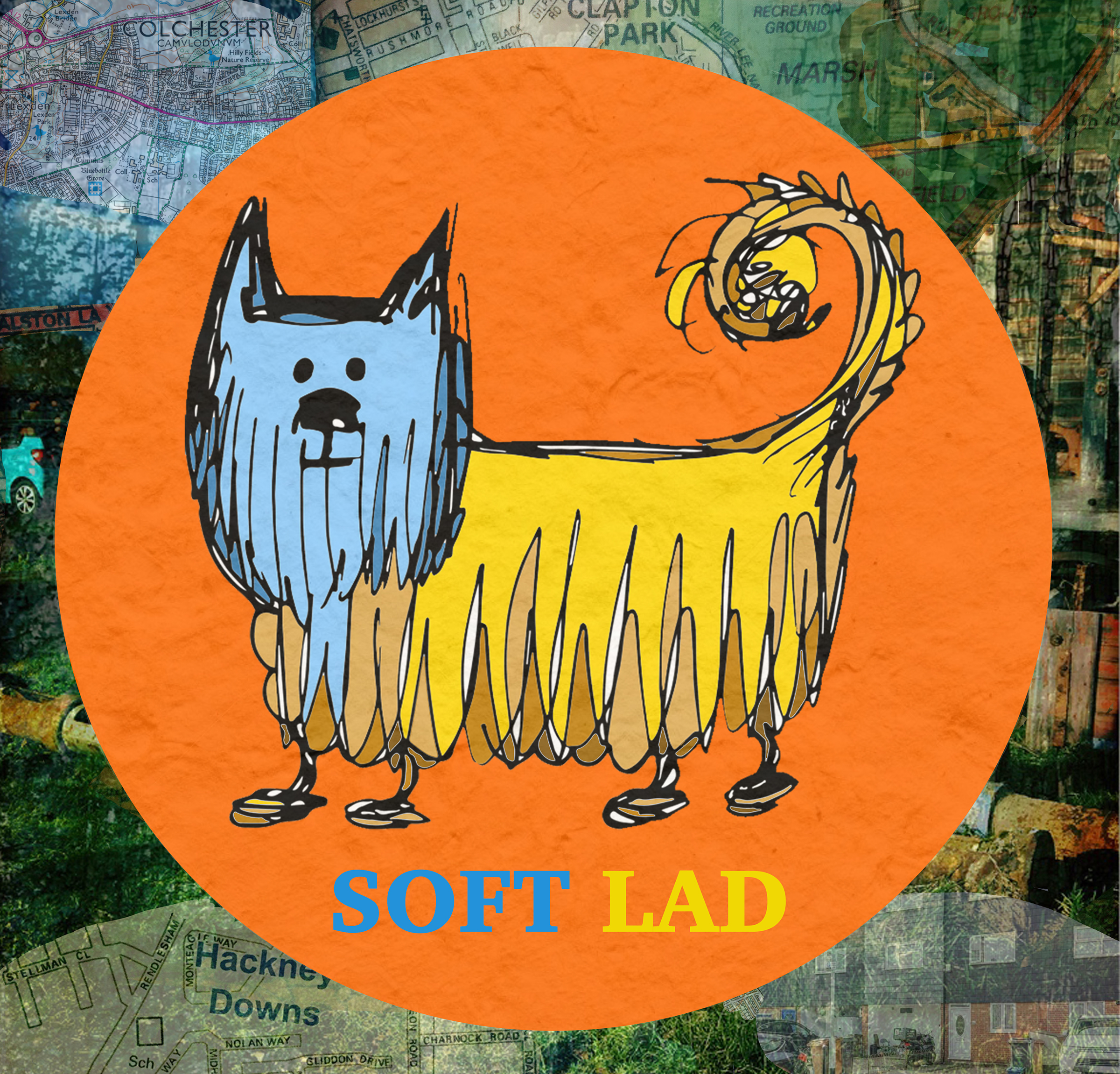
This is his fifteenth album — or thereabouts, because men like Casson don't count carefully, they just keep going — and it arrives wearing the peculiar dignity of work made under duress. An illness left his fingers compromised, his usual toolkit suddenly foreign and hostile. Another artist might have taken the hint, filed the whole business under "sabbatical," and quietly retreated. Casson, characteristically, did the opposite. He stripped everything back to almost nothing: a rubber-stringed Kala U-Bass, synths wobbling like a drunk trying to look sober, samples, vocal loops, and — here's the detail that tells you everything — a dying iMac whose very decrepitude became part of the aesthetic. It's the artistic equivalent of painting a masterpiece with your off hand. The constraint becomes the canvas.
The result is fifteen tracks that collectively feel like a transmission from somewhere just slightly outside normal time. Downtempo doesn't quite cover it; this is music that seems to breathe at its own rate, uninterested in your agenda. The reel-to-reel textures give everything a warmth that modern production — forever chasing the clinical and the pristine — has largely forgotten how to manufacture. You can hear the room. You can hear the thinking. In an era of immaculately buffed surfaces, *Soft Lad* feels almost shockingly human.
Comparisons to Robert Wyatt are not made lightly in this parish, but they're not made lazily either. There's that same quality of vulnerability held in careful check by craft; that sense of a man singing about difficult things — illness, love as survival mechanism, the sheer grinding dailiness of keeping yourself together — without once tipping into self-pity. Casson's vocals are punchy and earthy, yes, but more than that they're *direct*, which is the rarest quality in songwriting. He's not performing introspection. He's actually doing it, right there, in your ears.
The Balearic undercurrent that surfaces across the album's latter stretches is a masterstroke of sequencing. Just when the weight of the record's more introspective passages might threaten to become claustrophobic, something opens up — a melody arrives like afternoon light finding a gap in cloud cover, and you remember that Casson's essential disposition, however bruised, is one of determined optimism. These aren't songs of defeat. They're songs of reckoning, which is an entirely different and considerably more interesting thing.
His peers in the comparison column — Baxter Dury, Hak Baker, Bibio, Beck — are instructive. Like all of them, Casson operates in that fertile territory where lo-fi aesthetics meet genuine songwriting substance, where the texture is the point but never the whole point. But where Dury relies on louche swagger and Baker on righteous urgency, Casson's register is more ruminative, more internal. He's examining things, turning them over. You get the sense these fifteen tracks were *necessary* — not in the vague, self-aggrandising way that musicians often claim necessity, but in the literal, medical sense. Music as treatment. Music as the thing that organises the noise in your head into something bearable and occasionally beautiful.
Tom Robinson's oft-quoted assessment — that he feels about Snippet the way John Peel felt about The Fall — is worth sitting with. What Peel understood about The Fall, and what Robinson clearly understands about Casson, is that consistency of vision over decades is its own form of genius. The mainstream may never have beaten a path to his door, but the people who find Snippet tend to find him the way you find a good local — it becomes essential, part of the rhythm of things.
*Soft Lad* is his most cohesive and emotionally coherent record. It's the sound of an artist who, faced with genuine adversity, dug deeper than comfort and came back up carrying something worth keeping. In a music landscape lousy with product dressed up as art, that's not nothing. That's rather a lot, in fact. Essential listening for anyone who believes that the best music costs its maker something real.