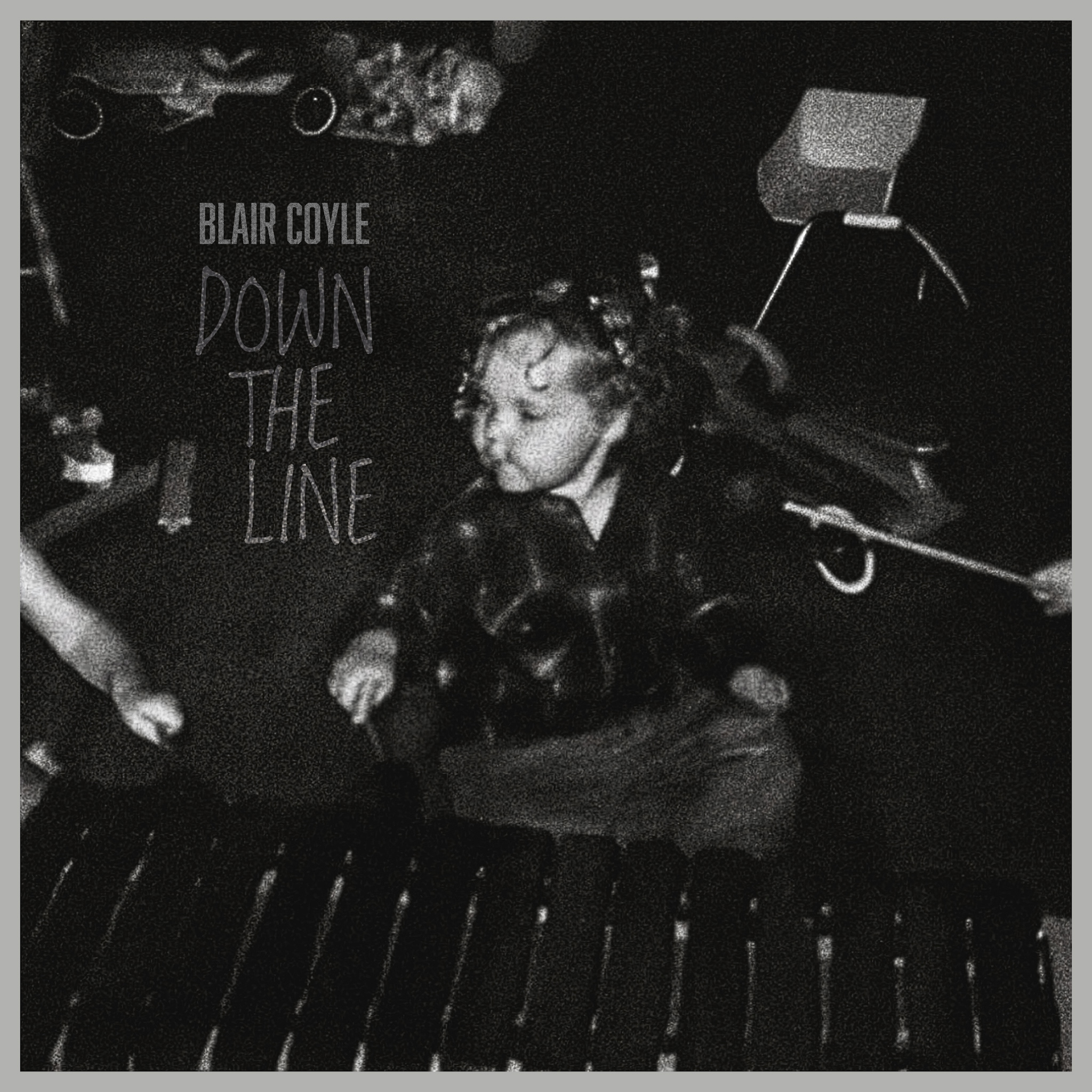
Coyle situates himself within a lineage of confessional indie folk that runs from the spare bedroom outward into the wider world: Phoebe Bridgers mapping grief onto ghostly production; Gregory Alan Isakov finding the cosmic in the domestic; Bon Iver building cathedrals out of private pain. These are not small reference points, and lesser artists would buckle beneath the comparison. Coyle, to his considerable credit, does not buckle. He absorbs these influences and then, crucially, discards the scaffolding — what remains is something that sounds entirely, unmistakably his own.
The song's premise is deceptively simple. A letter to an estranged family member. A one-sided conversation directed at someone with whom contact has been severed. The emotional architecture of this scenario is instantly recognisable to anyone who has ever loved someone they could no longer safely keep close — and Coyle navigates it without a single false step. He does not perform anguish. He does not reach for catharsis as a theatrical gesture. Instead, he does something considerably harder: he holds the door open. The song is an act of sustained tenderness toward someone who, by the singer's own admission, cannot currently receive it.
That restraint is the making of *Down The Line*. The British critical tradition has always rewarded songwriters who understand the power of the held note, the unresolved chord, the lyric that stops just before it explains itself — think of the way John Martyn could break your heart by leaving a sentence unfinished, or how Kate Bush always understood that obliqueness is not evasion but precision of a higher order. Coyle seems to have absorbed this lesson intuitively. The song carries its wounds lightly.
The bedroom production, handled entirely by Coyle himself, deserves particular attention. Bedroom recording has become so ubiquitous as a descriptor that it risks meaning nothing — but here it matters enormously. The intimacy is not incidental; it is the argument. This is music made in the same private space where the difficult thoughts live, and the production communicates that without ever stating it. Nothing is over-processed. Nothing is insulated from feeling by unnecessary layers. You get the sense of someone recording alone at night, choosing every sound with the particular carefulness of a person who knows they are saying something important.
The Sam Fender influence surfaces in a certain directness, a refusal to aestheticise suffering for its own sake. Coyle is not writing from a position of romantic misery; he writes from somewhere more complex and, ultimately, more courageous — from a place of continuing to love someone even when love demands distance. The hope for future reconciliation that runs through the lyric is not naive. It is hard-won, and the song knows the difference.
This is Coyle's first self-produced release, which makes its assurance all the more remarkable. Many artists spend years finding a voice this settled, this unafraid of silence. He has found his here — on a single track, recorded in a bedroom, addressed to someone who may never hear it. The rest of us, fortunate enough to listen from the outside, should pay close attention.