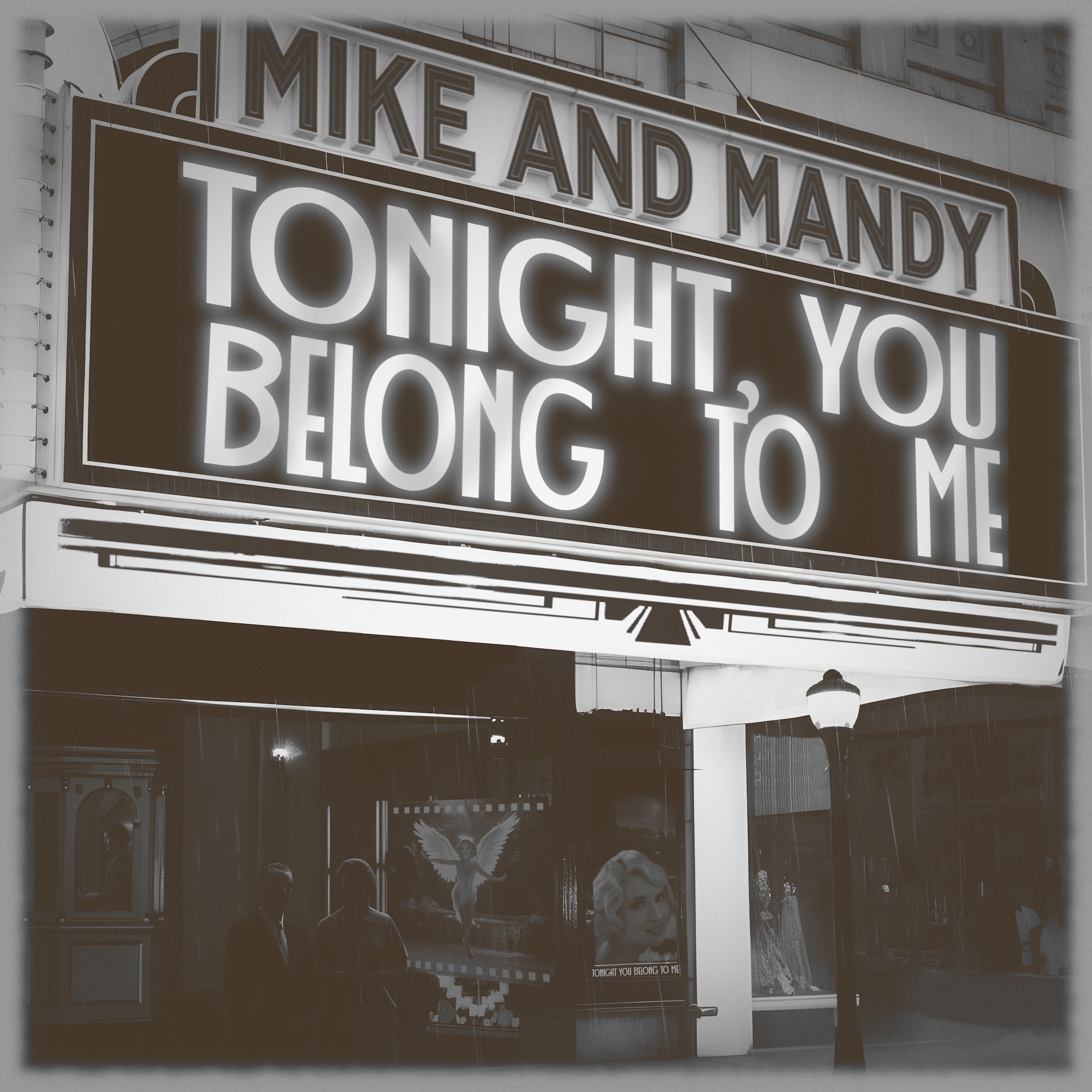
The Los Angeles duo have form here. Their dub-laced reimagining of "Quizás, Quizás, Quizás" demonstrated a genuine philosophical commitment to the idea that a song is not a finished object but a living argument — one that each generation must answer for itself. Their reading of The Cure's "Lovesong" suggested ears finely attuned to emotional architecture rather than surface texture. But this is bolder still. This is a century.
Written with melancholy baked into its bones — carrying both major and minor keys as if unable to commit to either joy or despair — the original 1920s composition always knew something that its chirpy mid-century reinvention chose to forget: love, at its most honest, is unresolved. Mike and Mandy restore that irresolution with a seriousness of purpose that borders on the devotional.
The production is the argument made physical. Sub-bass moves beneath everything like tectonic plates shifting — felt before it is heard — while dry, unhurried drums refuse the temptation of embellishment. This is restraint deployed as philosophy. The space between the beats is not empty; it *breathes*. Over this foundation, slide guitar traces the melody with the wandering tenderness of someone moving through a familiar room in the dark — knowing where everything is, touching things anyway.
The reverb is the masterstroke. Deep, oceanic, pulling each note slightly back from shore before it can fully arrive. This is the sound of longing rendered as texture. The 1920s wrote about yearning; Mike and Mandy make you *inhabit* it. The dub tradition — rooted as it is in the idea that absence is as meaningful as presence — proves a devastatingly appropriate vehicle for a song about wanting what you cannot quite hold.
That no artificial intelligence was involved in the making of this record is worth dwelling upon, not as marketing but as meaning. The entire project is a human conversation across time — between the songwriters of the Jazz Age and two musicians in modern Los Angeles who heard something worth preserving, worth transforming, worth caring about. Algorithms do not care. This record cares enormously.
The British critical tradition has always prized the moment when form and feeling become indistinguishable — when you cannot say where the idea ends and the emotion begins. Nick Kent understood it. Ian MacDonald dedicated a career to locating it. Mike and Mandy have found it in a hundred-year-old love song slowed to the pulse of someone unable to sleep.
"Tonight You Belong to Me" does not ask to be your favourite song. It asks only to be the one playing when the lights are low and the night stretches out with nowhere particular to go. Given the right room and the right ears, it will be absolutely impossible to shake.