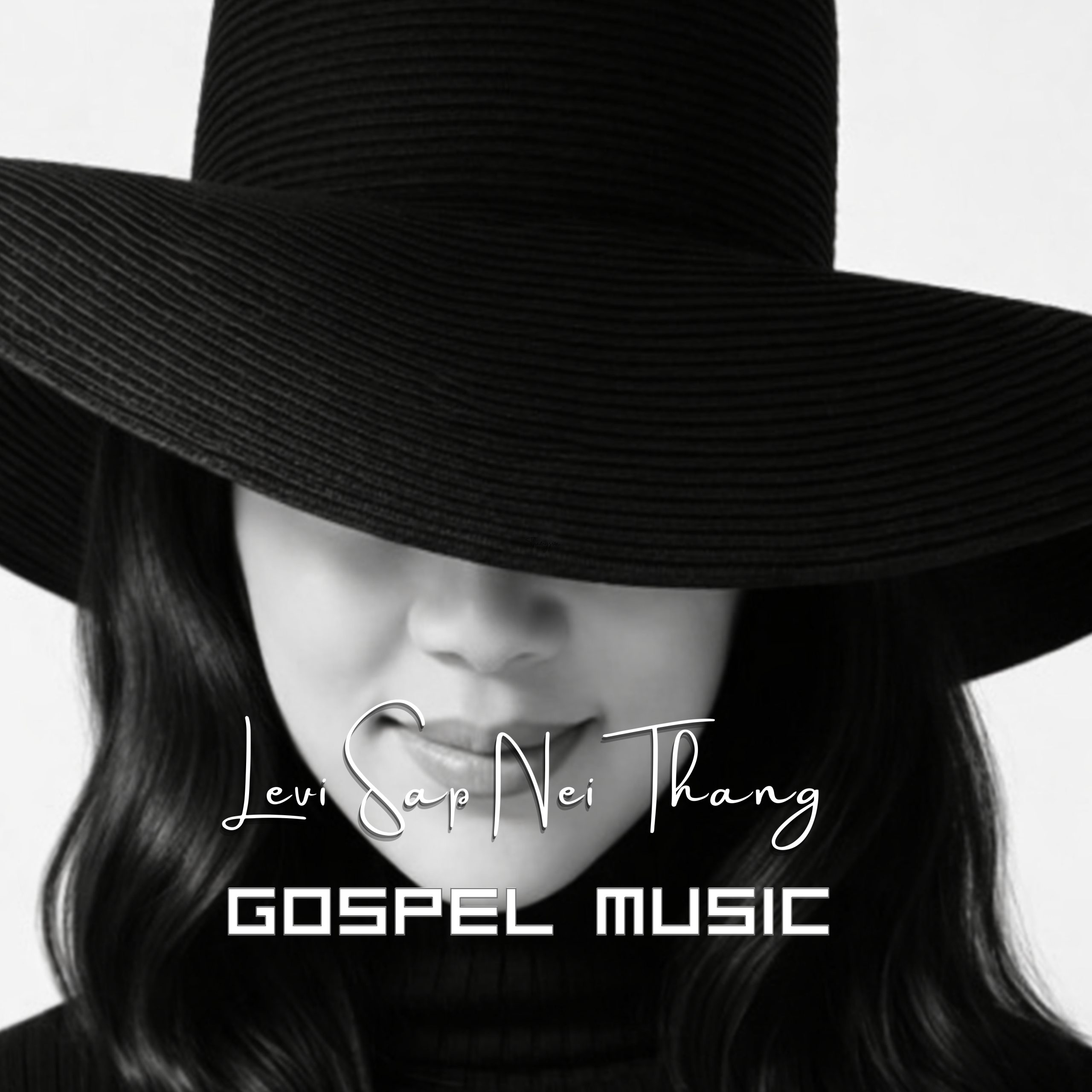
Released on Valentine's Day — a date the Nashville-based artist has chosen with obvious deliberateness, reframing a holiday of romantic commerce as an occasion for divine love — the album unfolds across fifteen tracks in a structure of almost liturgical intentionality. Five thematic movements carry the listener from Surrender through Repentance, Restoration, Identity, and finally into a multilingual declaration of devotion that spans Arabic, Chinese, Hebrew, Hindi, Malay, and Persian. The architecture alone announces that Sap Nei Thang is not simply assembling a collection of devotional songs; she is constructing a spiritual argument.
The title track opens proceedings with a disarming humility. The premise — bringing one's meagre self before the divine, trusting that sincerity outranks grandeur — is as old as the Psalms, yet Sap Nei Thang renders it with a freshness born of genuine autobiography. This is not the calculated vulnerability of the contemporary worship industry, where confessions of weakness are delivered in arenas before ten thousand screaming fans. The intimacy here feels genuinely earned, rooted in what the press materials describe as seasons of opposition, rejection, and suffering during which the artist chose silence over retaliation.
*Grace That Carried Me Home* and *Wounds into Music* represent the album's emotional apex, tracks five and seven respectively, where the theological stakes become most nakedly personal. The latter, particularly, does something quietly remarkable: it insists that suffering is not merely endured but alchemised — that brokenness can be the very material from which beauty is fashioned. The metaphor is not new, but the conviction with which it is delivered commands attention.
*He Knows My Name*, closing out the English-language portion, provides a kind of resting place — a comforting, almost lullaby-like reassurance of divine particularity — before the album pivots into its most audacious section.
The multilingual final movement is where *My Little Offering* most decisively separates itself from the contemporary worship pack. Six tracks, each a variant declaration of love for Jesus rendered in a different tongue, might read on paper as a programmatic exercise in cultural inclusivity. Heard in sequence, the effect is something rather more moving: a genuine approximation of what the Pentecostal tradition calls glossolalia, the sense of a single sacred impulse breaking across language barriers like light through a prism. The Persian closing track, *I Love You, O Savior*, lands with a quiet finality that would be difficult to manufacture.
Sap Nei Thang holds a degree in Physics and a Master of Divinity in Theology, credentials that might seem incongruous until you register the album's underlying precision — its structural rigour, its refusal of emotional self-indulgence, its sense that worship is a discipline as much as a feeling. She describes her music as "prayer set to melody," and the characterisation is apt. This is not music designed for passive consumption. It asks something of its audience.
The production sits comfortably within the Contemporary Gospel and Worship Ballad tradition — warm, unhurried, occasionally swooping into the orchestral — and will not trouble listeners who prefer their devotional music adventurous in texture. But to judge *My Little Offering* on sonic innovation alone would be to miss its point entirely. Sap Nei Thang is not trying to reinvent the form. She is trying to mean it. On that count, the album is quietly, persistently, and rather remarkably successful.
*Available now on all major streaming platforms.*