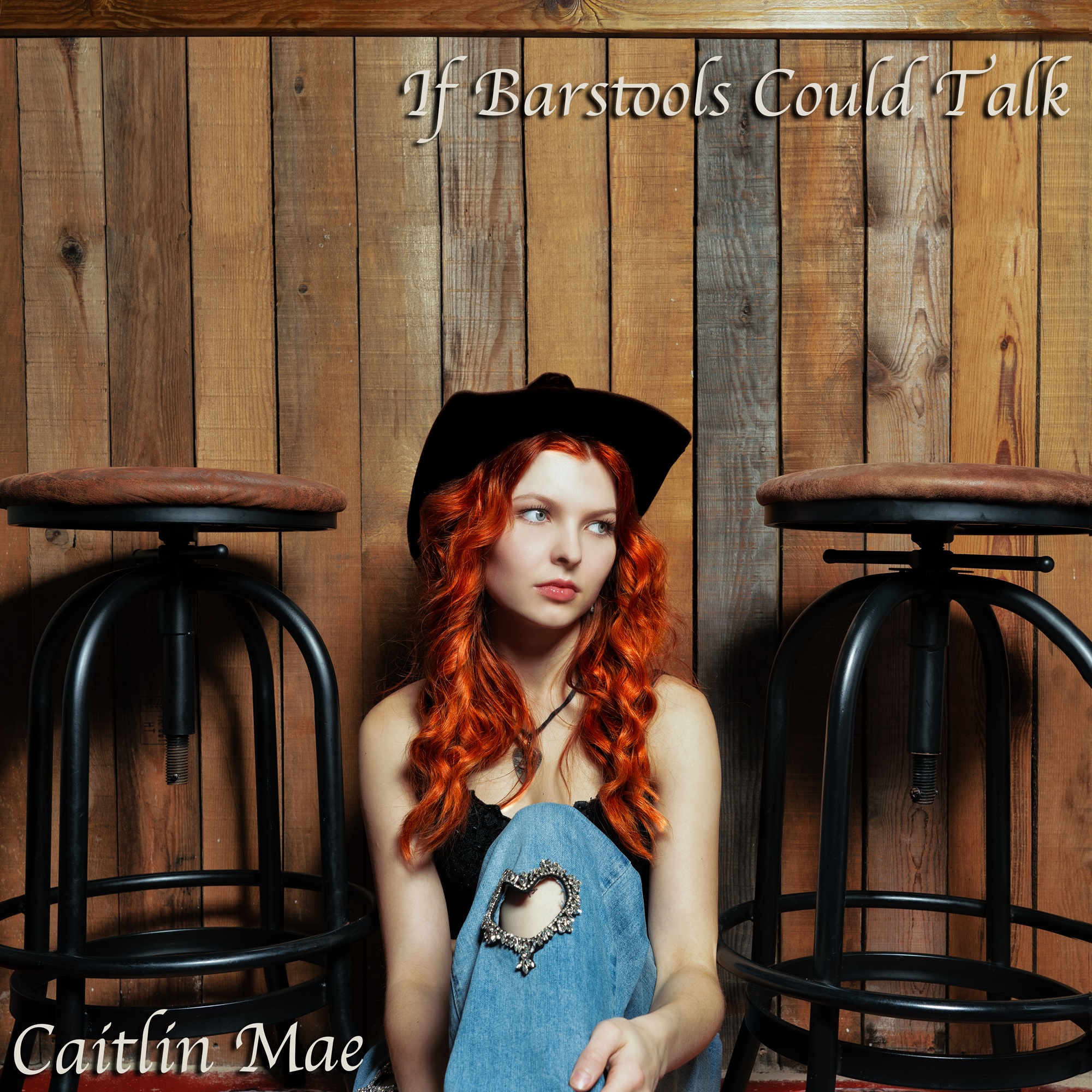
Mae is a Welsh singer-songwriter who, with the particular brand of madness that separates the genuinely driven from the merely ambitious, packed her life into cases and flew four thousand miles from a mining town in South Wales to Nashville, Tennessee. The distance is important. It isn't a hop across the M4 to a London showcasing circuit; it is a full severance, a burning of boats so complete that even the smoke would have been invisible from home. That biographical fact charges every syllable of this song with a weight that no amount of studio craft could manufacture — and yet here she has done both, living the story and then finding the exact musical shape to hold it.
That studio craft is considerable. Produced with a sensitivity and restrained elegance that one might expect from the orbit of Kent Wells — the man who has shaped some of Dolly Parton's most enduring recordings — the arrangement draws breath rather than drowning. A haunting, unhurried melody carries Mae's voice the way deep water carries a small boat: with total indifference to the passenger's anxiety, but with an underlying confidence that keeps it afloat. The production never overwhelms the lyric, which is a choice that many producers, seduced by the toys at their disposal, conspicuously fail to make.
The lyric itself is the thing. Mae writes, as she acknowledges, from inside the experience — sitting in half-lit rooms, speaking mostly to herself, observed only by furniture. It is a sharp conceptual device: the bar stool as silent witness, the repository of every performance, every doubt, every homesick evening spent watching the door that no one came through. "There are nights you're so proud you didn't give up," she has said of the song's emotional core, "and nights you wonder if you're completely crazy for even trying." That duality — pride and vertigo occupying the same chest at the same moment — is the oldest story in popular music, but Mae renders it with a specificity that makes it feel freshly minted. The girl who misses home and the girl who still believes are not presented as opposites to be resolved; they coexist, uneasily and honestly, which is the only way they ever do in real life.
Mae's voice is an instrument of considerable range and emotional intelligence. It does not announce itself. It doesn't need to. The kind of vocal performance that reaches across a room and holds you quietly by the collar is rarer than the barnstorming variety, and Mae has it in abundance. She phrases with the confidence of someone who has spent years performing to sparse crowds and learned — as only sparse crowds can teach you — that truth travels further than volume. Each line lands with the quiet certainty of someone who has earned the right to sing it.
What also distinguishes this record is its refusal of self-pity. Ambition's cost is acknowledged plainly, but Mae never tips into complaint. The bittersweet is genuinely both things simultaneously: bitter enough to be credible, sweet enough to keep you listening. The resilience is not manufactured for the chorus; it is threaded through the whole piece, as quiet and as load-bearing as a rafter.
Country music has always been, at its finest, a literature of displacement — of people who left somewhere and are not quite at home in the somewhere they arrived at. Hank Williams knew it. Townes Van Zandt knew it. It was the engine of the Bakersfield sound, of the outlaw movement, of a hundred forgotten records made in rooms not entirely unlike the ones Mae sings about. She joins that lineage not by imitating it but by living it, which remains the only legitimate entry point.
For a British artist to find her genuine voice inside the idiom of American country is not unprecedented, but it remains a genuinely difficult trick to pull off. Inauthenticity announces itself immediately to Nashville ears, and those ears are merciless. Mae sounds entirely at home in the form while never entirely abandoning the particular melancholy that seems to come standard with the Welsh landscape. The two things sit together rather well, as it turns out. Both traditions have always known something about rain, and distance, and the stubborn persistence of longing.
With 2026 already shaping up to be a formative year — new music, touring, and a growing body of work being assembled in serious company — this single makes a compelling case that Caitlin Mae is an artist whose most important chapters are still being written. Pull up a stool.
Released 13 February 2026. Available on all major streaming platforms.