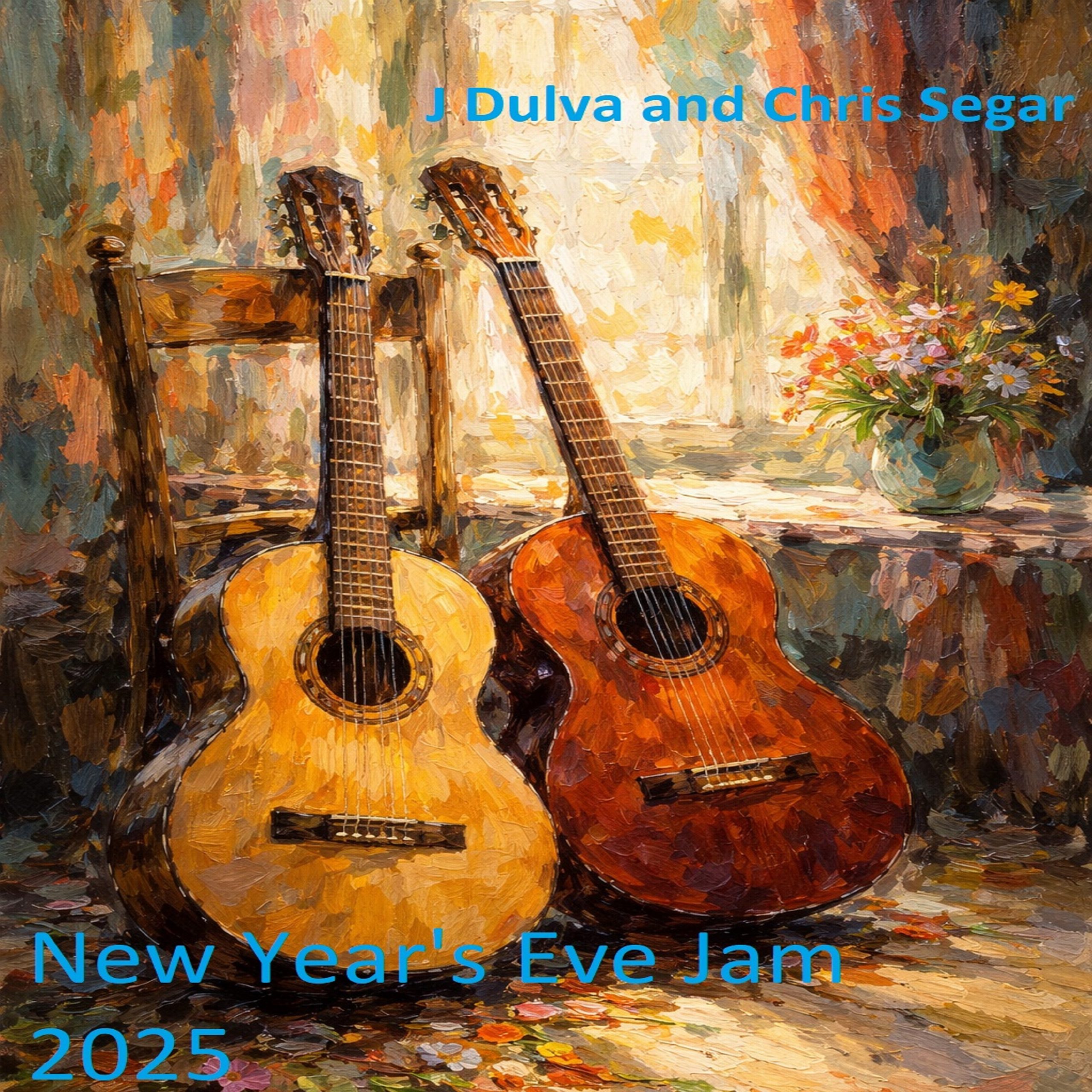
The genius of this recording lies in its brutal simplicity. Two microphones. Two acoustic guitars. Two voices. Poolside Studios in Eunice, Louisiana becomes not just a recording space but a witness to an impromptu reunion that feels less like a calculated release and more like eavesdropping on a private moment of musical communion. The technical setup—minimal to the point of asceticism—forces the listener to confront the music itself, stripped of studio wizardry and production gloss.
Their rendition of "Mrs. Robinson" exemplifies the album's greatest strength. Rather than attempting to replicate or reimagine Simon & Garfunkel's iconic arrangement, Dulva and Segar approach the song as if discovering it anew. The acoustic treatment lays bare the song's skeletal beauty, its lyrics about disillusionment and fractured American dreams resonating differently when filtered through the lived experiences of two Louisiana musicians whose paths diverged in the late 1990s only to reconverge on a New Year's Eve twenty-five years later.
"Hesitation Blues," the other standout track mentioned in the album's notes, showcases the duo's ease with American folk traditions. The song, a standard that has passed through countless hands from Charlie Poole to the Grateful Dead, finds new life here. The hesitation in the title becomes literal—you can hear the musicians listening to each other, leaving space, breathing together. The generation gap between the artists transforms into a dialogue rather than a chasm.
This is music born from Louisiana's rich cultural soil, and that provenance matters. South Louisiana has always been a place where musical traditions collide and hybridize—Cajun, Creole, blues, country, and beyond. Both artists carry these influences differently, shaped by when they came of age, yet their common geography provides a shared vocabulary that makes their collaboration feel inevitable rather than forced.
The spontaneity celebrated throughout the album's promotional material isn't mere marketing speak. You can hear it in the way phrases tumble over each other, in the moments where the two guitars lock into an unexpected harmony, in the vocal passages where one voice drops out and the other carries forward. This is the sound of musicians comfortable enough with their craft to trust the moment, to let the songs breathe and develop organically.
What makes "New Year's Eve Jam 2025" particularly compelling is its refusal to chase contemporary trends. No AutoTune. No layers of overdubs. No attempt to sound young or relevant or streaming-friendly. Instead, Dulva and Segar offer something increasingly precious: authenticity without self-consciousness. They're not performing authenticity as a stylistic choice; they're simply being authentic.
The album serves as a reminder that great music doesn't always announce itself with fanfare. Sometimes it arrives quietly, almost accidentally—the result of a chance encounter between two old friends on a holiday evening in a small Louisiana town. The best moments on this record feel like the musical equivalent of a well-worn photograph: slightly faded, imperfect, but charged with genuine emotion and memory.
For listeners weary of algorithm-generated playlists and focus-grouped releases, "New Year's Eve Jam 2025" offers something restorative. This is music that remembers why people pick up guitars in the first place: not for fame or streams, but for the simple joy of making sound together, of finding harmony with another human being across the strings and frets.
Dulva and Segar have given us an album that doesn't demand repeated listens so much as it rewards them, revealing new details and subtle interactions with each return visit. It's modest in scope but rich in spirit—a small gift that punches well above its weight.