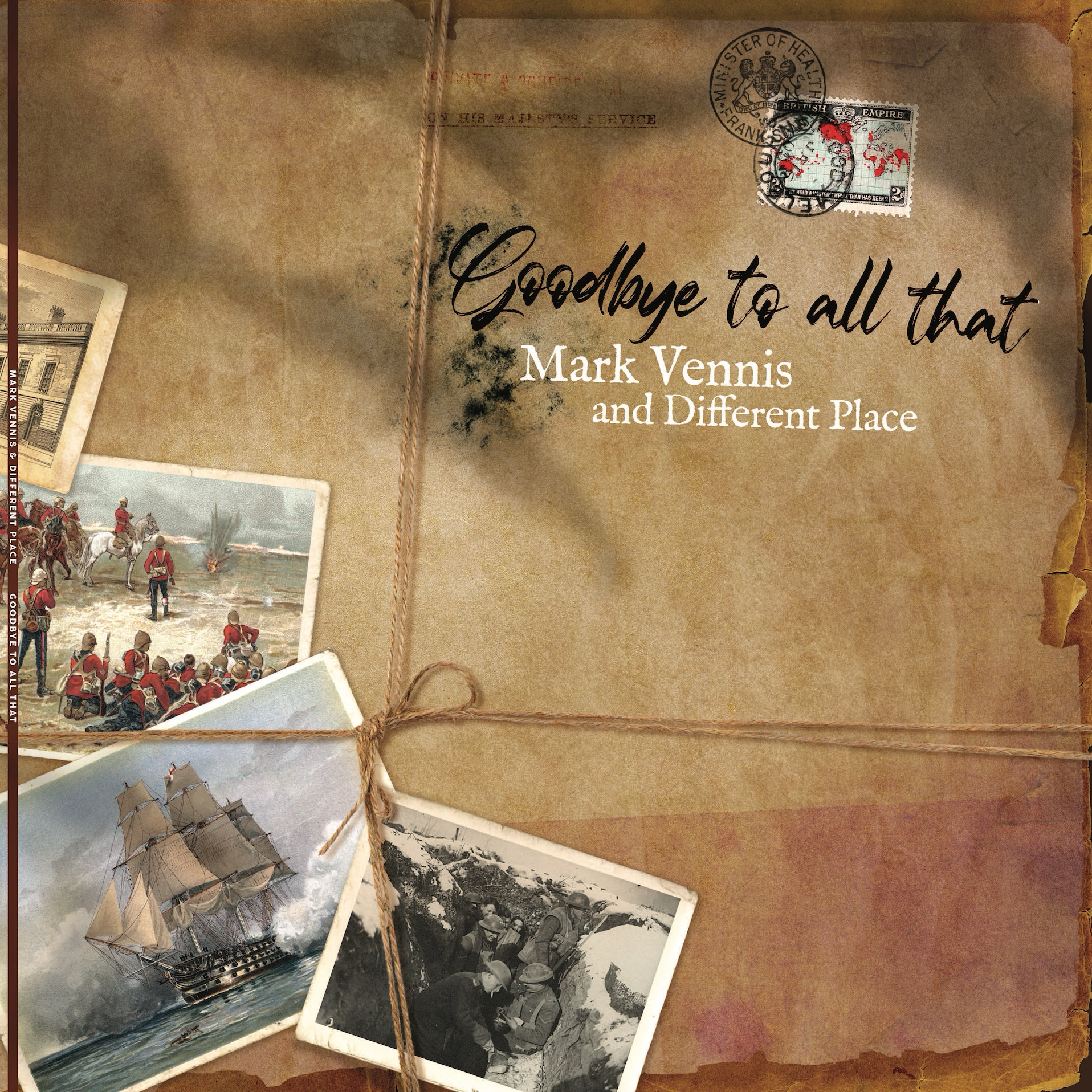
Vennis has long inhabited the territory where The Clash's political urgency meets The Kinks' social observation, but here he's pushing deeper into the uncomfortable truths lurking beneath Britain's self-image. The album's conceptual ambition—nothing less than a reckoning with empire—could easily have collapsed under its own weight. Instead, across twelve tracks, Vennis constructs a vivid, often harrowing panorama of voices: press-ganged sailors, enslaved peoples, working-class cannon fodder, and the ghosts who refuse to rest until the lies cease.
"This Nation's Ghosts" crystallises the album's methodology. Over a brooding, minor-key arrangement that recalls PJ Harvey's *Let England Shake* filtered through late-period Manic Street Preachers, Vennis catalogues the violence encoded in statues, the screams from slave ships still echoing at the ocean floor. The imagery is unflinching—"mounds of bones and blood," bodies "still bound in chains"—yet never gratuitous. This is protest music that understands the power of witness.
The production, handled by Vennis himself at Laundry Studios, favours raw immediacy over polish. Guitars snarl and jangle with a DIY aesthetic that channels the spirit of early Jam records, while the rhythm section maintains a relentless forward drive. On "Empire Road," the arrangement opens up into something approaching roots reggae, a fitting nod to Linton Kwesi Johnson's influence, as Vennis sketches a grotesque parade of "Kings, vicars and queens / Merchants a grubby scene."
"All Points South" offers perhaps the album's most devastating narrative—a 14-year-old press-ganged into naval service, facing violence and an unmarked grave. Vennis delivers these lines with a matter-of-fact brutality that makes them all the more affecting: "Gutted like a fish on the portside / We sleep now in an underwater grave." The casual cruelty of empire, the expendability of working-class lives—these aren't abstract concepts but flesh-and-blood tragedies.
The title track provides the album's emotional centre, explicitly invoking Robert Graves while extending his critique into contemporary Britain. "A country of amnesiacs," Vennis spits, and the line lands with precision. The song moves from trench warfare to modern deprivation, suggesting the continuities between imperial militarism and present-day inequality. When he asks, "have we really said goodbye to all that?", the answer hangs heavy in the minor-chord resolution.
Musically, Vennis refuses easy categorisation. "The Trader" lurches between folk ballad and post-punk intensity, while "An English Tragedy" deploys its Colonel Blimp references with caustic wit, the music veering into almost Music Hall-inflected irony before pulling back into anger. "Crawling Through the Woods"—presumably about escaped enslaved people or perhaps soldiers deserting—builds tension through repetition, the protagonist seeking light in perpetual darkness.
The closing one-two of "Golden Country" and "Requiem" offers no redemptive arc. The former references Powell and Pressburger's pastoral vision only to undercut it with imagery of decay and fire. "Requiem," meanwhile, channels the voice of a working-class soldier—"just like everybody else"—sent to die for a system that offers them nothing. The final lines hit like a punch: "No one answered as they put me in the earth."
*Goodbye To All That* will undoubtedly prove uncomfortable listening for those who prefer their British identity sanitised and celebratory. Vennis offers no such comfort. This is necessary, vital music—a reckoning delivered with guitars, punk attitude, and an unflinching historical consciousness. Whether Britain is ready to hear it remains another question entirely.