Jamali's relationship with music has always been unorthodox. Since her near-death experience in 2012, her compositions have arrived through dreams, delivered rather than constructed, channelled rather than crafted. This could easily descend into New Age mawkishness, yet Jamali possesses something more valuable than mere sincerity—she has restraint. The piece unfolds with the patience of someone who understands that genuine transcendence cannot be rushed or forced.
The single piano line moves with the deliberate simplicity of Erik Satie's Gymnopédies, though where Satie cultivated detachment, Jamali offers something warmer, more embracing. Her melodic phrases shimmer and recede like memory itself, each progression suggesting forward motion while simultaneously glancing backwards. This duality—the sense of nostalgia coexisting with hope—gives the composition its emotional complexity. We are not simply witnessing a new beginning; we are carrying our histories into it, transformed but not erased.
Jamali describes the piece as an "opening gate," and the metaphor proves apt. The music creates space rather than filling it, clearing ground rather than occupying territory. The sparse arrangement—just piano, unadorned and unamplified—demands we lean in, that we bring our own attention to meet it halfway. Modern streaming culture has conditioned us to expect immediate gratification, relentless stimulation. "Angel Sandalphon" offers the opposite: contemplation, breath, the radical act of simply being present.
The choice of Sandalphon as patron angel reveals Jamali's deeper intentions. In mystical tradition, Sandalphon stands as the tallest of angels, head reaching heaven whilst feet remain planted on earth, serving as bridge between human prayer and divine listening. He is also, crucially, the angel of music—the celestial force that transforms human emotion into cosmic language. By invoking this particular figure, Jamali positions her work not as entertainment but as spiritual practice, as functional magic.
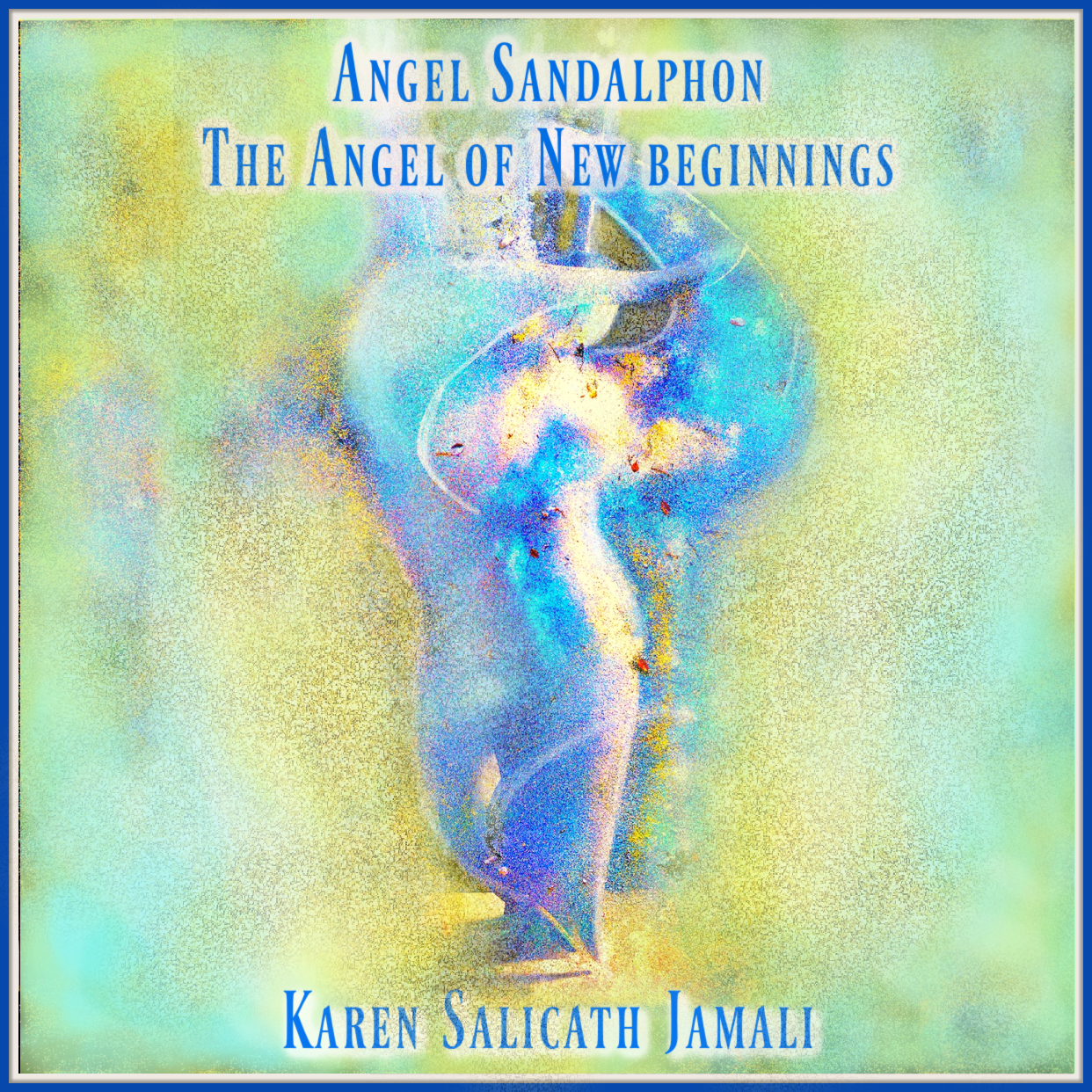
The visual component—Jamali's own painting created specifically for this release—reinforces the integration of her artistic vision. Sound and image operate as twin frequencies of the same fundamental expression. For an artist who works across multiple media with such fluency, this synthesis feels less like marketing strategy and more like aesthetic necessity.
One might question whether such explicitly spiritual music can find purchase in our increasingly secular, fragmented cultural landscape. Yet Jamali's growing audience—over 100,000 followers, more than 10 million streams—suggests a genuine hunger for what she offers. Her album *Dreams of Angels* currently airs on WWBA Classical FM USA, proof that her work resonates beyond the usual New Age circuit.
The timing of this release proves significant. As the first single of 2026, partnered with EMPIRE and published through KOSIGN (powered by Kobalt Music Group), it marks not merely a new beginning for the calendar year but a new chapter in Jamali's career trajectory. Yet the music itself remains remarkably unburdened by such considerations. It simply exists, occupying its three or four minutes with quiet authority, offering itself as salve, as reset button, as threshold.
"Angel Sandalphon" will not change the course of contemporary music. It makes no such claim. What it does offer, with humble persistence, is a moment of genuine renewal—a clean breath, a soft landing, a gentle awakening. Jamali has created a small sanctuary, a protected space where transformation can occur at its own pace. That such delicate work can find an audience speaks to something essential about what music, at its most fundamental, can still accomplish: not merely to entertain or distract, but to heal, to clear, to renew.
The night turns to day. The birds begin to sing. And we, if we choose to listen, might find ourselves transformed in ways we didn't anticipate, by music that asks nothing more than our attention.