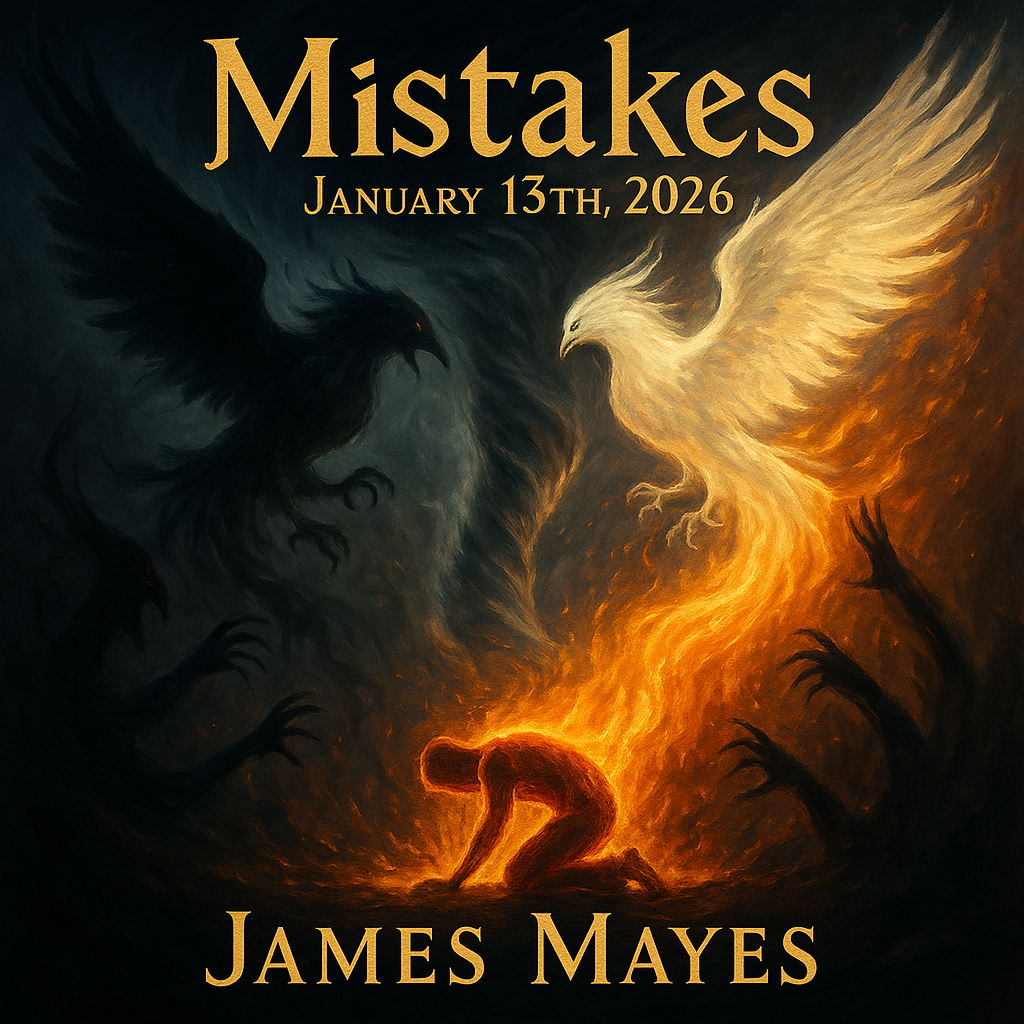
From its opening moments, "Mistakes" establishes an atmosphere of uncomfortable intimacy. The production begins spare and skeletal, each element carefully placed as though Mayes is afraid of disturbing the delicate emotional architecture he's constructing. It's the sound of someone taking stock, of turning over memories like stones in one's hand, examining them from every angle before deciding what to do with the weight they carry.
What becomes immediately apparent is Mayes's refusal to indulge in easy sentimentality. Lesser artists might have treated this subject matter—the examination of personal failings and their reverberations—as an exercise in self-flagellation or, worse, as an opportunity for therapeutic navel-gazing. Mayes does neither. Instead, he presents his reflections with a clear-eyed honesty that never tips into maudlin excess. The lyrics acknowledge fault without wallowing in it, creating a portrait of someone who understands that growth demands acknowledgment rather than obsession.
The production work deserves particular attention. Mayes has clearly studied at the altar of cinematic electronic music, but he wields these influences with restraint and purpose. The track's sonic landscape shifts gradually, almost imperceptibly at first, before erupting into a bass-driven finale that feels both inevitable and surprising. This isn't the cheap drama of a predictable drop; it's the natural culmination of the emotional journey the song has been charting all along.
The bass, when it finally arrives, doesn't simply provide rhythmic foundation—it becomes the physical manifestation of perseverance itself, a low-end rumble that suggests the deep reserves of strength required to face oneself honestly. The cinematic sweep of the arrangement never overwhelms the song's essential humanity; rather, it amplifies it, suggesting that our personal struggles contain their own epic dimensions when viewed with sufficient perspective.
Mayes's decision to foreground this particular track as the entry point to his EP demonstrates considerable artistic maturity. "Mistakes" doesn't announce itself as a statement of arrival; it positions itself as the beginning of a conversation, an invitation to examine the ways our past actions—and the influences that shaped them—continue to inform our present selves. The song acknowledges that we are all products of both internal decisions and external pressures, some of which we recognize only in retrospect.
The progression from the track's intimate opening to its expansive conclusion mirrors the psychological journey from introspection to action, from recognition to renewal. This isn't music designed to comfort; it's music meant to galvanize, to transform the often-painful process of self-examination into something that propels rather than paralyzes.
What proves most compelling about "Mistakes" is its refusal to offer easy resolutions. The song doesn't conclude with redemption neatly packaged and delivered; instead, it leaves us in the midst of transformation, suggesting that the work of growing beyond our errors is ongoing, perhaps perpetual. It's a brave choice, and one that speaks to Mayes's confidence in his audience's ability to sit with complexity.
This is the work of an artist who has learned that the path to authenticity often requires abandoning the masks we've worn, even—or especially—the ones we didn't realize we had on. "Mistakes" marks James Mayes as a producer and songwriter worth watching, someone capable of translating personal reckoning into universal resonance without sacrificing either specificity or emotional truth. Welcome back, indeed.