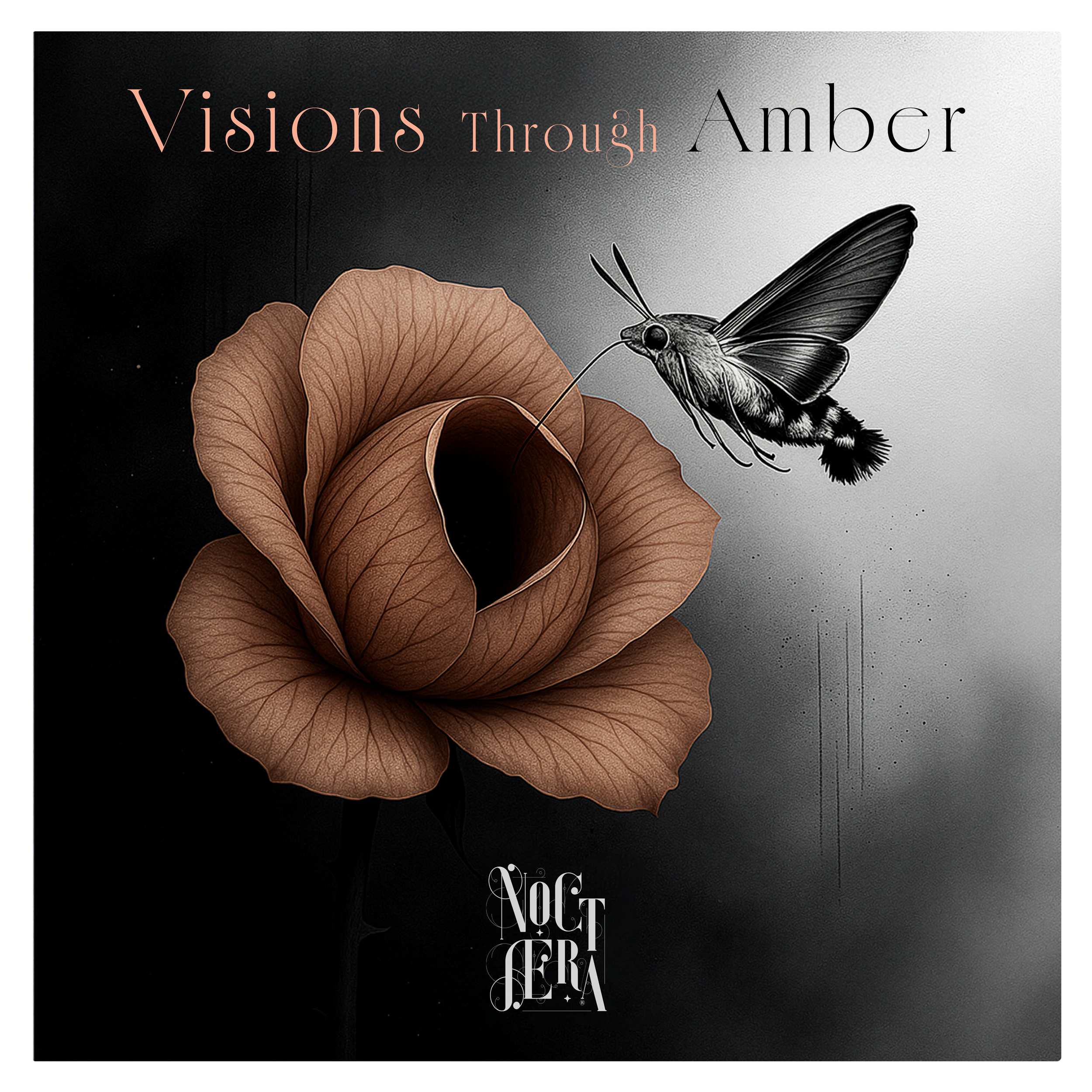
The album's territory—somewhere between raw folk, pop and rock—proves less a genre exercise than a dismantling of such categories altogether. Noctæra moves through these modes with the fluidity of someone for whom boundaries exist merely as suggestions. One track might open with the stripped-back intimacy of bedroom folk before morphing into something altogether more muscular, whilst another reverses the trajectory, building tension only to dissolve into fragility.
What marks 'Visions Through Amber' as particularly compelling is its refusal to separate vulnerability from strength. Noctæra understands that power and fragility aren't opposing forces but intertwined states, each lending the other greater resonance. Her voice becomes the primary instrument through which this philosophy manifests—capable of whispered confession and full-throated declaration, sometimes within the same verse. The production wisely gives her room to explore these extremes, never smoothing the rough edges or polishing away the rawness that gives these songs their visceral impact.
The bilingual nature of the record—French and English trading places throughout—adds another layer of dislocation and intimacy. Noctæra doesn't simply translate emotions between languages; rather, each tongue seems to access different emotional registers. The French passages arrive like interior monologues, whilst the English lyrics face outward, engaging more directly with the listener. It's a sophisticated approach that avoids the pitfall of treating language-switching as mere novelty.
Those oriental-tinged touches mentioned in the album notes weave through the record like thread through fabric, sometimes barely perceptible, elsewhere more pronounced. These elements never feel grafted on but rather integrated into Noctæra's sonic vocabulary—melodic choices that bend Western pop structures just enough to create unease, instrumental flourishes that suggest influences absorbed and transformed rather than merely borrowed.
The album's sense of place—that bedroom where noisy solitude and grace intermingle—becomes both literal and metaphorical space. One can practically feel the four walls, the late-night isolation, the amplified presence of every breath and movement. Yet this claustrophobia paradoxically creates intimacy rather than confinement. Noctæra invites us into proximity that feels almost transgressive, as if we're overhearing things never meant for wider consumption.
Across the album's runtime, Noctæra demonstrates remarkable range without ever losing her distinctive voice. Tracks that lean toward pop sensibilities retain their grit and complexity; those that embrace rock's muscularity never sacrifice their emotional nuance. The sequencing feels deliberately unsettled, avoiding any comfortable flow that might lull the listener into passivity. Just when patterns seem to emerge, Noctæra shifts approach, ensuring that attention never wavers.
The production choices throughout favor texture over clarity, space over density. Instruments appear and recede, sometimes fully formed, elsewhere as ghostly presences. This creates a sonic landscape that feels alive and breathing, where silence carries as much weight as sound. It's a bold approach that trusts the material enough to let it breathe, resisting the contemporary impulse toward maximalist production.
'Visions Through Amber' ultimately succeeds because Noctæra has created a coherent artistic statement that nevertheless resists easy summation. This is work that demands engagement, that rewards close listening whilst maintaining its mysteries across multiple encounters. It's an album that understands restraint as a form of power, that finds beauty in imperfection, and that treats listeners as collaborators rather than passive consumers.
Noctæra has crafted something genuinely distinctive here—an album that exists in its own carefully constructed world, inviting us in whilst never quite letting us get comfortable. Troubling, beautiful, and utterly compelling.