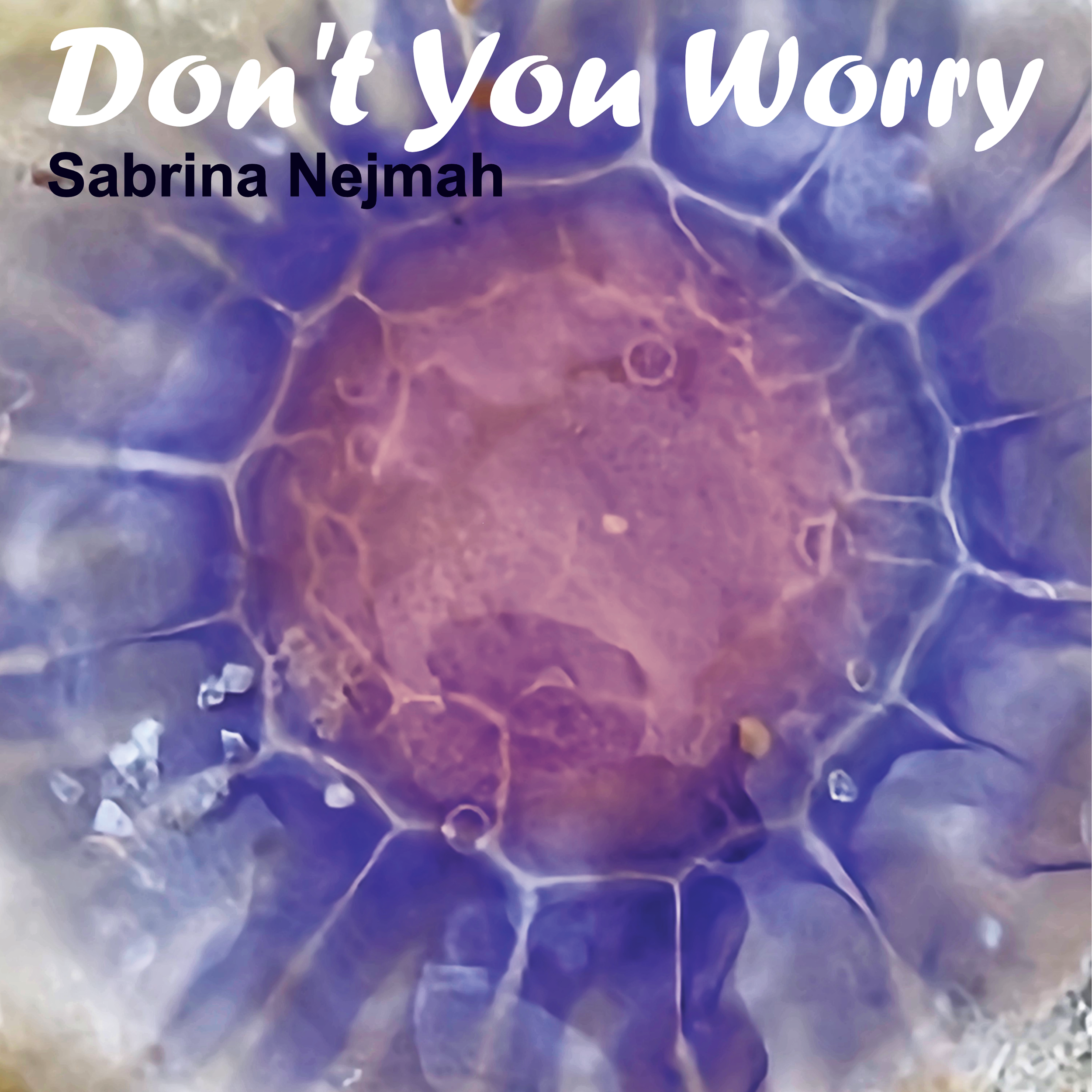
The song announces itself with Edgar Herzog's saxophone, played on a Selmer Mark VI tenor—a detail worth noting for its deliberate invocation of jazz's romantic lineage. The warm, fuzzy timbres establish an immediate intimacy, as though one has stumbled into a dimly lit lounge where confessions are currency. This is no accident. Nejmah's construction of atmosphere serves the song's central metaphor: two lovers aboard a spaceship, navigating uncertainty together, their relationship both vessel and voyage.
The metaphor itself risks veering into the realm of greeting card sentiment, yet Nejmah grounds it with specificity. The narrative unfolds through the eyes of one partner checking vital signs and contemplating the distant destination, a vision inspired by those peculiar morning hours when one wakes first and the world feels simultaneously infinite and claustrophobic. The house becomes spaceship becomes relationship—each a container for two people alone together, hurtling forward through time.
Vocally, Nejmah occupies a fascinating middle ground. Her delivery neither strains for the weathered gravitas of singers twice her age nor retreats into the breathy affectation that plagues much of modern pop. Instead, she opts for clarity, her voice carrying what one might describe as a shimmer of youth without sacrificing presence. The restraint is admirable. Where lesser artists might oversell the emotional stakes with vocal gymnastics, Nejmah trusts the material to carry its weight.
The production favours warmth over precision, enveloping the listener in a sonic embrace that complements the lyrical reassurance. The instrumentation remains tastefully sparse, allowing the saxophone and vocals to breathe. One detects the influence of bedroom pop's DIY ethos, yet the execution avoids that genre's occasional tendency toward lo-fi affectation for its own sake. This is polished without being sterile, intimate without being precious.
Lyrically, the song functions as a mantra against anxiety. One partner's worries are met not with dismissal but with gentle acknowledgment, the refrain serving as both title and thesis: don't you worry. The simplicity could be construed as naïve, particularly by those who have weathered relationships past the honeymoon phase. Yet dismissing the song on these grounds would be churlish. Nejmah captures a specific emotional moment—the early relationship's mixture of hope and trepidation—with enough nuance to transcend cliché.
The father-daughter collaboration adds an intriguing dimension. Norman Astor's involvement suggests a musical education steeped in craft rather than fleeting trends. One wonders how this partnership will evolve as Nejmah's own artistic identity crystallises. For now, the collaboration yields fruit: a song that feels considered rather than dashed off, intentional rather than accidental.
The track's greatest strength lies in its modest ambitions executed with care. "Don't You Worry" does not aspire to revolutionise pop music or deliver profound philosophical insights. Instead, it offers comfort—a quality undervalued in critical circles yet essential to music's social function. The song succeeds as a balm, a reassurance, a small beacon of optimism in turbulent times.
With only two singles released, Nejmah remains very much a work in progress. The collaboration with her father suggests a strong foundation, but the true test will come when she ventures fully into her own artistic voice. "Don't You Worry" hints at promise: a knack for melody, an ear for arrangement, and most crucially, an understanding that pop music need not choose between emotional honesty and commercial appeal.
The single positions Nejmah as an artist worth watching, someone who might develop into a distinctive voice within indie pop's crowded landscape. For now, "Don't You Worry" offers exactly what its title promises—a brief respite, a moment of assurance, a reminder that sometimes the simplest comforts prove the most enduring. Whether Nejmah can build upon this foundation remains to be seen, but this second effort suggests she possesses both the talent and the temperament to do so.