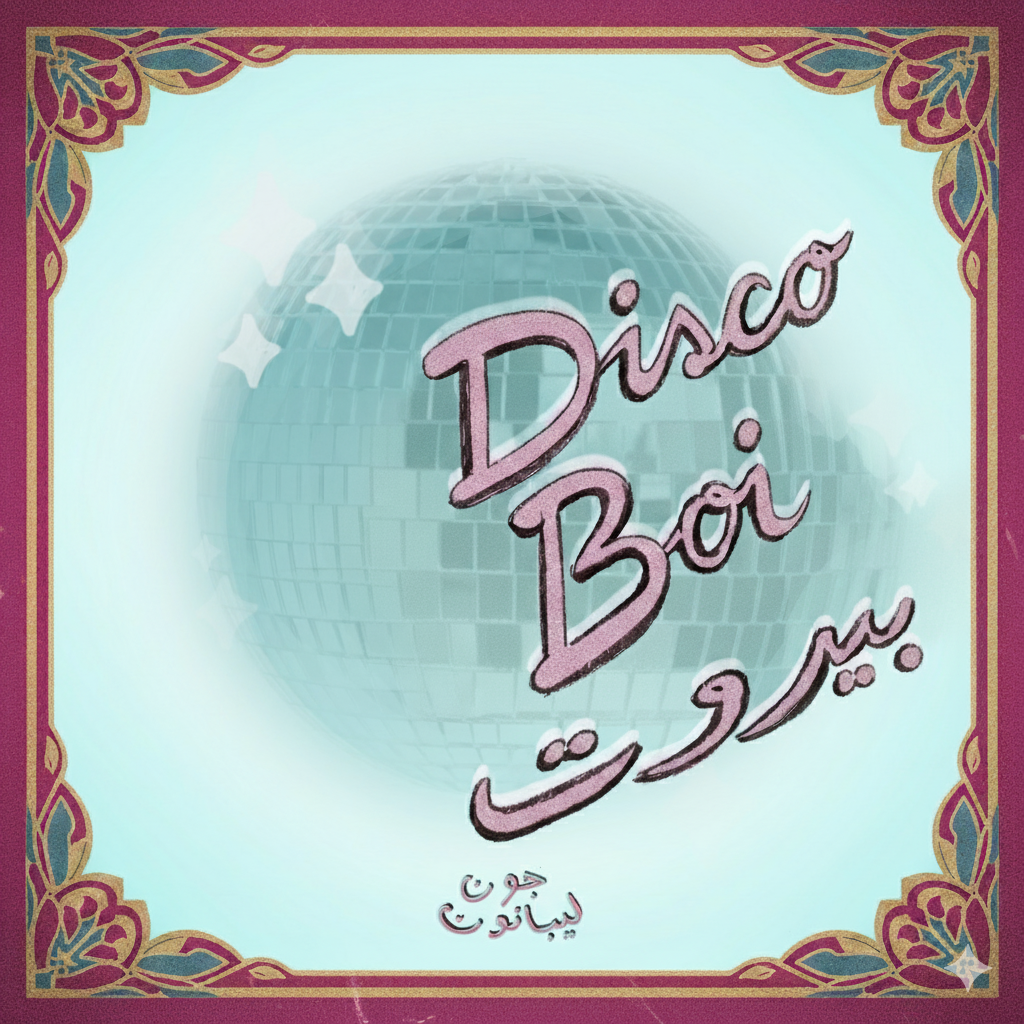
Lebanon's decision to accelerate the tempo from the original's jazzier languor proves inspired. Where the 2017 composition moved with studied, nocturnal restraint, this iteration pulses with kinetic urgency, as though the intervening years have compressed his emotional timeline. The arrangement, handled largely by Lebanon himself across drums, guitars, and synthesizers, achievers a remarkable density without sacrificing clarity. Matt DeLuccia's bass work provides the track's gravitational center, anchoring the more ephemeral electronic textures that shimmer around Isabelle Malhame's returning vocals.
Malhame's performance deserves particular attention. Her voice carries the warmth that defined the original while adapting to the quickened pace with admirable suppleness. She navigates the bilingual lyrics—penned by Papa Sway, Michel Jeha, and Lebanon—with the ease of someone inhabiting rather than merely performing the material. The Arabic line "Sabiyye mnebeed tghanille wou t3id wou ta3melle harakeit" functions as the song's emotional fulcrum, its repetitive, incantatory quality creating precisely the mesmerizing effect Lebanon describes: a distant voice that draws you inexorably inward.
The production, jointly handled by Lebanon and longtime collaborator Matthew Hatch, reflects the song's thematic preoccupations with dislocation and synthesis. Recording took place across Providence and Boston, with the team incorporating archival material from Alex's studio in Rhode Island—the space where Lebanon first experimented with songwriting after arriving from New York. This archaeological approach to production yields fascinating results. One can occasionally detect the ghostly presence of those earlier sessions, their sonic fingerprints preserved beneath newer layers, creating a palimpsest effect that mirrors the song's conceptual concerns with memory and return.
The track's greatest achievement lies in its refusal of easy categorization. The disco reference point suggested by the title materializes not through slavish genre adherence but as a kind of spectral influence—a groove-oriented foundation that supports rather than dictates the song's direction. The indie sensibilities evident in the arrangement's quirks and textural choices prevent the composition from settling into predictable patterns. When Lebanon cites his grandmother's imagined preference for increased tempo, he reveals the deeply personal calculus governing artistic decisions that might otherwise seem purely aesthetic.
Lebanon performs a delicate cultural balancing act, neither exoticizing his Lebanese heritage nor relegating it to decorative status. The English and Arabic elements coexist without hierarchy, each language claiming equal territory in the song's emotional landscape. This bilingual approach generates productive tensions—the desire and fascination Lebanon articulates find different tonal registers depending on which language carries them forward.
The forthcoming intimate performance at a Beirut music café represents an apt debut venue. "Disco Boi Beirut" rewards close listening, revealing new dimensions with repeated exposure. The track functions simultaneously as personal artifact and universally accessible pop confection, a duality many attempt but few achieve with such assurance.
Lebanon has crafted a song that operates as functional autobiography while transcending its specific origins. The result occupies that rare territory where individual experience becomes a lens rather than a barrier—we understand this voice, this longing, this particular infatuation, yet recognize within it broader patterns of displacement, memory, and the endless human project of locating home. For a reimagined track, "Disco Boi Beirut" sounds remarkably like discovery.