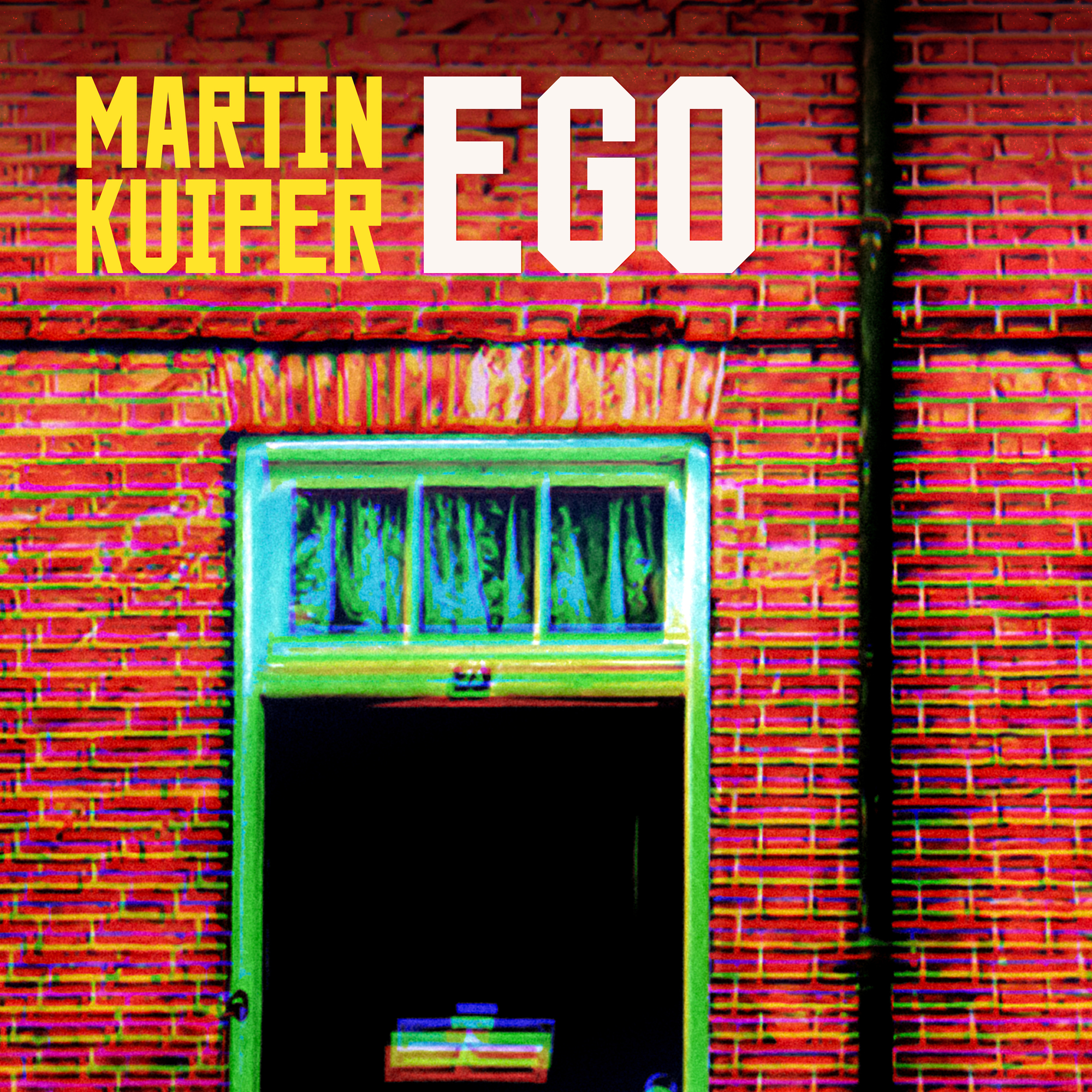
"Ego" announces itself with immediate, unfussy confidence. The production, courtesy of Guido Aalbers working alongside members of Money & The Man, delivers exactly what Kuiper promises: a "kick ass rock song" that eschews the current fashion for overproduced sheen in favor of something more direct and visceral. The arrangement builds around a muscular guitar framework that recalls the straightforward power of classic rock without slavishly imitating any particular era. This is contemporary rock music made by people who understand that the genre's essential appeal lies in its directness and emotional punch.
The infectious chorus Kuiper mentions proves to be the song's strongest asset. "You need to be on a diet / Of ego killing eye drops / To cure your 1d vision"—it's an unlikely set of lyrics to lodge themselves in your consciousness, yet they do precisely that. The metaphor of "ego killing eye drops" manages to be both absurd and pointed, a pharmaceutical solution to a spiritual malady. It's the kind of phrase that rewards repeated listening, revealing new layers of meaning as you consider how we might chemically treat what is fundamentally a problem of character and perspective.
What prevents "Ego" from descending into tedious finger-wagging is Kuiper's willingness to implicate himself in the critique. His admission that narrow-mindedness "happens to me too sometimes" bleeds through into the songwriting itself. The verses paint a portrait of someone "raised as the center of attention" for whom "second fiddle feels like detention," but the perspective shifts throughout, suggesting a narrator who recognizes these patterns in himself as much as in others. The "prison of modesty" referenced both in the song and the album title becomes a double-edged metaphor—modesty as both liberating discipline and constraining jail cell.
The lyrical terrain Kuiper navigates here—the dangers of excessive self-regard, the paradox of love without boundaries breeding dysfunction—hardly represents uncharted territory in rock music. Yet his approach feels refreshingly free of cynicism. The repeated refrain "love is all around me / but don't keep waiting for the love / keep it all inside now" captures a particularly modern anxiety: the awareness that emotional sustenance surrounds us even as we fail to internalize or accept it. It's a diagnosis of our cultural moment delivered with enough ambiguity to avoid sounding prescriptive.
The promised "killer solo" does its job competently without overstaying its welcome, a reminder that Kuiper's collaborators understand the grammar of rock songcraft. Henk Wesselink and Ymte Koekkoek contribute playing that serves the song rather than showing off, while the rhythm section provides the necessary heft without overwhelming the melody.
Kuiper's late entry into recorded music might have resulted in over-earnestness or desperate relevance-seeking. Instead, "Ego" suggests an artist comfortable enough in his own skin to write about discomfort, experienced enough to avoid the pitfalls of self-righteousness, and savvy enough to wrap his observations in a genuinely memorable rock song. If this represents the opening salvo from *Prison Of Modesty*, the full album promises to be worth the wait. One suspects that spending five decades observing human behavior before committing it to tape has its advantages.