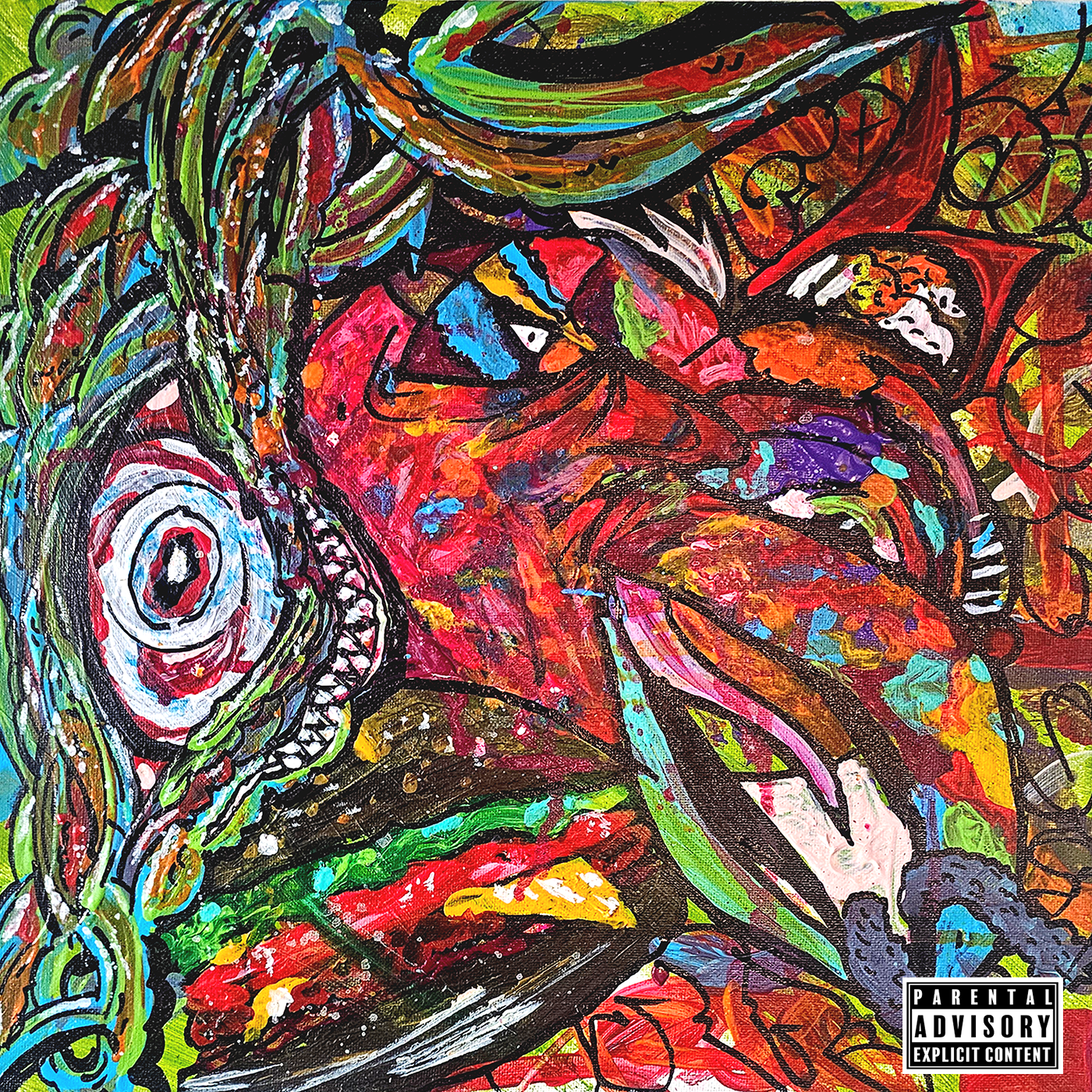
Released on November 18th through Bucket Fresh Studios, Side A of this two-part EP arrives with KABOOM as sole featured artist, establishing a blueprint that favors spartan arrangements and unvarnished truth-telling over the genre's contemporary preference for maximalism. The production choices alone announce MUFASA RKG's intentions: where peers chase streaming numbers through algorithmic predictability, these seven tracks embrace the kind of austere minimalism that recalls Roc Marciano's producer-as-auteur approach, albeit filtered through a more experimental sensibility.
"GIBLETS" exemplifies this aesthetic most dramatically. The absence of drums—that fundamental heartbeat of hip-hop—becomes not a gimmick but a statement of intent. What remains occupies a liminal space between melody and atmosphere, a fog bank through which MUFASA RKG's verses cut with surgical precision. The effect proves hypnotic, demanding repeated listens to unpack the layered social commentary embedded within what initially presents as abstract ambience.
"PRICE RITE," meanwhile, demonstrates the artist's range, pivoting toward classic boom bap without abandoning the EP's overarching conceptual framework. Here, the marriage of traditional hip-hop fundamentals with MUFASA RKG's distinctive worldview suggests an artist equally comfortable excavating the past and interrogating the present. The track title itself—evoking the discount supermarket chain—hints at the economic realities underlying much of the EP's thematic concerns.
The project's positioning as art-based influence proves more than promotional rhetoric. MUFASA RKG has explicitly tied individual tracks to visual art pieces, creating a multimedia conversation about authenticity and appropriation. This approach recalls hip-hop's foundational connections to graffiti and visual culture while simultaneously interrogating who profits from such associations. The "culture vultures" reference—a pointed critique of those who extract value from hip-hop whilst contributing nothing substantive—animates the entire endeavor.
Context matters considerably here. The Cocoa Butter trilogy, we're told, emerged from romantic dissolution and atmospheric experimentation. "Vulture Recipes" represents something different: a return to clarity after electronic abstraction, a clearing of the decks. That MUFASA RKG recorded and mixed the entire project using FL Studio at Bucket Fresh Studios—essentially a home setup—reinforces the EP's DIY ethos and skepticism toward industry machinery.
The announced Side B, scheduled for December and featuring NARDESIGNS and guest Ron G, promises to expand the sonic palette whilst maintaining thematic coherence. One anticipates how these additional voices will interact with the established aesthetic framework, whether they'll provide counterpoint or amplification.
Comparisons to MF DOOM, Aesop Rock, and Westside Gunn feel apt without being limiting. Like those artists, MUFASA RKG understands that underground hip-hop's power derives from its refusal to compromise, its willingness to privilege artistic vision over commercial considerations. Yet "Vulture Recipes" carves its own niche through its particular blend of social observation and sonic experimentation.
The EP's greatest strength may be its self-awareness. MUFASA RKG recognizes the irony inherent in critiquing oversaturation through new music, addressing this tension head-on rather than ignoring it. The result feels less like addition to the pile and more like necessary intervention—a reminder that hip-hop retains capacity for genuine expression when approached with proper intent and execution.
"Vulture Recipes" demands patience and rewards attention. This is music for late nights and introspection, for listeners willing to meet MUFASA RKG halfway. Not every experiment succeeds entirely, but the ambition itself merits respect. As cultural commentary wrapped in uncompromising soundscapes, it announces MUFASA RKG as an artist worth watching closely as the project reaches completion.