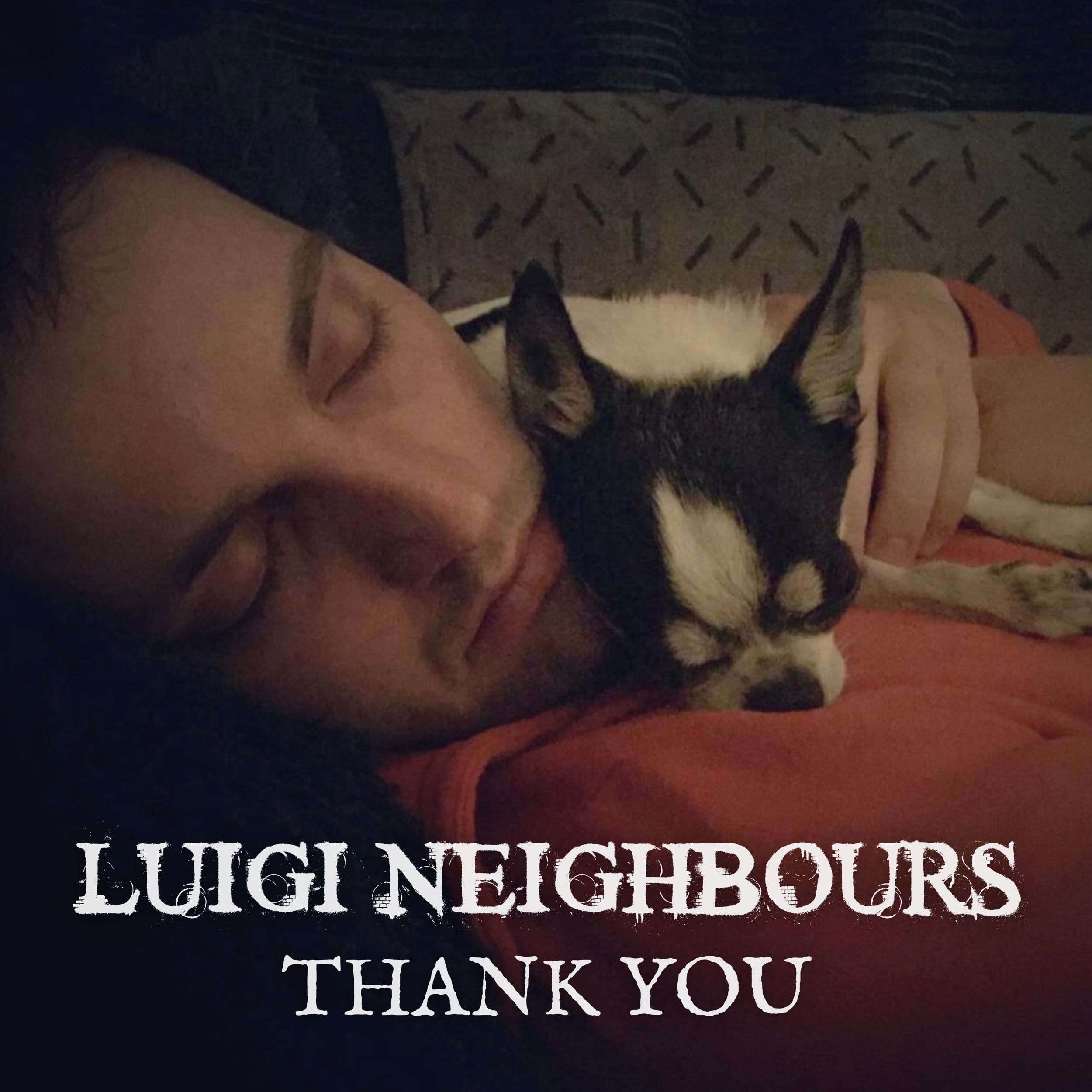
Pet loss songs occupy a peculiar space in popular music – too often mawkish, occasionally exploitative, rarely achieving the emotional honesty required to justify their existence. Neighbours sidesteps these pitfalls entirely. "Thank You" works precisely because it refuses to indulge in sentimentality while simultaneously embracing vulnerability. The seven years he shared with Chico become a lens through which to examine the nature of love itself, that most elusive and essential of human experiences, extended here to encompass the soul-bonds we form across species.
The sonic landscape Neighbours inhabits will feel familiar to anyone who came of age during the early 2000s alternative rock boom. His cinematic approach recalls the earnest grandeur of Lifehouse, the weathered melancholy of the Goo Goo Dolls, the muscular emotionalism of Daughtry. These are not superficial comparisons – Neighbours clearly understands the grammar of this particular musical dialect, the way a well-placed guitar line can suggest years of unspoken feeling, how a vocal delivery can convey both strength and fragility simultaneously.
Yet to simply catalogue influences would be to miss what makes "Thank You" compelling. Neighbours brings his own sensibility to bear, one rooted in what he describes as a need to "get all my emotions out." This raw directness animates the track, preventing it from collapsing into mere nostalgia or generic tribute. The production supports rather than smothers the song's emotional core, allowing space for the silences that follow loss – those moments when absence becomes palpable, when memory turns both comfort and wound.
The broader achievement of "Thank You" lies in its universality. While rooted in the specifics of one man's relationship with his companion animal, the song transcends its immediate subject matter. Neighbours has tapped into something fundamental about the human condition: our capacity to form profound attachments, our inevitable confrontation with mortality, and our desperate need to honor what we've lost while somehow continuing forward. The silence he references – that awful quiet that descends after death – will resonate with anyone who has lost someone they loved, regardless of species.
The lyrical approach favours emotional truth over clever wordplay, which serves the material well. Neighbours isn't interested in obfuscation or metaphorical distance. His declaration of gratitude, his acknowledgment of pain, his attempt to reconcile the beautiful with the agonising – these feel earned rather than performed. When he suggests that "some goodbyes are really love lasting in a different form," it could easily tip into platitude, yet somehow the sentiment lands with weight and sincerity.
What "Thank You" ultimately offers is permission – permission to grieve fully, to acknowledge the profound impact animals have on our lives, to recognize that love doesn't diminish simply because it crosses the human-animal boundary. Neighbours has created a space for those memories he describes as eternal, those connections that survive death by transforming into something equally powerful if less tangible.
The single arrives at a moment when authenticity in popular music often feels performative, when vulnerability can seem calculated. "Thank You" cuts through that noise with its unadorned emotional directness. Luigi Neighbours has given us not just a tribute to a beloved companion, but a genuine meditation on love, loss, and the mysterious ways we carry the dead with us into our living days.