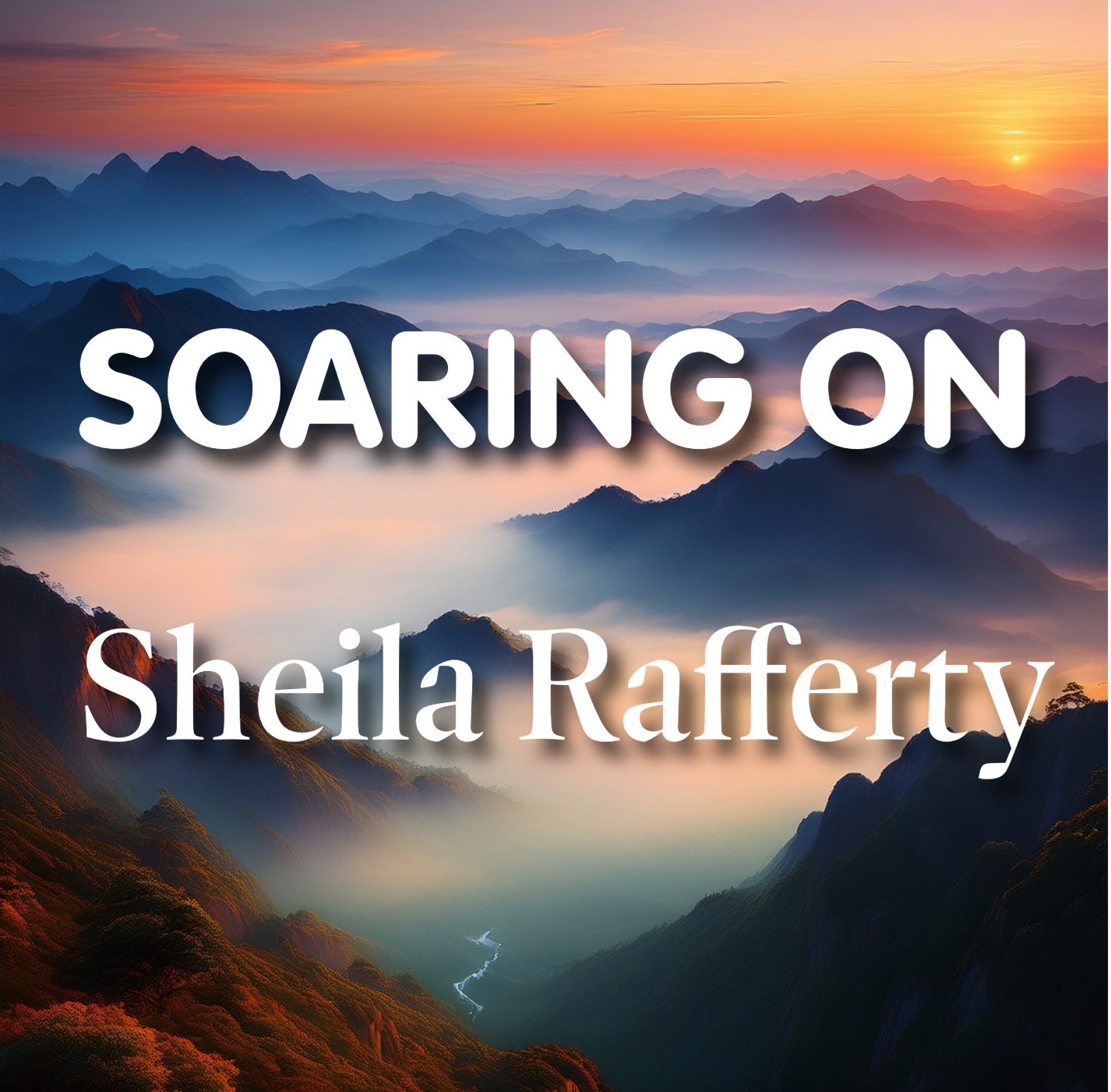
Rafferty, a Leeds-based synthesist, has crafted a piece that refuses easy categorisation. The ethereal quality of her synth work recalls the pioneering ambient explorations of the late 1970s, yet the execution feels decidedly contemporary—unencumbered by nostalgic affectation or the tendency toward pastiche that plagues much of today's electronic music. Her approach to the instrument demonstrates a mature understanding of space and restraint; the synth lines don't merely occupy the sonic field but seem to drift across it like weather patterns shifting over moorland, patient and inexorable.
The inclusion of Ian Rafferty's congas and percussion introduces a fascinating counterpoint to what might otherwise risk becoming too diffuse. His rhythmic sensibility grounds the composition without tethering it, providing just enough pulse to guide the listener through Sheila's more abstract territories. The interplay between the cool, measured groove of the congas and the warm wash of synthesiser creates a tension that feels entirely deliberate—this is music that understands the value of contrast, of allowing elements to exist in dialogue rather than simple harmony.
The decision to record on location proves crucial to the piece's success. Field recording has become something of a fetishised practice in certain quarters of experimental music, often yielding results that feel more like exercises in concept than genuine artistic achievement. Rafferty avoids this pitfall entirely. The moors don't intrude upon "Soaring On" as captured ambient sound or obvious environmental texture; rather, the landscape has been internalised and translated into musical gesture. The open skies and rolling terrain find their analogue in the composition's unhurried development and generous use of reverb and delay, which suggest vast horizontal expanses rather than vertical grandeur.
One might draw comparisons to the work of certain British electronic pioneers, yet Rafferty herself insists the piece emerged without conscious influence—a claim that, however difficult to fully credit in our hyper-connected age, at least speaks to an artist uninterested in signposting her references. This independence of vision serves the music well. "Soaring On" doesn't announce itself as part of any particular tradition or movement; it simply exists, content to be judged on its own considerable merits.
The production, achieved through relatively modest means, possesses a warmth often absent from more polished electronic fare. GarageBand's limitations become virtues here, forcing creative solutions that lend the recording an appealing intimacy. This is music that invites close listening yet never demands it—equally effective as contemplative foreground or as atmospheric accompaniment to solitary thought.
For those weary of the hyperactive maximalism that characterises much contemporary electronic music, Rafferty's minimalist approach offers genuine respite. "Soaring On" trusts in the power of sustained tones and gradual evolution, allowing ideas to unfold at their own pace. The result feels generous rather than sparse, immersive rather than austere.
Whether this single heralds further explorations in location-based composition or represents a singular experiment remains to be seen. For now, "Soaring On" stands as a quietly impressive achievement—proof that adventurous electronic music need not sacrifice accessibility, and that the British landscape continues to inspire work of genuine substance. Rafferty has created something both transportive and grounded, a paradox the North Yorkshire Moors themselves would surely recognise.