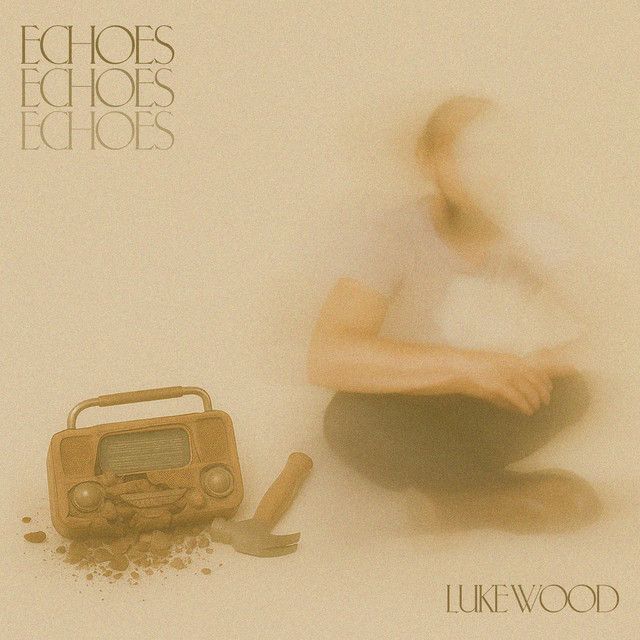
Across five tracks, Wood navigates the terrain between Americana's weathered storytelling and indie rock's unfussy directness. The title track establishes the collection's emotional coordinates immediately—a meditation on memory and its persistent afterimages that builds from sparse verses into a chorus that lingers exactly as its subject matter suggests. Wood's vocal delivery here strikes a careful balance: intimate without being precious, earnest without tipping into sentimentality. It's the work of a songwriter who understands that restraint often carries more weight than histrionics.
"Ghost in Time" shifts the perspective inward, examining identity through the lens of impermanence. The arrangement allows space for contemplation, with instruments entering and receding like breath. Wood's lyricism demonstrates a maturity that belies the relative youth of his recording career—these are not the broad strokes of a novice attempting profundity, but rather the specific observations of someone who has done the necessary work of living before writing about it.
The EP's centre is occupied by "Price Tag," which introduces a slightly brighter sonic palette without abandoning the collection's cohesive atmosphere. Here, Wood explores the tension between authenticity and commerce—a theme particularly resonant for an artist navigating Nashville's increasingly complex musical ecosystem. The song avoids easy answers, instead offering questions wrapped in melody.
"No Mercy" provides the record's most muscular moment, injecting a rawness that prevents *Echoes* from drifting into background listening territory. There's genuine grit in Wood's vocal performance, matched by arrangements that finally allow the band to stretch out and push against the songs' boundaries. It's a necessary pivot that demonstrates Wood's range as a performer and suggests interesting possibilities for future releases.
The closing track, "Choke it Down," returns to the introspective mode but with accumulated weight. By this point, Wood has earned the listener's trust, and the final song plays like a reckoning—honest about difficulty without wallowing, acknowledging struggle without performing it for sympathy. The production throughout, courtesy of RCSQ Records, deserves mention for its restraint. These songs breathe naturally, free from the compression and over-treatment that often plagues contemporary roots-adjacent music.
Wood's emergence as part of what RCSQ Records terms the "Eclectic Roots Groove" movement reflects a broader conversation happening across American roots music about genre boundaries and their usefulness—or lack thereof. While such branding exercises can feel forced, Wood's actual music justifies the terminology. These songs genuinely hybridise folk's narrative focus, rock's directness, and Americana's sense of place without feeling like a calculated exercise in genre fusion.
The Blue House Band, mentioned in Wood's press materials as his frequent collaborators, deserves credit for their sympathetic support. The musicianship across *Echoes* never draws undue attention to itself, instead serving the songs with the kind of intelligence that only comes from players who understand the difference between technique and taste.
*Echoes* confirms Luke Wood as an artist worth following. He writes with clarity, performs with conviction, and demonstrates the kind of measured growth that suggests longevity rather than flash. This is thoughtful, well-crafted music that rewards attention—a collection that earns its title by leaving impressions that don't quickly fade.