Lian's lineage is clear enough from the opening bars of "We, as our home." The fingerprints of Philip Glass and Nils Frahm are evident in the cyclical patterns and textural restraint, yet this feels neither derivative nor overly reverential. The piece unfolds with patient insistence, its repeating motifs suggesting the daily rituals that sustain long-distance love. Where lesser composers might have reached for grand romantic gestures, Lian trusts the material to carry its own weight. The result speaks more truthfully about devotion than any amount of melodrama could manage.
"Healing" follows with remarkable tonal shift, though the architectural principles remain consistent. Written during a period of convalescence—whose, we are not told, and it scarcely matters—the composition breathes with the rhythm of recuperation itself. Lian understands that healing is not linear, and his phrases circle back, pause, begin again. The influence of Max Richter's emotionally intelligent minimalism surfaces here, but Lian demonstrates an admirable willingness to let silence do its work. The spaces between notes carry as much meaning as the notes themselves.
The EP's centre of gravity arrives with "Harrowing the Darkness," a title that promises confrontation and delivers it through unexpectedly kinetic means. After two pieces of meditative stillness, Lian's left hand drives forward with percussive urgency while the right traces patterns that seem to spiral upward and away. This is not the darkness of Gothic melodrama but something more immediate and recognisable: the kind of fear that arrives at three in the morning, when thoughts turn predatory. The piece works because Lian refuses to offer easy resolution. The darkness remains; what changes is our movement through it.
"A Breakfast with the Ghosts I'm Afraid Of" might risk whimsy with such a title, but the music itself possesses considerable gravitas tempered by precisely the lightness the composer intends. Here, Lian's classical training shows most clearly—not in showiness, but in the sophisticated harmonic movement underlying what initially sounds like simple melody. The ghosts in question reveal themselves gradually, shadows that lengthen and recede as the piece progresses. One thinks of Peter Gabriel's willingness to explore psychological complexity without sacrificing accessibility, a balance Lian navigates with comparable skill.
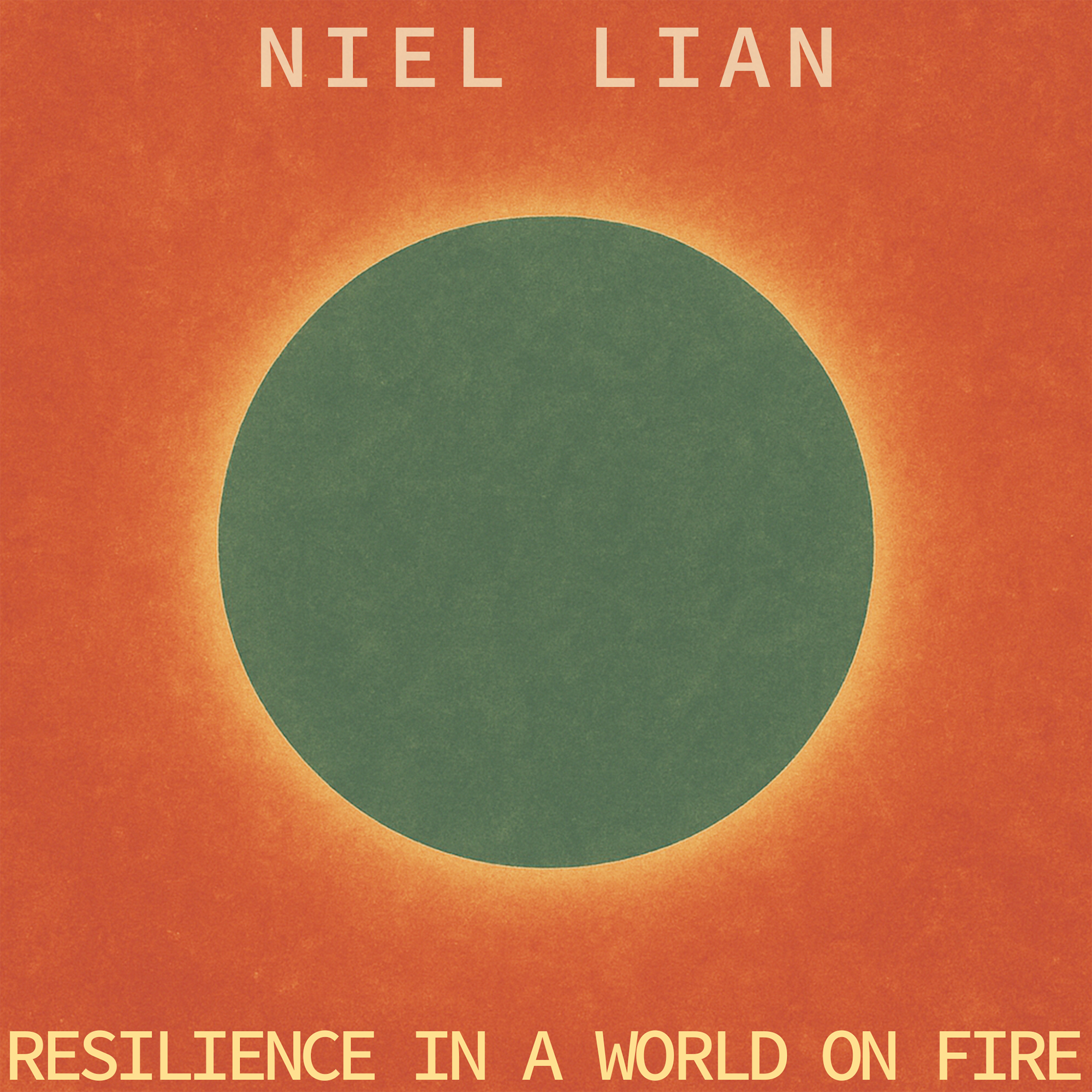
The title track concludes matters with what the press materials describe as "fluid treatments of time," which proves an apt description for music that seems to exist in its own temporal dimension. Motifs from earlier pieces surface and dissolve, not quite quotations but echoes heard through water. Lian has absorbed Wim Mertens's lessons about how repetition can create a kind of ecstatic suspension, though his application remains distinctly personal. The fragile hope mentioned in his artist statement manifests not as triumphant resolution but as continued presence—the decision to remain engaged despite uncertainty.
What Lian has achieved here is no small thing: a debut that establishes both technical command and emotional authenticity without sacrificing either to the other. The solo piano format, so often a vehicle for either academic exercise or New Age vapidity, becomes in his hands a means of articulating complex interior states with clarity and purpose. This is music that trusts its audience to meet it halfway, to sit with discomfort and uncertainty, to recognise that resilience looks nothing like invulnerability.
The world may indeed be on fire, but Lian's response is neither despair nor false optimism. Instead, he offers something more valuable: attention, presence, and the quiet insistence that beauty and meaning remain possible even when fragile. For a debut release, this represents a remarkably mature artistic statement.