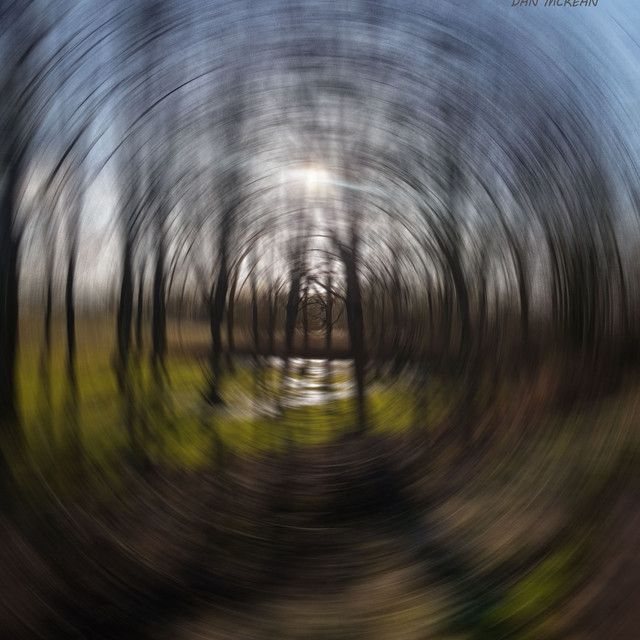
McKean's decision to transpose Nick Drake's beloved alternate tunings onto electric guitar creates an uncanny sonic palette that wrong-foots expectation from the opening bars. Where Drake's fingerpicked patterns bloomed with woody, intimate warmth, McKean's electric interpretation adds a glassy, almost crystalline quality – the notes ring out with peculiar clarity, lending the proceedings a dreamlike atmosphere that perfectly complements the song's narrative of romantic dissolution and dawning awareness.
This ability to bridge seemingly disparate influences speaks to McKean's broader artistic vision. His citation of Elliott Smith and Randy Newman alongside The Beatles suggests a songwriter unafraid to embrace vulnerability while maintaining melodic sophistication. One can hear traces of Smith's delicate fingerpicking technique reimagined through McKean's electric prism, while Newman's narrative directness informs the lyrical approach – personal without being confessional, specific without becoming solipsistic.
The arrangement unfolds with architectural precision. Beginning with that deceptive fingerstyle foundation, McKean gradually constructs layers of instrumentation that never overwhelm but constantly enrich. Those pad synths mentioned in the press materials hover at the periphery like morning mist, present without announcing themselves, adding dimension without cluttering the soundstage. It's mixing that demonstrates real maturity – knowing when restraint serves the composition better than bombast. Here one might detect echoes of Khruangbin's spacious production aesthetic, that understanding of how silence and subtlety can amplify rather than diminish impact.
Rhythmically, the track adopts a languid shuffle that owes debts to Steely Dan's sophisticated grooves, though stripped of that band's jazz-fusion complexity. This slower pulse gives the song room to breathe, allowing the listener to inhabit its emotional landscape rather than merely passing through. The tempo feels inevitable rather than imposed, as though the song could move no other way. It's the kind of unhurried confidence one associates with Leon Bridges' best work – that refusal to rush emotion for the sake of contemporary attention spans.
Where McKean truly distinguishes himself, however, lies in his approach to vocal harmony. The Beach Boys and Crosby, Stills & Nash hover as obvious reference points, yet McKean avoids the trap of simple pastiche. His harmonies possess their own character – perhaps less euphoric than Brian Wilson's choirboy perfection, more earthbound than CSN's canyon-dwelling reveries. They suggest influence absorbed and then genuinely transformed rather than merely replicated. The Beatles' influence manifests not in specific sonic fingerprints but in that quintessentially Fab Four quality: the sense that pop craftsmanship and artistic ambition need not be opposing forces.
The lyrical content tackles well-worn territory – the painful recognition that a relationship has run its course, complicated by the revelation of a third party – but McKean handles this material with admirable directness. Rather than drowning in abstraction or cliché, he allows the instrumental textures to carry much of the emotional weight, trusting his arrangement to communicate what words might fumble. This restraint recalls Elliott Smith's greatest gift: understanding that sometimes the music must say what the lyrics cannot.
Recording the entire enterprise at home could have resulted in the thin, apologetic sound that plagues many DIY productions. Instead, McKean demonstrates that limitations of space and equipment need not constrain artistic vision. Each element occupies its proper place in the mix, from the shimmering guitar tones to the subtle electronic embellishments, suggesting countless hours spent refining and adjusting until every component served the whole. As both performer and producer, McKean reveals an instinct for when to add and when to subtract – a surprisingly rare quality among self-produced artists who often fall victim to maximalist tendencies.
The track's power accumulates gradually. Initial listens might register charm without fully revealing the craft beneath; subsequent spins unveil the careful thought behind every musical decision. This quality – of rewarding sustained attention rather than demanding immediate capitulation – marks McKean as an artist working against the grain of algorithmic consumption, trusting that patient listeners still exist.
"Didn't Know About Andy" ultimately functions as both a calling card and a promise. It showcases technical facility married to genuine emotional intelligence, ambition tempered by taste. Whether McKean can sustain this level of craft across a full album remains to be seen, but this single suggests an artist worth watching – someone genuinely interested in how songs work, how they can be built component by component into structures that resonate beyond their constituent parts. Oxford has given us another thoughtful voice, and on this evidence, one well worth hearing.