The opening salvo of "La Tierra Drift" announces the shift immediately. Vocalist Christopher Goett sings of swapping "urban murmurs and side-eyes for southern bound birdsong and budding cones of piñon," and you believe him. The guitar work cascades like water over high desert rock formations, reverb-drenched and shimmering with that particular quality of light you only find at elevation. The rhythm section—Donaldson's melodic bass threading through Ivey's propulsive drumming—provides the kind of hypnotic foundation that early shoegaze bands built their cathedrals upon. This is music that understands space, both geographical and sonic.
"Ultra Azul" pushes further into psychedelic territory, its phase-shifted guitars and analog delay cascades creating a sense of dislocation that feels appropriate for a band caught between worlds. The track builds from Goett's urgent, cathedral-reverbed vocals into walls of distorted tremolo before dissolving into ambient washes—a trajectory that recalls the best moments of the Brian Jonestown Massacre without simply photocopying Anton Newcombe's playbook.
The album's political heart beats strongest on "Ascension (Towards Sangre Skies)," which addresses contemporary social discord through post-punk urgency rather than didactic lecturing. The song builds from contemplative verses to an anthemic coda about rising "above the tree-line" through collective will, and the metaphor works because Blackout Transmission have actually done it. They've climbed to higher ground, literally and figuratively, and the view has clarified things.
"When the Aspens Turn" demonstrates the band's gift for deceptive simplicity. The refrains feel immediate and accessible, but underneath, layers of jangling guitars processed through vintage amplifiers create the kind of spatial depth that made Slowdive's *Souvlaki* such a landmark. This is sophisticated music masquerading as straightforward rock, and the disguise serves it well.
"Las Estrellas en Alta" grounds its synthesizer washes with modulated guitar work, Ivey's drumming adding rhythmic complexity that filters Neu!'s motorik precision through dream pop sensibility. The mechanical pulses and hazy atmospherics create tension between the organic and electronic, mirroring the album's broader themes of displacement and searching for authentic grounding.
The closing "Kairos" explores the weight of present moments through layered guitars and analog sequencer patterns, Goett's double-tracked vocals floating through tape echo and plate reverb like ghosts in the machine. It's a fitting conclusion to an album concerned with time, place, and the difficulty of being fully present in either.
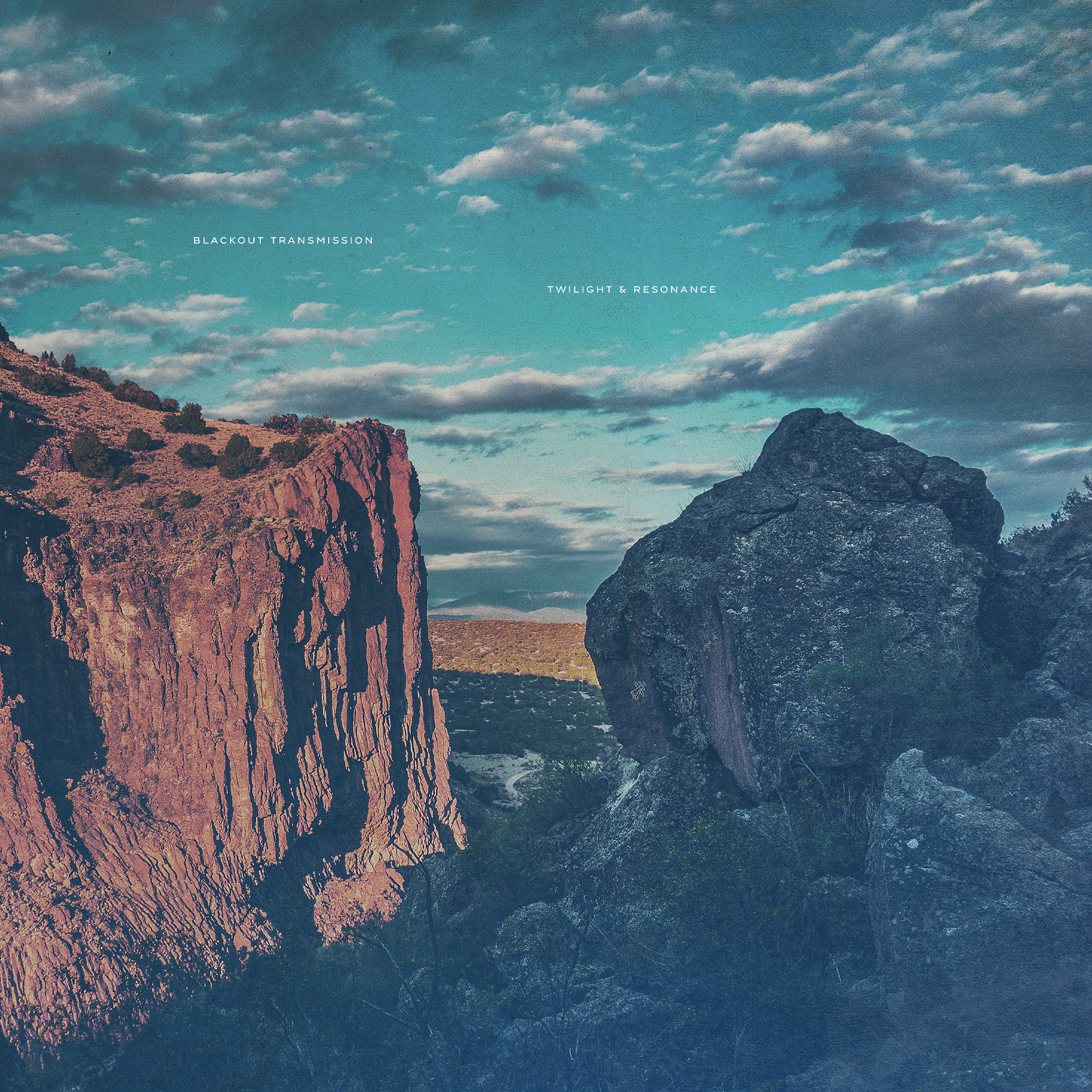
Producer Jeff Holmes deserves credit for capturing the band's expanded sonic palette without sacrificing clarity, while Jonathan Keeton's artwork apparently reflects the album's desert mysticism (the dark purple vinyl edition sounds particularly fetching). At 34 minutes, *Twilight & Resonance* understands the virtue of concision—it makes its points and departs before outstaying its welcome.
Comparisons to Echo & the Bunnymen's oceanic expansiveness and Ride's gossamer guitar interplay are warranted, but Blackout Transmission carve out their own territory here. This is lysergic post-punk shoegaze filtered through high desert air, where the space between notes matters as much as the notes themselves. The band have found something genuine in their geographical shift, and *Twilight & Resonance* documents that discovery with intelligence and feeling.
Not every track reaches the same heights—some moments drift when they should drive—but the album's cohesive narrative rewards repeated listening. Each encounter reveals new textural details and lyrical connections, like hiking the same trail and noticing different plants each time.
For those seeking music that bridges exterior landscapes and interior reflection, *Twilight & Resonance* offers both refuge and revelation.
*Twilight & Resonance is released October 10, 2025 via Etxe Records*