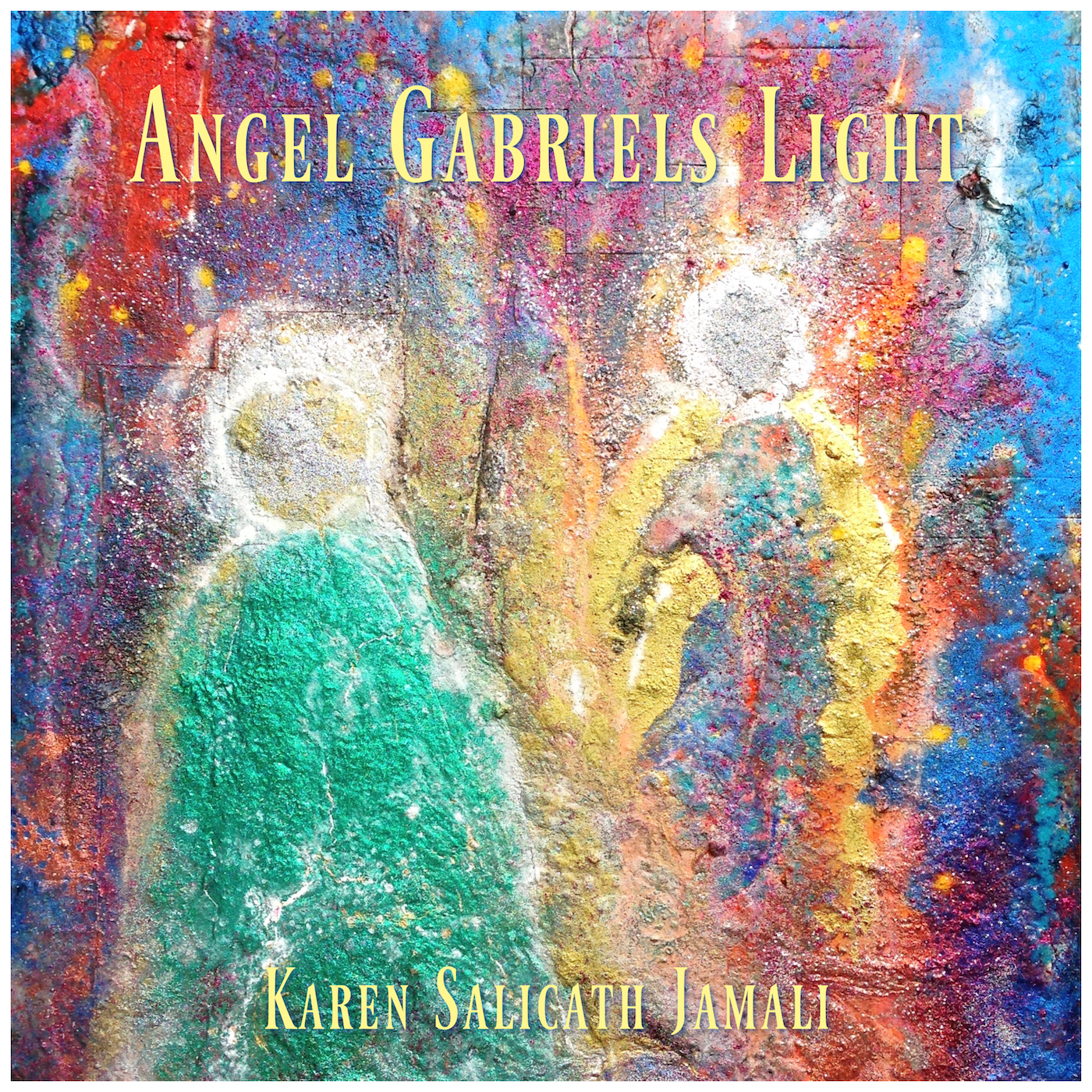
Salicath's piano composition, recorded in what she describes as a single intuitive session following a dream, unfolds with the unhurried certainty of meditation made audible. The piece occupies that liminal space between classical miniature and contemporary ambient work, where harmonic simplicity becomes a virtue rather than limitation. Her melodic lines breathe with natural phrase lengths, avoiding the manufactured spirituality that mars so much music bearing religious titles.
The work's meditative character emerges not through empty repetition, but from Salicath's understanding of musical space as architectural element. She allows the Steinway's natural decay to become compositionally significant, creating moments where absence speaks as eloquently as presence. This restraint suggests an intuitive grasp of temporal proportion that formal training often obscures rather than clarifies.
The accompanying video proves unexpectedly sophisticated in its visual restraint. Rather than resorting to the predictable iconography of angels and celestial light, the filmmakers have created imagery that functions as visual counterpoint to the music's contemplative flow. Soft-focus cinematography and unhurried editing rhythms establish their own temporal logic, neither slavishly following nor arbitrarily contradicting the musical structure.
Most crucially, the video understands that its primary responsibility lies in creating space for the music to inhabit, not overwhelming it with competing narrative demands. The visual language speaks in whispers where lesser efforts might have shouted, allowing Salicath's essentially private musical communication to retain its intimacy even in the public medium of video.
Maria Triana's mastering deserves recognition for capturing both the instrument's woody resonance and the domestic acoustic that suits music of such personal genesis. Her distinguished work with Dylan, Franklin, and Sting has evidently taught her when to step aside and allow an artist's essential character to emerge unvarnished.
The single's ascent to #1 on Hypeddit's classical chart speaks to music's capacity to communicate beyond academic boundaries. While conservatory-trained ears might identify harmonic simplicities that formal study would have complicated, these same moments often carry the work's most affecting passages. Salicath writes not as a pianist-composer in the Rachmaninoff tradition, but as someone for whom the keyboard has become conduit for experiences that resist conventional articulation.
Both single and video function as curious artifacts of our moment: art born from trauma and transcendence, recorded without revision, and presented without apology. The eight-minute duration passes like a held breath, creating contemplative space that our accelerated culture rarely permits. Whether one accepts the spiritual framework Salicath provides, the combined work offers something increasingly precious—the sound and sight of unguarded human expression finding its way to beauty through the simplest possible means.
The biographical circumstances surrounding Salicath's musical awakening—spontaneous compositional ability emerging from a near-death experience in 2012—might easily overshadow critical assessment. Yet "Angel Gabriel's Light," as both audio and visual experience, demands evaluation on purely artistic terms. Here it reveals genuine insight and the peculiar vulnerability that marks all truly personal creative statements.
For all its technical modesty, this single-and-video pairing achieves something that eluded many more sophisticated recent releases: it makes the listener-viewer grateful for the accident of having encountered it, and curious about the larger artistic journey it represents.