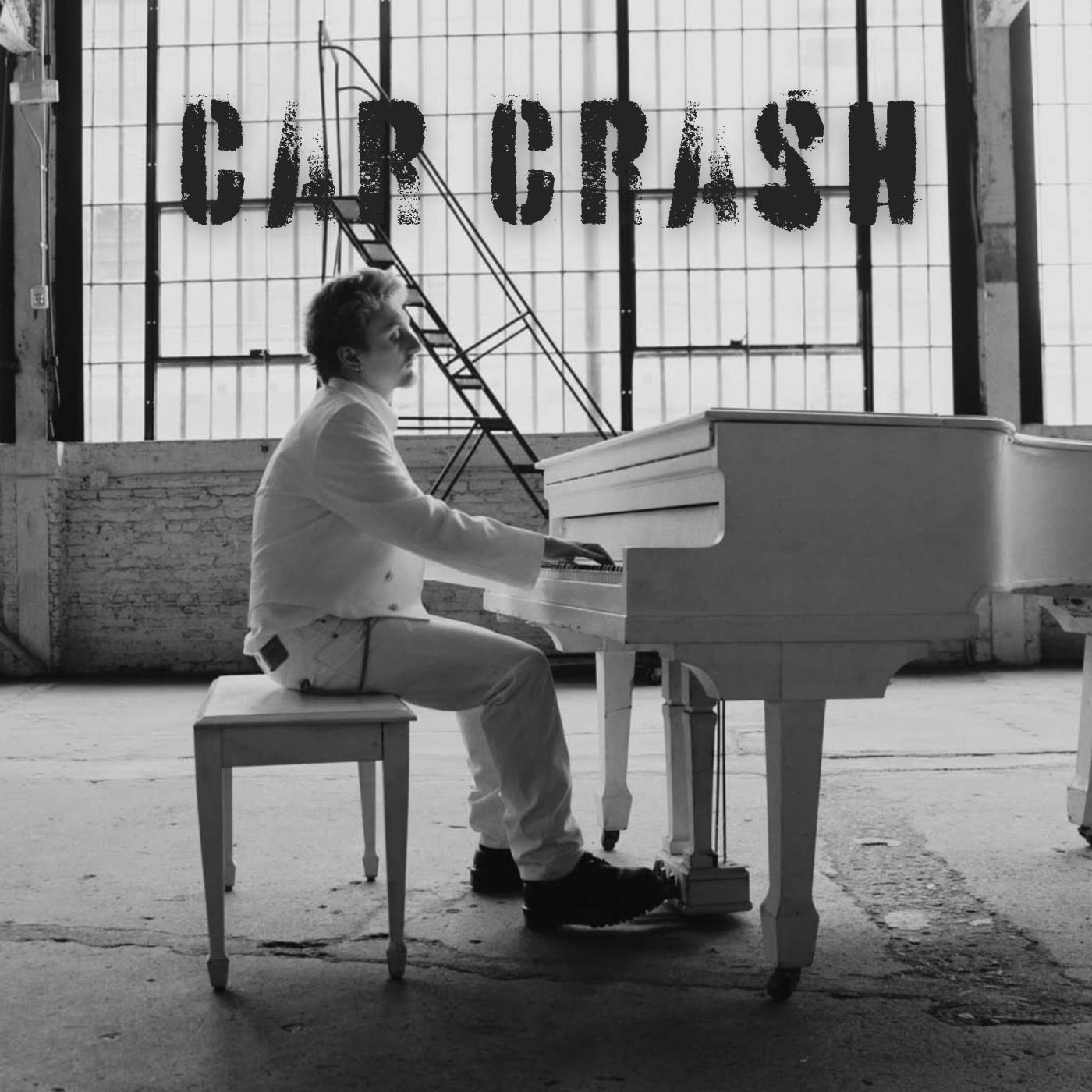
The opening piano figures arrive tentatively, almost apologetically—as if testing whether the ground beneath will hold. When the lower registers join, they don't crash in with theatrical bombast but settle like sediment, providing a foundation that feels both inevitable and fragile. It's the sort of restraint that British producers have long understood: sometimes the most devastating blow is delivered with a feather's touch.
Bell's vocal performance here deserves particular mention. Gone is the throat-shredding intensity we've come to expect; instead, we're presented with something far more unsettling—a voice that grows increasingly breathless, as though the very act of confession is slowly suffocating him. "His delivery grows breathier as the verses unfold, with exhaustion and resignation," capturing that post-trauma numbness with unnerving accuracy.
The metaphorical framework—love as vehicular collision—could have been painfully obvious in lesser hands. Yet Bell navigates these lyrical curves with surprising dexterity, finding fresh angles on familiar territory. The juxtaposition of "Angel wings, heart strings and thoughts of a ring" against the brutal honesty of conflicted emotions reveals a songwriter grappling with the maddening contradictions of intimacy.
Producer Daniel Alcala deserves recognition for understanding that sometimes the most cinematic approach is the most minimal one. Where many would have gilded the lily with orchestral swells or unnecessary percussion, Alcala allows space for silence to do its devastating work. The production feels like watching someone's private breakdown through frosted glass—intimate yet respectfully distant.
Keith Coleman's accompanying video mirrors this aesthetic philosophy perfectly. The "simple, intimate, and touching video directed by Keith Coleman reflects its haunting stillness," offering visual restraint that complements rather than competes with the song's emotional weight.
What's most remarkable about "Car Crash" is how it positions Love Ghost within a broader conversation about vulnerability in contemporary rock. This isn't performative sensitivity or calculated market positioning—it's the sound of a band mature enough to recognise that their quietest moments might be their most powerful.
The track succeeds precisely because it doesn't try to resolve its central tension. Like the best British melancholy—think early Radiohead or The Cure's more introspective moments—"Car Crash" understands that some wounds are meant to be examined rather than healed, that some collisions leave beautiful wreckage worth preserving.
In an era where emotional authenticity is often mistaken for mere confessional exhibitionism, Love Ghost have crafted something genuinely affecting: "sometimes the subtlest songs cut the deepest." It's a song that lingers not because it shouts, but because it whispers—and in that whisper, there's more honest devastation than a dozen overwrought power ballads.
"Car Crash" suggests that Love Ghost's most interesting work may lie not in the spaces where they rage against the machine, but in those quiet moments where they simply acknowledge the wreckage and decide, with characteristic American optimism tempered by hard-earned wisdom, that the debris itself might be worth something after all.
"Car Crash" is available now on all streaming platforms. The music video, directed by Keith Coleman, can be viewed on Love Ghost's official YouTube channel.