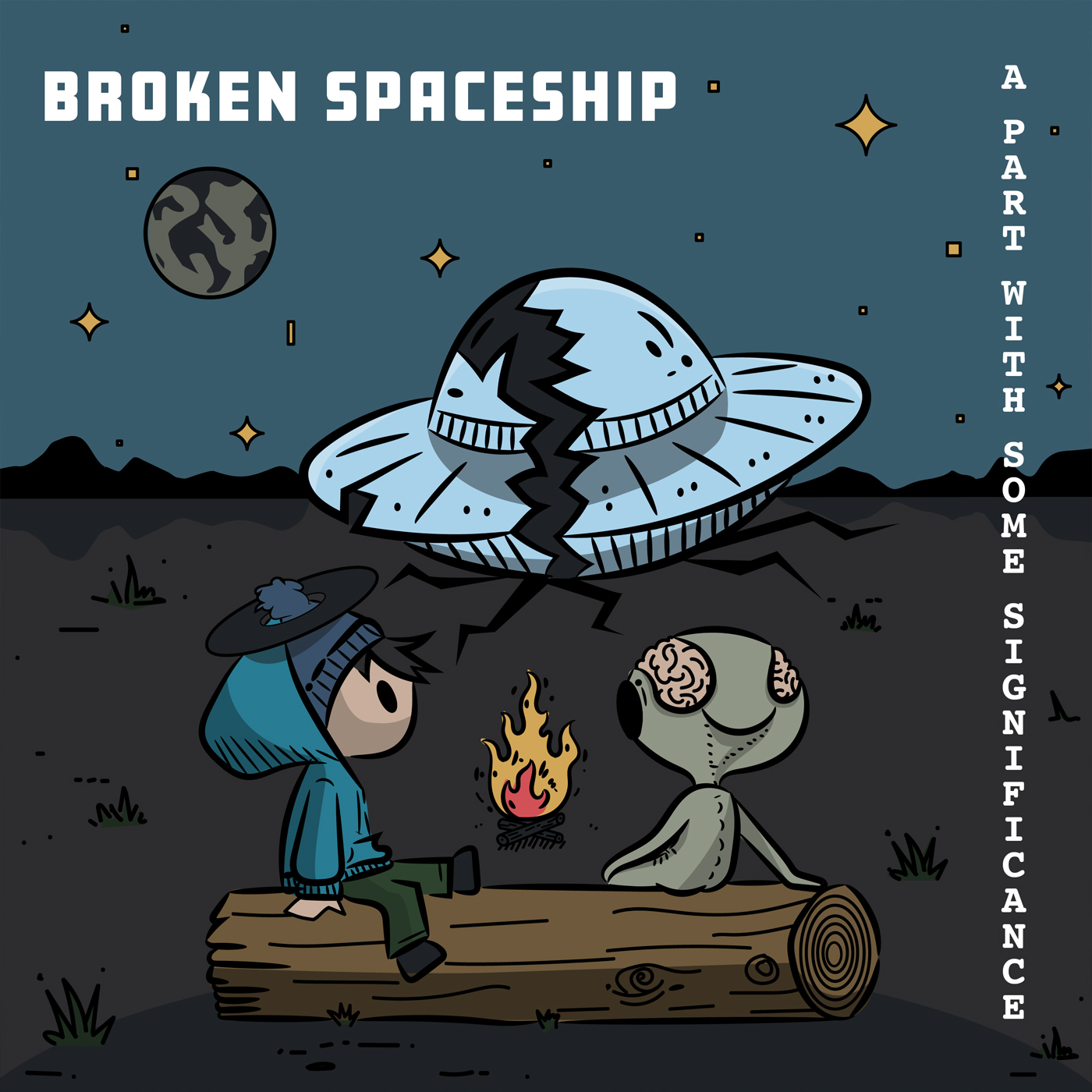
Opening with the stuttering drum machine patterns that immediately recall Public Image Ltd's more experimental moments, the duo establish their territory as somewhere between Suicide's minimalist menace and Death Grips' digital brutalism. Yet where lesser acts might simply throw influences against the wall to see what sticks, Broken Spaceship demonstrate a curator's instinct for arrangement. Ultra_Eko's visual sensibility—clearly informed by those cult directors of the early '90s—translates remarkably well to the sonic realm, creating tracks that unfold like short films rather than traditional songs.
The production bears Joserra's multi-disciplinary fingerprints throughout. His experience across the musical ecosystem—from DJ booth to booking office—manifests as an understanding of how different elements serve the whole. When industrial clatter meets trap-influenced hi-hats on the standout track, it feels inevitable rather than forced. The THC Chameleons' techno heritage surfaces in the low-end programming, while echoes of his Biota project's organic-electronic fusion add textural depth that rewards headphone listening.
Ada Peña's artwork provides the perfect visual companion: geometric abstractions that mirror the music's angular architecture while hinting at the organic elements lurking beneath the digital surface. The imagery captures something essential about the project's aesthetic—simultaneously futuristic and primal, constructed yet intuitive.
The mini-album format serves the material well. At four tracks, there's no filler, no indulgent detours. Each piece feels necessary, contributing to a cohesive statement about music's capacity to absorb and transform influences rather than simply collect them. The brevity forces focus, both from the artists and the listener.
Broken Spaceship have crafted something genuinely distinctive here—a post-genre experiment that never forgets the importance of groove and atmosphere. While the components might be familiar, their recombination feels fresh, pointing toward possibilities rather than dwelling on precedents. The title proves prophetic: this is indeed a part with significance, both for the artists' trajectory and for anyone interested in music's continuing evolution beyond traditional boundaries.