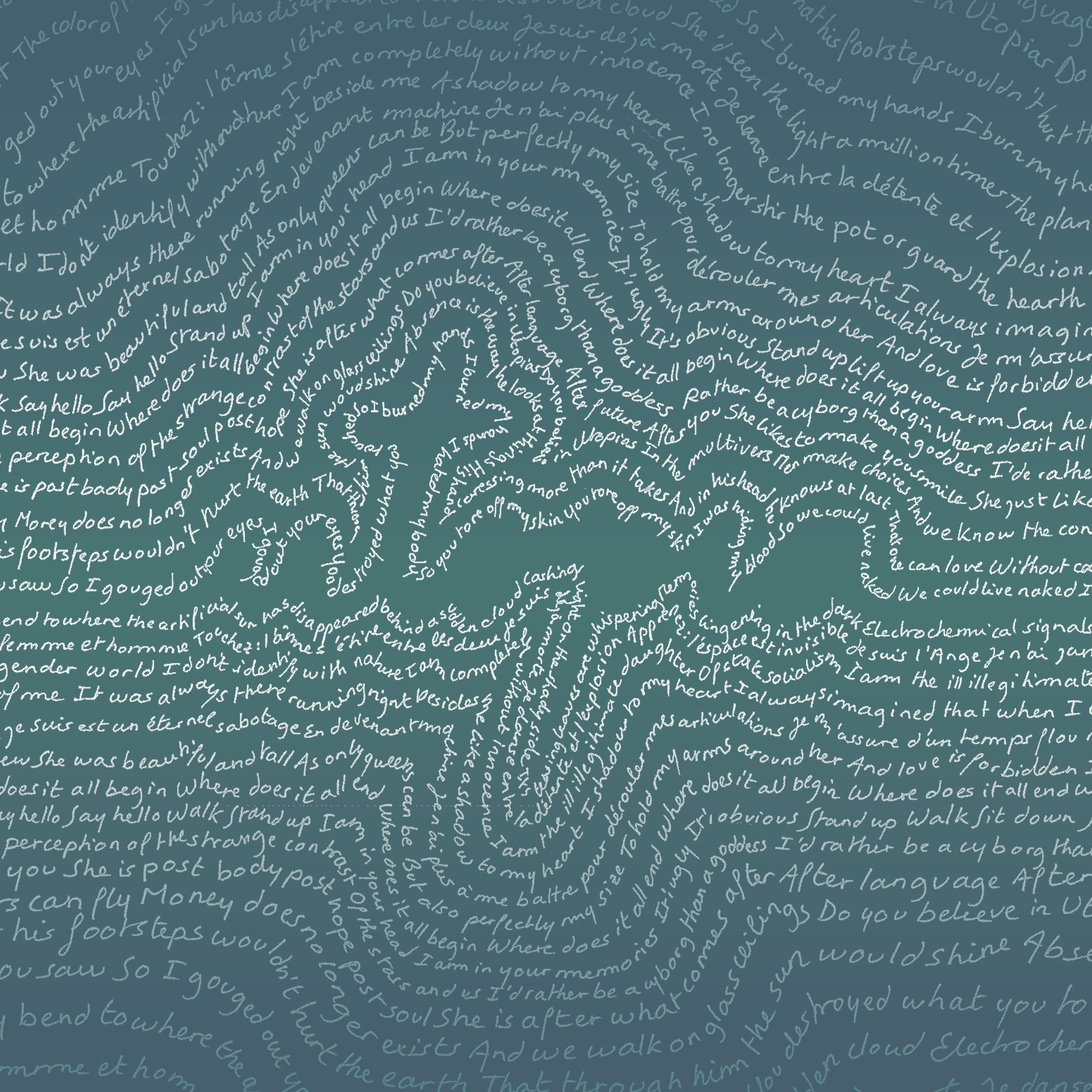
Laurien SHE Snowapple's vocals drift through the mix like smoke through architecture, processed into something between human warmth and digital speculation. When paired with Caro Martin's more earthbound harmonies, the effect is genuinely unsettling—two voices mapping the space between flesh and circuitry. The clarinet, also handled by Snowapple, provides moments of unexpected intimacy that puncture the album's more forbidding electronic surfaces.
The influence of Portishead hovers most obviously over tracks like 'I, Cyborg', where Zlaya Loud's synth arrangements create the kind of claustrophobic beauty that made 'Dummy' such a landmark. Yet the collective's theatrical background prevents them from falling into mere homage. These songs breathe with the rhythm of performance, each arrangement serving a larger narrative about bodies, technology, and the spaces between them.
Matteo Cerboncini and Giulia Pastorino's guitar work operates in careful counterpoint to the electronic elements, never competing but rather finding pockets of melody that feel both ancient and futuristic. The string arrangements—Eleanora Liuzzi's violin and Alessandro Bono's cello—add a chamber music precision that elevates the more experimental passages beyond simple art-rock posturing.
The album's conceptual framework, drawing inspiration from Donna Haraway's Cyborg Manifesto, could easily have collapsed under its own intellectual weight. Instead, Snowapple navigate these ideas with a lightness that makes the philosophical accessible without dumbing it down. 'Calculator' and 'Plants' represent the album's most successful marriage of concept and execution, where Jan Lauwereyns' poetry provides a foundation for some genuinely moving songwriting.
'Utopia'—the kind of record that thinks harder than it feels—it also demonstrates a collective working at the height of their powers. The production, handled by Zlaya Loud, maintains clarity without sacrificing atmosphere, allowing each element to exist in its own sonic space while contributing to a larger whole.
The album's 45-minute runtime feels exactly right, long enough to establish its world without overstaying its welcome. This is music for the long dark nights of late capitalism, offering neither false hope nor cheap despair, but rather something more valuable: the possibility of connection across the growing distances between us all.