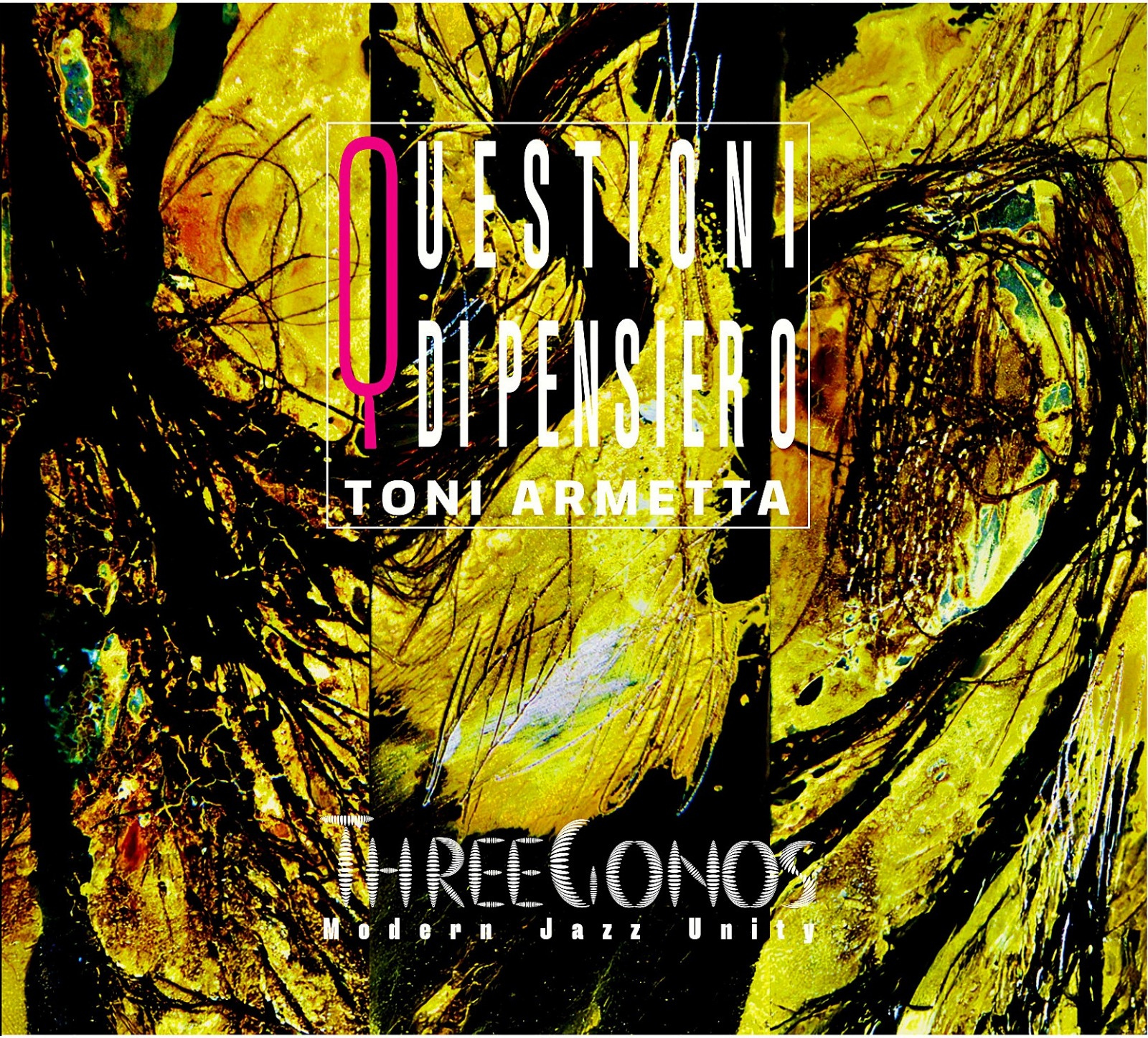
Armetta, the band's bassist and primary composer, has crafted ten compositions that flow between intimate chamber jazz and expansive orchestral textures. The opening title track establishes the album's philosophical bent – "matters of thought" indeed – as Giuseppe Russo's saxophone weaves contemplative lines around Edoardo Petretti's nimble keyboard work. The interplay between instruments feels conversational rather than confrontational, suggesting musicians who have learned to listen as much as they speak.
"Como Si Fuera Una Bulería" immediately shifts the palette, introducing flamenco's rhythmic complexities without resorting to pastiche. Ludovico Piccinini's guitar work here deserves particular attention; his lines carry the ghost of Paco de Lucía while maintaining the harmonic sophistication that modern jazz demands. When Umberto Vitiello's percussion enters, the piece achieves a kind of musical code-switching that feels entirely natural.
The album's middle section proves most adventurous. "Minimal Impact" strips the arrangements to their essence, allowing space for each voice to breathe, while "The Day Passage" builds layers of sound that recall the best of 1970s fusion without falling into that era's occasional excesses. Petretti's accordion on several tracks adds an unexpected folk element that could have felt forced but instead provides textural variety and emotional depth.
Danilo Ombres deserves recognition for his drumming throughout, particularly his tabla work on the closing tracks. His rhythmic concepts anchor the ensemble's more exploratory moments while propelling the groove-based pieces with subtle authority. The guest appearances by Paolo Innarella and Gabriella Aiello integrate seamlessly into the band's established chemistry – no mean feat for musicians joining an already tight unit.
"Walking Through The Black Market" stands as the album's most compelling statement, its title suggesting the kind of cultural exchange that happens in life's margins. Here, Middle Eastern modal concepts brush against jazz harmony while African rhythmic patterns provide the foundation. The piece exemplifies the album's central achievement: demonstrating how jazz can serve as a universal language without losing its distinctive accent.
The production, overseen by Armetta himself alongside Andrea Ruscitto, maintains clarity without sacrificing warmth. Each instrument occupies its own sonic space while contributing to a cohesive whole. Carlo Amato's mastering brings out the subtle dynamics that make repeated listening rewarding.
Threegonos have created music that respects tradition while refusing to be constrained by it. "Questioni di Pensiero" offers genuine musical dialogue between cultures, avoiding both the sterility of academic fusion and the superficiality of world music tourism.
This is jazz for the long haul – music that reveals new details with each encounter while maintaining immediate emotional impact. Armetta and his collaborators have produced a recording that honors both the improvisational spirit of jazz and the rich musical traditions of their various homelands. The questions posed by the album's title find their answers not in words but in the sophisticated interplay between six musicians who have learned to speak a common language while retaining their individual voices.