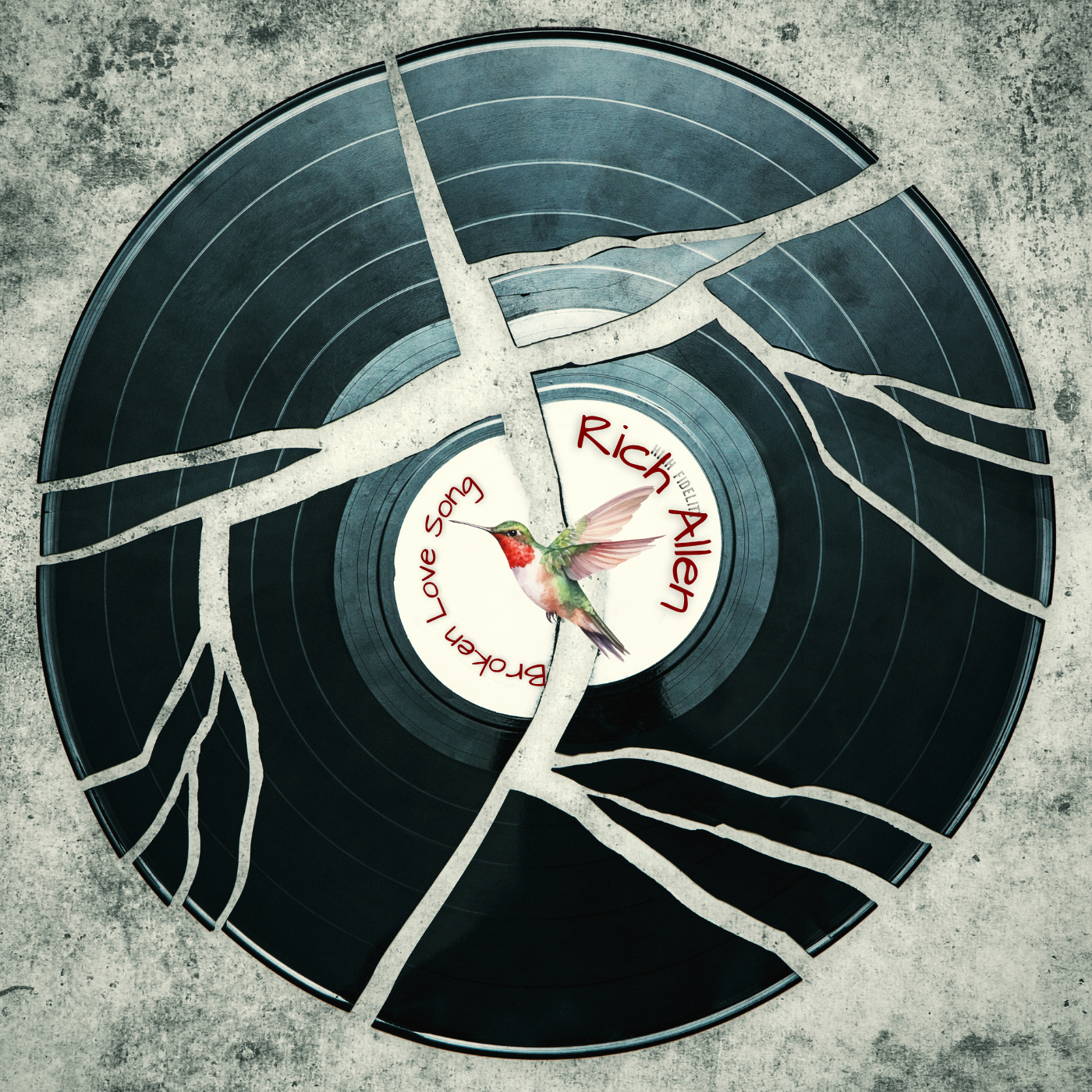
The track opens with a delicate fingerpicked guitar line that immediately establishes the song's vulnerable core. Allen's vocal delivery—weathered yet precise—carries the unmistakable authority of someone who has lived through the very experiences he chronicles. His voice navigates the melody with the careful deliberation of a man walking through the wreckage of his own making, never rushing toward easy catharsis.
Lyrically, Allen demonstrates considerable sophistication, weaving personal narrative with broader existential inquiry. The central metaphor of broken melodies seeking resolution feels earned rather than contrived, avoiding the saccharine sentiment that plagues so much contemporary singer-songwriter material. When he asks whether we are "victims of fate or architects of our redemption," the question lands with genuine weight, anchored by the song's musical restraint.
The production, mercifully, resists the urge to overwhelm. Each instrument occupies its own space in the mix, allowing the song's inherent melancholy to breathe without suffocation. The string arrangement, when it finally arrives, feels like a natural extension of the emotional landscape rather than imposed orchestration.
"Broken Love Song" ultimately rewards repeated listening, revealing new layers of meaning with each encounter. Allen has crafted something rare: a song that thinks deeply without forgetting to feel. For an artist willing to ask difficult questions about love, loss, and the stories we tell ourselves, this represents a considerable achievement.
The final fadeout—a lone guitar echoing into silence—feels like the perfect punctuation mark on a work that understands the power of what remains unspoken. Allen has given us not just a song, but a space for reflection, and that may be the highest compliment one can pay any piece of music.