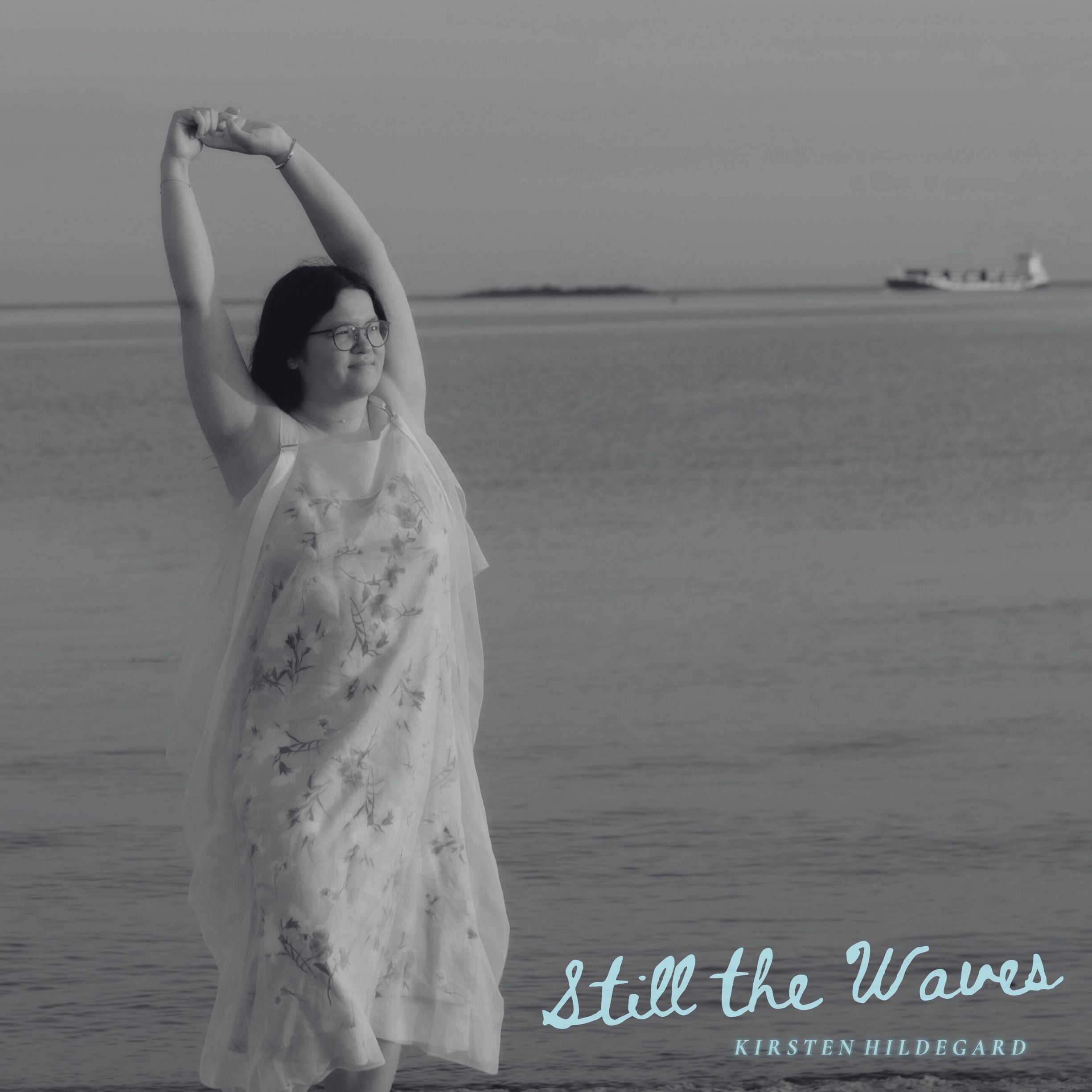
Recording from her Copenhagen apartment with the Baltic lapping at her doorstep, Hildegard has produced a work that feels both geographically specific and spiritually universal. Her collaboration with Argentine producer Nick Honchar—conducted entirely through video calls—yields a sonic landscape that mirrors the song's thematic preoccupations with distance, longing, and the spaces between certainty and doubt.
The track draws its conceptual framework from Kierkegaard's reinterpretation of "Agnete og Havmandet," the 18th-century Danish ballad of a woman who abandons her underwater realm for terrestrial love. Where the original tale focuses on Agnete's choice, Kierkegaard—and by extension, Hildegard—turns the lens toward the Merman, that figure of perpetual yearning trapped between worlds. It's a sophisticated literary conceit that could easily overwhelm a lesser songwriter, but Hildegard possesses the rare gift of making philosophical complexity feel viscerally immediate.
The repetitive structure, borrowed from Taizé chant traditions, transforms the central plea—"Still the waves of my heart oh lord"—into something approaching mantra. Each iteration deepens rather than dulls the impact, creating the kind of hypnotic pull that devotional music has always sought. When Hildegard sings of "sitting on the floor of the sea, sorrowing," the image carries both mythological weight and personal resonance, particularly given the autobiographical shadows cast by her father's diving accident.
Sonically, the production maintains an almost ascetic restraint. Honchar's arrangements provide atmospheric support without overwhelming Hildegard's home-recorded vocals, which possess a quality of intimate immediacy—as if overheard rather than performed. The approach suits the material's contemplative nature, though one occasionally wishes for more sonic adventurousness to match the lyrical ambition.
The bridge offers the song's most arresting moment: "I can swim in existence / But for this mystical soaring I'm too heavy." It's a line that encapsulates both human limitation and spiritual aspiration with startling economy, delivered with the kind of matter-of-fact vulnerability that marks genuine artistic statement.
"Still the Waves" positions Hildegard as a songwriter unafraid of wrestling with substantial themes. Her lineage—theological training at Yale, named for both her German grandmother and Hildegard of Bingen—suggests an artist for whom intellectual rigor and emotional honesty are inseparable pursuits. This debut hints at depths worth plumbing, marking the emergence of a voice capable of making ancient wisdom feel urgently contemporary.