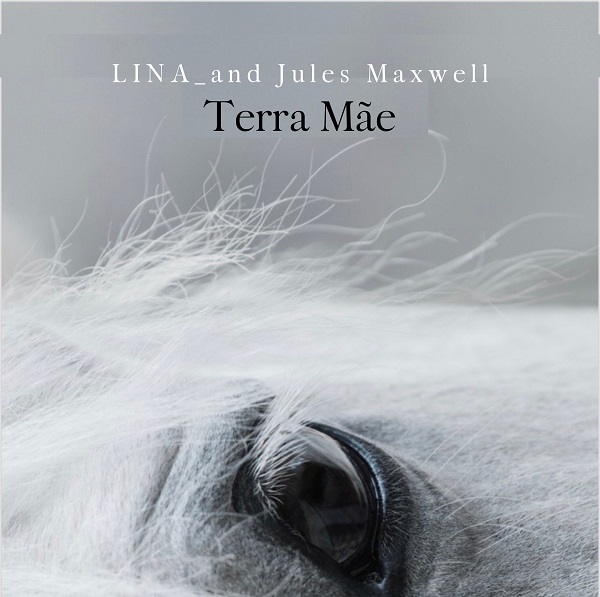
The album's conceptual foundation proves as compelling as its execution. The discovery that "fado"—Portuguese folk songs of doleful character—shares linguistic DNA with the Irish Gaelic "fadó" (meaning "long ago," the traditional story opener) becomes more than etymological curiosity. It illuminates the deeper currents connecting two Atlantic-facing nations, both shaped by histories of longing, departure, and return.
Maxwell and LINA have crafted nine original compositions that honour this connection without exploiting it. Opening track "Arde Sem Se Ver" (Follow The Dove) immediately establishes the album's dual identity: LINA's melismatic vocals soar over Maxwell's characteristically expansive soundscapes, while producer James Chapman (Maps) weaves multi-layered electronics that feel both ancient and futuristic. The Mercury Prize nominee's production work here matches his celebrated remixes for The Killers and Depeche Mode in sophistication, yet maintains intimate focus throughout.
The contributions of Portuguese composer and poet Amélia Muge prove crucial to the album's literary weight. Her adaptations on "Arde Sem Se Ver," "A Flor Da Romã" (Cherry Blossom), and "Entre O Ser E O Estar" (Wishful Thinking) prevent the project from drifting into new-age abstraction. Instead, her poetic sensibility anchors even the most experimental passages, ensuring that LINA's emotional delivery always serves narrative purpose.
The album's most powerful moments emerge from improvisation. The title track "Terra Mãe" and "Requiem" capture something spontaneous and unrehearsable—the sound of two musical traditions discovering their shared vocabulary in real time. These pieces, created during an artistic residency at Wiltshire's 12th-century Malmesbury Abbey, carry the weight of both history and possibility.
LINA's voice remains the album's primary revelation. Her ability to navigate between Portuguese fado tradition and Maxwell's more abstract territories demonstrates remarkable interpretive range. On "Não Deixei de Ser Quem Sou" (The Person I Always Was), she transforms personal testimony into universal statement, her melismatic phrasing adding layers of meaning that pure translation could never achieve.
Maxwell continues to demonstrate his post-Dead Can Dance evolution with impressive confidence. Rather than simply recycling gothic grandeur, he has developed a more nuanced approach to collaboration, allowing his partners' strengths to reshape his compositional methods. The closing track "When Are You Coming," co-written by both artists, exemplifies this democratic approach—neither voice dominates, both contribute essential elements.
Chapman's production deserves particular praise for its restraint. His global electronica elements never overwhelm the human voices at the album's centre, instead creating atmospheric space where cultural boundaries can dissolve naturally. The result sounds neither artificially Irish nor consciously Portuguese, but genuinely transnational.
The album's brevity—nine tracks exploring such rich conceptual territory—occasionally feels constraining. Certain ideas, particularly the improvised pieces, might have benefited from extended development. Yet this concision also serves the project's intimacy, preventing grand themes from overwhelming personal expression.
Terra Mãe stands as compelling evidence for Maxwell's growing maturity as a collaborator and LINA's expanding artistic ambitions. Their shared exploration of love, longing, and leaving—the emotional constants that bind Irish and Portuguese folk traditions—produces moments of genuine transcendence. When LINA's voice rises over Maxwell's carefully constructed atmospheres, geography becomes irrelevant, and we hear instead the universal language of displacement and desire.
The album represents more than cultural exchange; it suggests that musical traditions separated by distance often share deeper roots than political boundaries might suggest. Terra Mãe offers both a worthy addition to Maxwell's catalogue and a powerful statement about art's capacity to reveal unexpected connections between seemingly distant worlds.