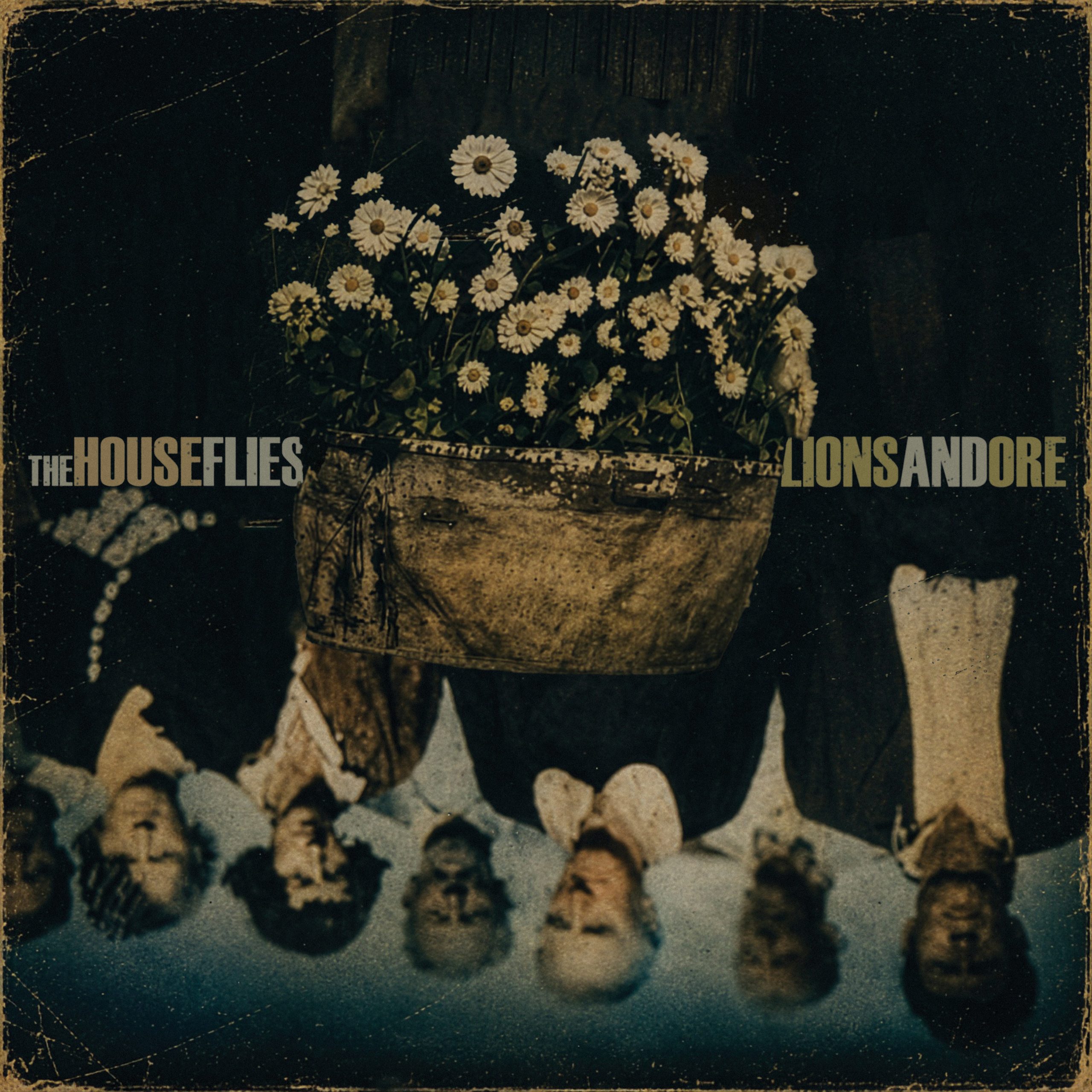
The first and largest change is the arrival of a second guitarist. Burnie Eckhardt is now a full-time presence rather than a visitor, and the band have spent the gift wisely. Where the debut sketched its darkness in quick strokes, these seven songs take their time. They breathe in and out. A passage of near-silence will hold for a long moment, long enough to make you lean towards the speakers, and then the guitars come back wider and heavier, like weather arriving over flat land. The effect is less dynamics as a studio trick than dynamics as dread, relief and then dread again.
"Goodnight, Goodnight, Lover Dear" opens the record with hymnal, domestic imagery, a lullaby sung in a house that has begun to feel haunted, before stillness gives way to a larger guitar sound. It is a bold way to begin, patient to the point of provocation, and it earns the patience it asks for. "Lost Literature" is the album's most urgent pulse, a night drive of memory fragments carried on a melodic line that lodges in the skull and refuses to leave. The accompanying video, in which handmade marionettes act out the song, is exactly the right kind of homespun strangeness. Strings are visible, and nobody apologises.
Then comes "Derelict Crawl", the record's heavy, mournful centre of gravity, built around the repeated line "We don't belong." Repetition is a dangerous weapon in rock, and in lesser hands it is merely a way of filling time. Here it works as incantation, a thing chanted until it stops being a lyric and becomes a condition. "Snakes and Toads" follows, slower and stranger, devotional language wrestling with animal imagery over textures that seem to have been dredged from the bottom of a pond. It is the sound of a church service conducted in a swamp, and I mean that as the highest praise.
Side B is quieter in its menace and perhaps deeper in its pull. "Count Us Down" turns streetlights and weather into a hypnotic loop, a slow wheel of the sort that Joy Division and Bauhaus fans will recognise in their bones without being able to name the source. "Shelter Me" finds heat, old wire and enclosed spaces, and is among the record's most direct moments, a plea that doesn't dress itself up. Then, finally, "The Glass, The Orchard" begins as a tender closing scene of memory and gradually swells into a dramatic finale driven by a wish to remain in view. It is an extraordinary last act. The song asks, with a roar, not to be forgotten, and after seven tracks of houses emptied and things left behind, the request lands like a fist on a table.
The band's reference points are obvious and honourable: the Cure's melancholy, Interpol's stern elegance, shoegaze's blur and a heavier alternative rock muscle underneath. But *Lions and Ore* never feels like homage. Its recurring images give the songs a shared setting without pinning them to one story, so the album plays like a single long dream rather than a set of illustrated anecdotes. Riggen, who also designed the haunting sleeve art, clearly has an eye as well as an ear.
Mixed by Ross Mixes, mastered by Michael Briggs, and pressed in a run of only a hundred vinyl copies, this is a small record with a very large shadow. Buy one before they vanish into other people's attics.