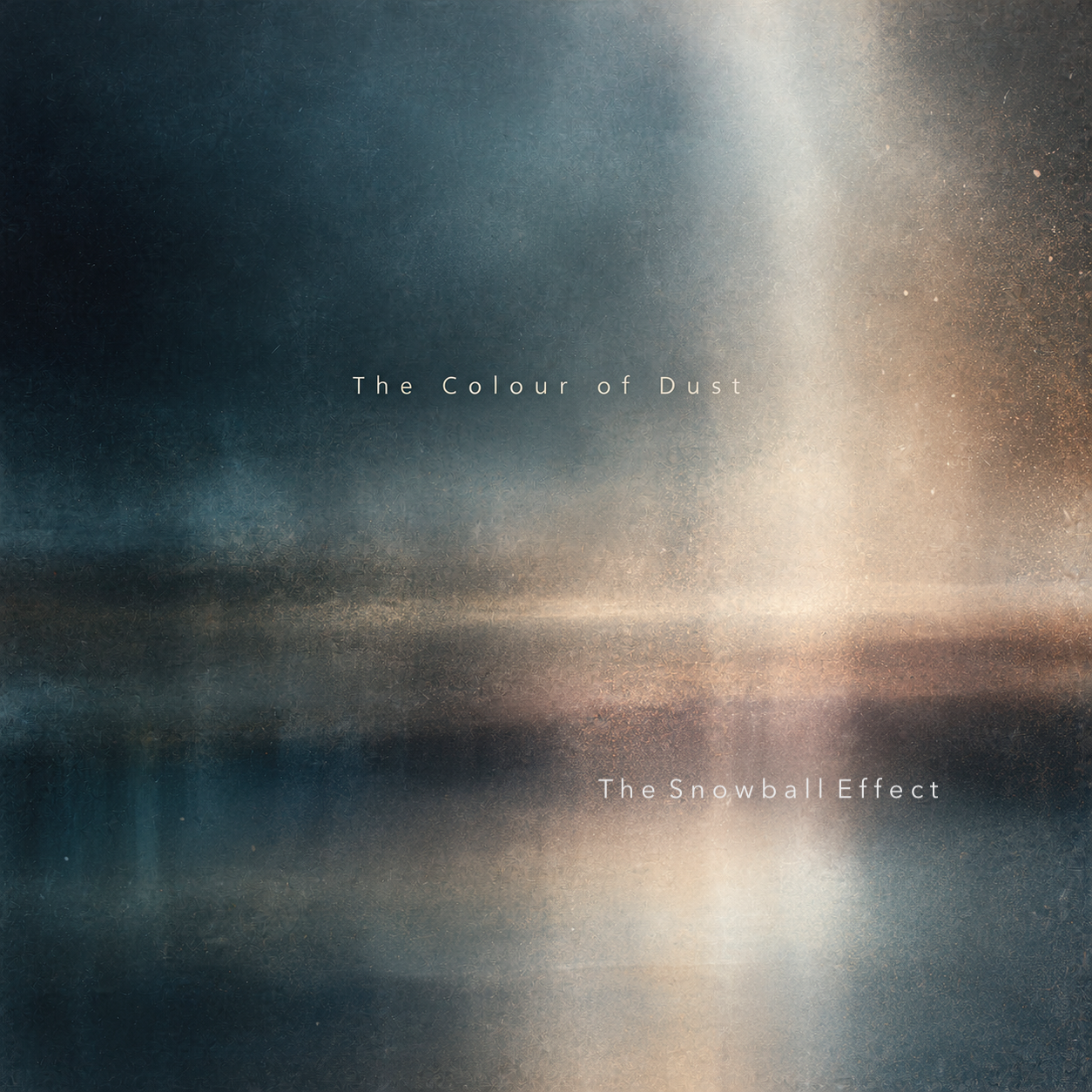
The title is the first clue. Dust is the residue of things: of rooms left undisturbed, of afternoons that have ended, of objects handled by people who are no longer there. It catches light and gives it a colour, and the sleeve, a smear of slate blue and amber with a shaft of pale radiance falling through it, suggests exactly this. The music matches the image with surprising fidelity. Beith opens with warm synthesiser tones that arrive as if from another room, soft-edged and faintly worn, and he lets them hang long enough for you to stop waiting for something to happen. That patience is the track's central gesture, and it is a brave one. Plenty of ambient records lose their nerve and reach for a beat or a hook around the second minute. Beith simply trusts his materials.
And what materials they are. The synthesiser textures have a gentle grain, the sonic equivalent of film stock left too long in a drawer, and over them he lays subtle melodic fragments that surface, glow briefly and withdraw before they can harden into a tune. These are more suggestions than statements. A guitar line, treated until it sounds half remembered, drifts through the middle of the piece; a few piano notes, placed with real tenderness, fall into the space like pebbles into still water, and Beith has the good sense to let the ripples finish before he adds anything else. Those who know his earlier work will recognise the palette, but here it feels more disciplined, more certain of what it wants to be.
The emotional temperature is what keeps the piece from drifting into mere background wash. The harmonies lean toward warmth, yet something in the voicing, a suspended chord left unresolved a beat longer than comfort allows, introduces a shadow of melancholy. The mood is neither sad nor consoling. It is closer to the feeling of looking through old photographs: pleasure and ache arriving together, neither willing to give way. That ambiguity gives the track its faintly mysterious quality, and it is the reason one returns to it. A pleasant ambient piece is forgotten by the time it ends. This one lingers.
Comparisons are inevitable, and not unflattering. There is something of Brian Eno's Apollo-era reverence for open space in the track, a hint of the cinematic widescreen of Stars of the Lid, and a touch of the late-night introspection of Boards of Canada, though Beith is less interested in nostalgia's eerier corners than in its gentler ones. Yet the track never feels derivative. His fingerprints, a fondness for the human imperfection of guitar and piano amid the electronics, are all over it, and they give the music a pulse that purely synthetic work often lacks.
The production deserves its own note. Home studios are frequently invoked as an apology; here the setting seems to have been an advantage. The mix is spacious without being cold, and the low end has a rounded softness that lets the upper textures shimmer. On headphones in the dark, it is quite lovely, with details sliding from one ear to the other like slow weather. On speakers in daylight it behaves differently, receding into the room and altering its mood, which is perhaps the finest quality an ambient piece can have.
It would be easy to dismiss music this restrained as pleasant furniture. That would be a mistake. "The Colour of Dust" is the work of a musician who understands that silence and sustain are instruments too, and who has the confidence to leave the listener alone with them. It is a small, graceful, beautifully judged thing, the sort of record one plays last thing at night and finds still playing in the mind the next morning.
Highly recommended, and one hopes a longer work is on its way.