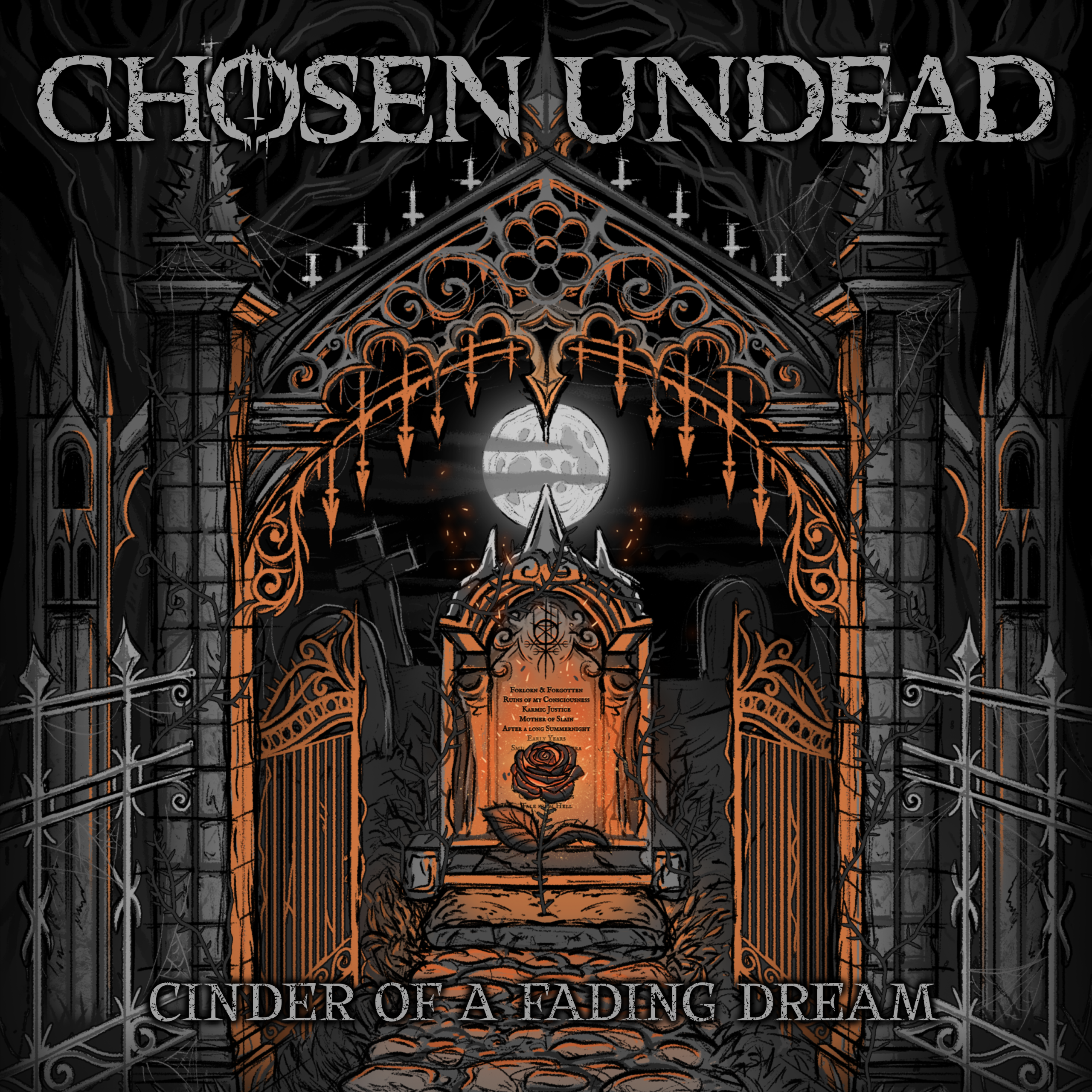
The curtain rises on "Forlorn & Forgotten", an instrumental of choral murmurs and organ drone that sounds like a cathedral being dismantled by ghosts. It's an assured piece of stagecraft, and it makes "Ruins of My Consciousness" hit harder when the band crash in. The song tackles the particular horror of remembering who you used to be and discovering the road back has been demolished. That's a bold way to introduce yourself when half your material predates your band's name, and a neat piece of self-awareness besides.
The architecture is old-school metalcore in the best sense: breakdowns with real weight behind them, riffs that keep coming like a landlord at the door, and melodies dragged out of a burning building. Around that frame the band smuggle in melodic death metal's grandeur, rock's swagger and pop-punk's bruised optimism. Plenty of bands claim to be genre-agnostic and sound like a playlist on shuffle. Here the lurches have a reason, and the band's credo, that genre serves the story and never the reverse, is enforced with a straight face and a steel-toed boot.
The stories are the secret weapon. "Karmic Justice", lifted from a *Dark Souls* miracle, hands cruelty its supernatural invoice. Anyone who has lost a few hundred hours to Lordran will appreciate the lineage, and everyone else can enjoy a song settling a score. "Mother of Slain" turns the lens inward on a toxic relationship and the grim arithmetic of finding the strength to leave. Then "Lone Wolf" gives betrayal fur and fangs: a wounded animal abandoned by its pack, who survives and returns for blood. It's revenge fantasy as therapy, the oldest trick in heavy music, played with dancing lead guitars and shifting rhythms. Elsewhere, titles like "Your Prediction", "The Way of Knife", "Epic Disaster" and "Out of the Abyss" keep the dread flowing through the back half.
What keeps the record from sinking into pure gloom is "After a Long Summernight", a gleeful swerve into feel-good pop-punk, all youth, warmth and reckless nostalgia. On a lesser record it would feel like a wrong turn at the services. Here, tucked just before "Early Years" and "Smile for the Camera" start poking at memory and appearances, it's the beating heart of the project. It's proof that darkness doesn't erase every good memory, and the album is richer, and frankly more human, for it.
Having let in a little sun, the band put it out with the closer. "Tale from Hell" runs a touch over five minutes and is the heaviest thing here, and the most gleefully theatrical. A couple perform a ritual to find out whether Hell exists, and it does. The man turns out to be a demon, and since no living soul may stay, he must kill the woman beside him. It's pulp horror played with total seriousness, and the last breakdown, with its sign-off of "Farewell, farewell — welcome to Hell", is pure operatic menace. You'll want to hear it live in a sweaty room with the lights off.
If the album has a thesis, it's that the supernatural makes a rather good language for ordinary suffering: betrayal as a wounded beast, emotional ruin as an abyss, inner conflict as demons and rituals. You can read these songs as dark fiction or as confession, and they hold up either way.
*Cinder of a Fading Dream* is the sound of a band standing where their past and future collide, refusing to apologise for the smell of smoke. It's heavy, sincere and ambitious, with more heart than most debuts manage. Dreams die, as the band keep reminding us. The good ones leave enough cinder to start a fire, and this one is burning nicely.