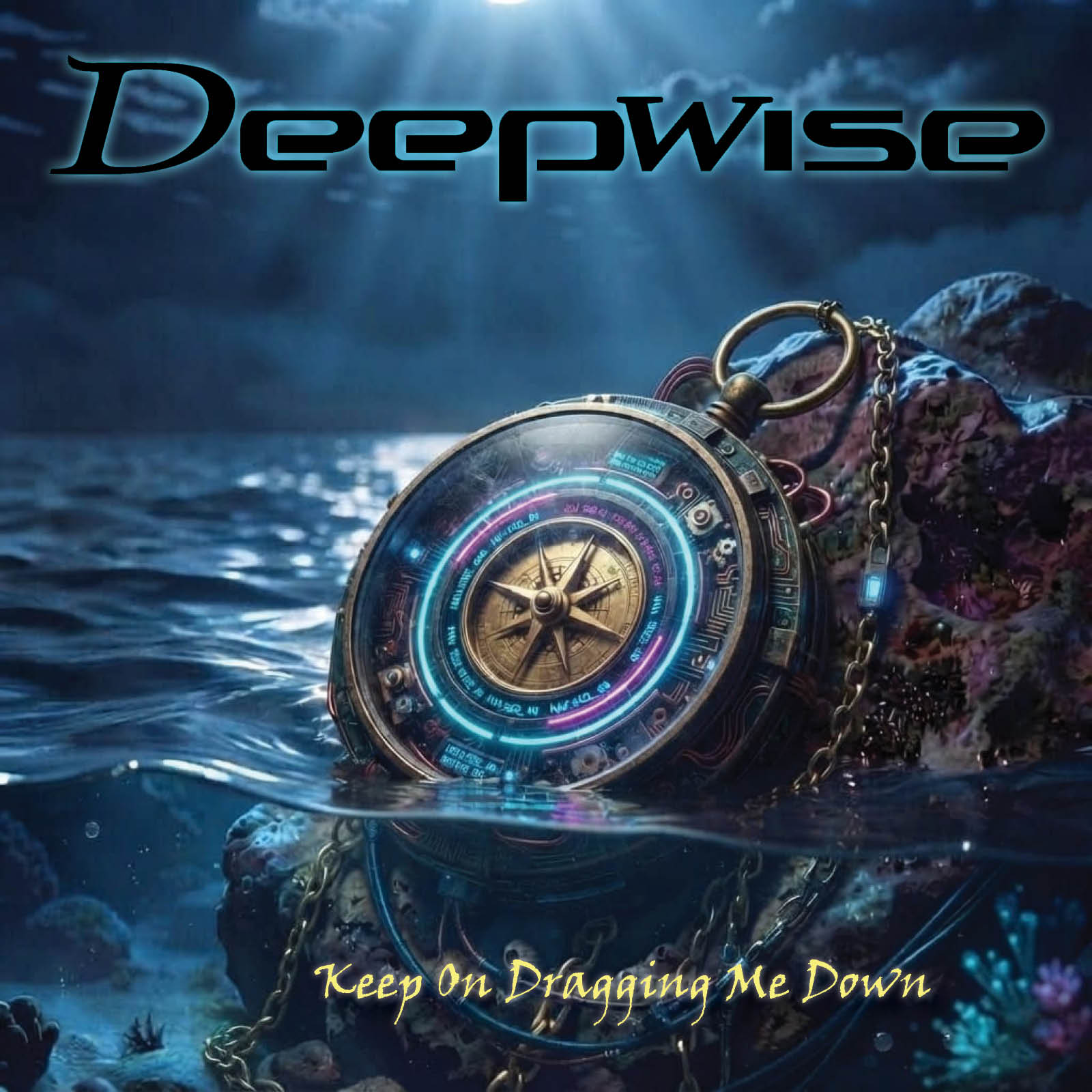
The premise is simple and unglamorous. The narrator has spent years holding other people up while his own feet slip out from under him. Most artists would turn that into a tirade, a kiss-off with the volume cranked and the grudges itemised. Deepwise declines. "Keep On Dragging Me Down" arrives after the argument is over, when the door has closed and the adrenaline has drained away. What remains is the strange, flat, faintly guilty relief of having said no at last. It is a mood pop music rarely bothers with, and hip-hop bothers with it even less.
The production is stripped to the studs. Deepwise, a producer as well as a rapper and singer, treats silence like an instrument. The video-game synths that colour his wider work, all glowing arcade shimmer, are held back and allowed to hover rather than charge. Beneath them, the jazz and funk instincts in his musical DNA show in the spacing rather than the flourish. Notes are left to hang, and grooves breathe rather than push. Somebody raised on golden-era lyricism knows that a great verse needs room around it, and here that lesson is applied with a sculptor's restraint.
His delivery is the record's greatest risk and its finest asset. He is somber without being sulky, weary without wallowing. The voice sits low and unhurried, closer to a confession across a kitchen table than a proclamation from a stage. Rappers of his generation are often tempted to prove their stamina with density and speed. Deepwise proves his by slowing down, and the effect is oddly intimate. You lean in, as you would with a friend who has finally decided to tell you the truth.
It would be easy to mistake all this for gloom, and that would misread the man. Deepwise has long styled himself a conscious, positivity-minded artist, and the song honours that promise in an unexpected way. It offers no pep talk and no bootstrap philosophy. Its optimism is smaller and more believable: the notion that stepping back is not abandonment, that boundaries are not betrayals, and that peace, once chosen, can be rebuilt slowly, like muscle after injury. It is self-help with the sermon removed, and it is better for it.
The accompanying instrumental version, offered as a companion piece, is a smart gesture. It invites listeners to bring their own burnout, their own long shifts and unreturned favours, and set them against those unhurried synths. Few singles make that offer, and fewer make it feel sincere.
"Keep On Dragging Me Down" will not shake the walls of a nightclub. It will do something rarer, slipping into the car on a late drive home and staying there. Deepwise has written a hushed, generous, quietly stubborn song about putting the weight down, and it is a pleasure to hear him do it.