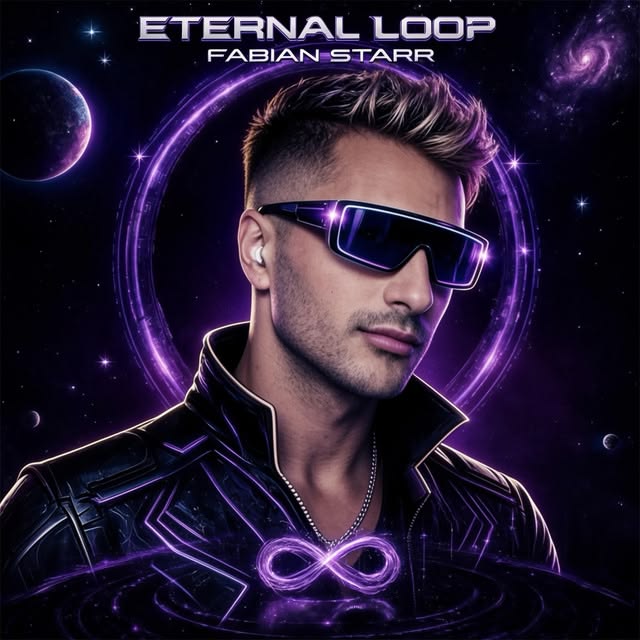
He shouldn't. *Eternal Loop* is a sixteen-track, eight-chapter journey through a whole human life, from the first gasp to the last exhale and back again. On paper this is the kind of ambition that ends in tears, or in a triple vinyl edition that nobody finishes. In practice it is the most confident thing the Manhattan synthesist has made, and the most fun.
Consider the trick of it. Starr's previous record, *Back to the Arcade*, was pure dancefloor, all strobe and sweat and the glorious stupidity of a good four-on-the-floor kick. He describes the new one as "the other side of my universe," and the phrase is accurate. The party has finished, the lights have come up, and he has walked out into the car park to look at the stars and think about his mother. The same synthesizers that once made you move now make you wonder, which is a harder thing to pull off, and he pulls it off.
The opener, "First Light," is a meditation on birth and arrival. It has the hush of a maternity ward at four in the morning, played through instruments that seem to have been left orbiting Jupiter. From there the record moves through "Becoming" and on to "Heavy Days," and the titles alone tell you Starr understands pacing. Nobody wants a life-cycle album that is all sunrise. The middle stretches carry real weight, the grown-up business of rent and regret and the slow accumulation of things you can't put down, and the cinematic production gives that weight room to breathe rather than sinking it under bombast.
That production deserves its own paragraph. Starr and his collaborators build atmospheres that feel less like backing tracks than like weather systems. Synths swell and dissolve like nebulae, and the mix has the widescreen glamour of a film score for a picture that hasn't been shot yet. It calls to mind the great synth-pop romantics of the early Eighties, the ones who understood that a drum machine could be lonely and a chord change could be a lump in the throat. Yet it never feels like museum curation. This is music of the present tense, played with the straight face and secret grin of somebody who knows exactly how big the idea is.
The masterstroke is the refusal to resolve. Conventional wisdom says a story needs an ending, and Starr politely disagrees. The record circles back on itself, so that the end becomes the beginning and the last track leans straight into the first. Anyone who has pressed repeat at two in the morning will know the feeling. It is also, rather cleverly, a piece of commerce: you cannot finish this album, only start it again. Yet the loop feels earned rather than cynical, a real statement about how lives and generations fold into one another, and no mere gimmick of sequencing.
Is it flawless? Sixteen tracks is a lot of eternity, and a stern editor might have taken a few minutes off the middle chapters. Some listeners will find the cosmic register a touch grand for their taste. But in a landscape crowded with cautious, playlist-sized records made by people afraid to sound like they mean it, Starr's sincerity is a tonic. He has looked at birth, love, age, transcendence and rebirth, and rather than shrugging, he has built a spaceship out of them.
*Eternal Loop* is a big, beautiful, unashamedly romantic record, and the surest sign of its success is that, having reached the end, you will find yourself already back at the beginning.