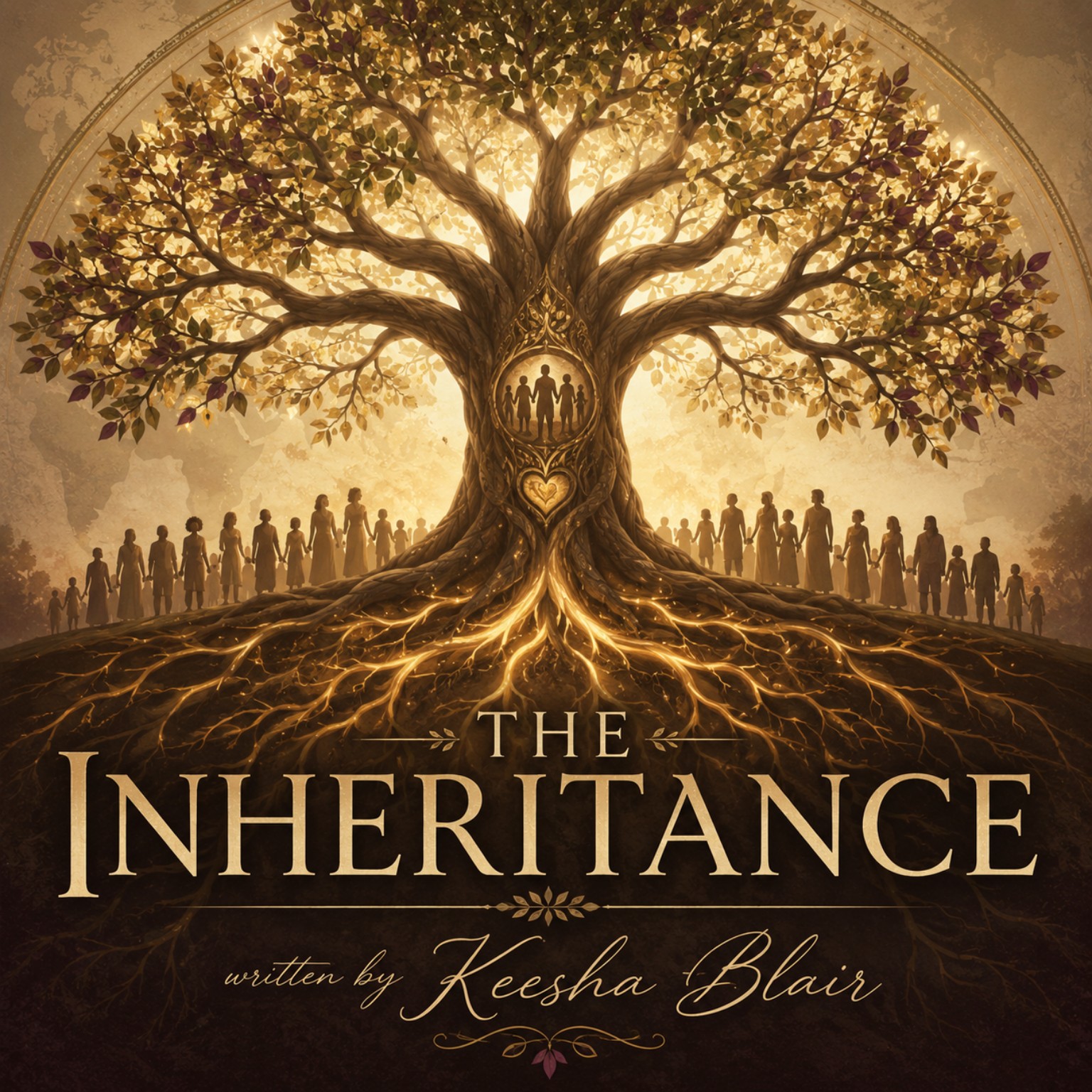
Blair's subject here is inheritance stripped of its usual associations: not wills, not houses, not money, but the harder-to-name currency of love, wisdom, and resilience passed down through a family line. The song's origins in her own mother and grandmother give it a grounded, unsentimental warmth, but Blair is too sharp a writer to leave things at the personal. She widens the lens until the listener is standing inside a universal family tree, every leaf a legacy, every stranger a distant relative in the same continuously growing story. It is a lovely piece of songwriting logic: start at the kitchen table, end at the whole of humanity, and never once feel the joins.
What makes the song genuinely moving is its honesty about the discomfort of receiving. Rather than settling for easy gratitude, Blair sits with the anxiety of feeling unworthy of what she has been given, before arriving at a hard-won peace: that worth was never the price of admission. That turn, from overwhelmed to unburdened, is where the song does its finest emotional work, and it is handled with a restraint that plenty of more decorated songwriters would do well to study.
The production deserves its own note of praise, not least because it is doing something unusual. The vocals are AI-generated, credited plainly as such, and yet the performance carries genuine tenderness — a reminder that emotional conviction in a recording can come from the writing and the direction as much as from the lungs behind it. Blair, serving as both writer and creative director, has used the tool with clear intent rather than novelty, and the result sits comfortably alongside more conventionally recorded devotional pop without asking for special allowances.
Melodically, the song favours patience over spectacle: verses that unfold like conversation, a chorus that arrives not with a jolt but with the quiet certainty of something long believed. That approach suits the material. A song about generational patience earns the right to be patient itself.
"The Inheritance" sits comfortably in a tradition of gratitude-driven songwriting that stretches from gospel's call-and-response warmth to the more secular hymns of legacy found in soul and contemporary Christian pop. Blair's achievement is to make that tradition feel personal again, rooted in two specific women rather than in abstraction, while still leaving room for every listener to slot their own inherited riches into the frame. Few songs manage both intimacy and universality this gracefully. Sit with it, and the closing question it leaves behind — what we choose to leave for those we may never meet — has a way of staying long after the final note fades.