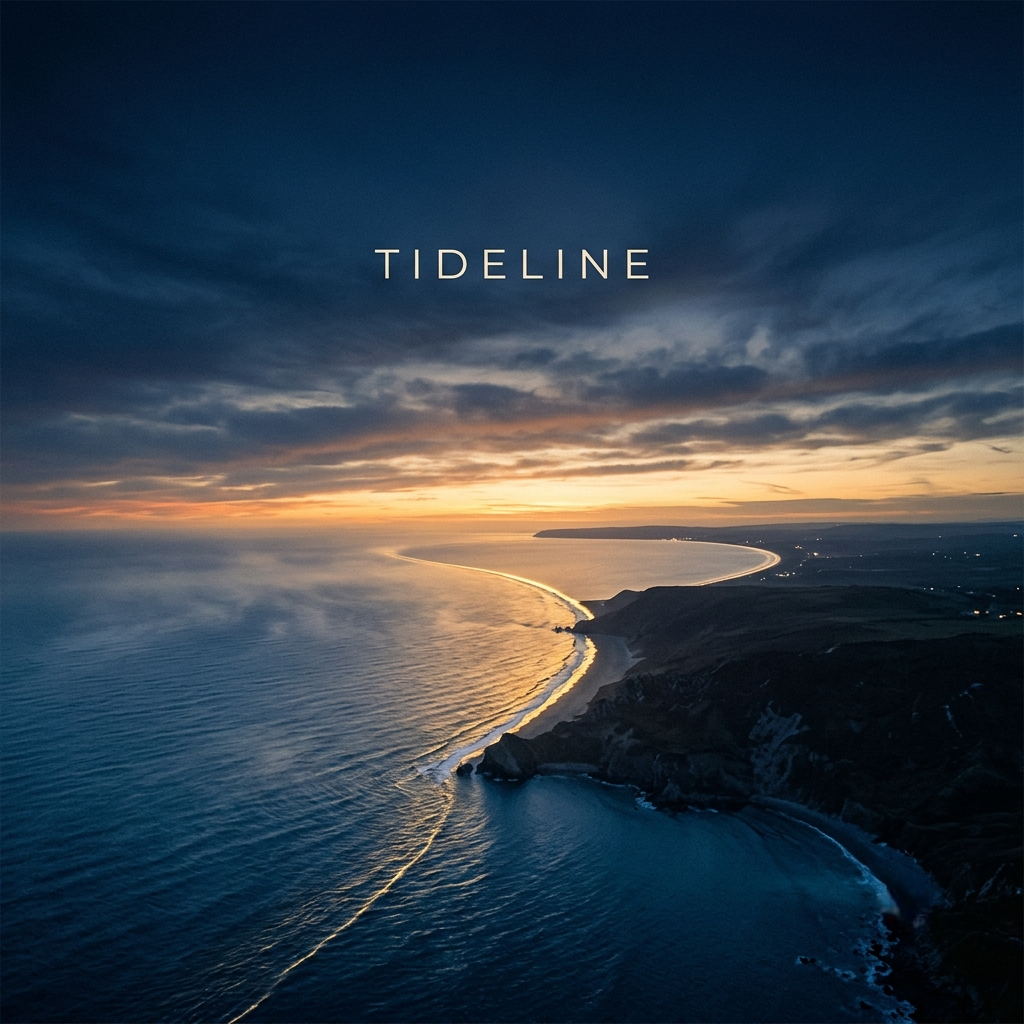
The record's great trick is patience. Where lesser hands would cram the low end and call it atmosphere, diegoista lets his tracks breathe with an almost stubborn discipline, allowing single melodic phrases to recur and mutate across the album's arc rather than exhausting themselves in a single drop. It's a compositional choice that owes more to film scoring than to festival programming, and it pays off handsomely: tracks accumulate meaning the way tide pools accumulate salt, slowly, through repetition and light.
Sonically, the palette leans warm — pads that glow rather than shimmer, basslines with the rounded edges of vinyl rather than the glass-cut precision of contemporary big-room house. But the cinematic ambition never tips into bombast. diegoista understands the difference between scale and volume, and TIDELINE's most affecting moments are its quietest: a half-heard vocal chop, a filter sweep that arrives a beat later than expected, a moment of near-silence before the low end returns like a held breath finally released.
The album saves its emotional high-water mark for the very end. "Golden Hour (Duet Remix)," featuring Sophie Laurent, closes TIDELINE not with a bang but with something closer to a sigh of recognition, as though the previous eleven tracks were all quietly building toward this one exhale. Laurent's vocal doesn't sit on top of the production so much as thread through it, and the track's structure — patient verses giving way to a chorus that blooms rather than explodes — reads like the record's thesis statement finally spoken aloud after eleven tracks of implication. Closing an album on a feature is a risk; it can feel like handing someone else the last word. Here it works because the collaboration has clearly been the destination all along, not a detour bolted on for variety. TIDELINE doesn't end so much as arrive.
What ultimately distinguishes TIDELINE from its peers in the melodic house field is its refusal to treat feeling as decoration. Plenty of records in this genre reach for cinematic strings and hushed pianos as a kind of emotional shorthand, a costume worn over otherwise conventional club architecture. diegoista instead builds the architecture around the feeling itself, letting song structures bend to accommodate mood rather than the other way round. The result is a record that rewards headphones as readily as it would reward a sunset set on some Adriatic terrace — arguably more so, since so much of its detail lives in the margins.
diegoista hasn't just made a good melodic house album — he's made a genuinely persuasive case for treating electronic music as a vessel for private memory rather than public spectacle. Trieste's coastline has given us a producer who understands that the tide doesn't need to crash to be felt. Sometimes it just needs to keep coming in.