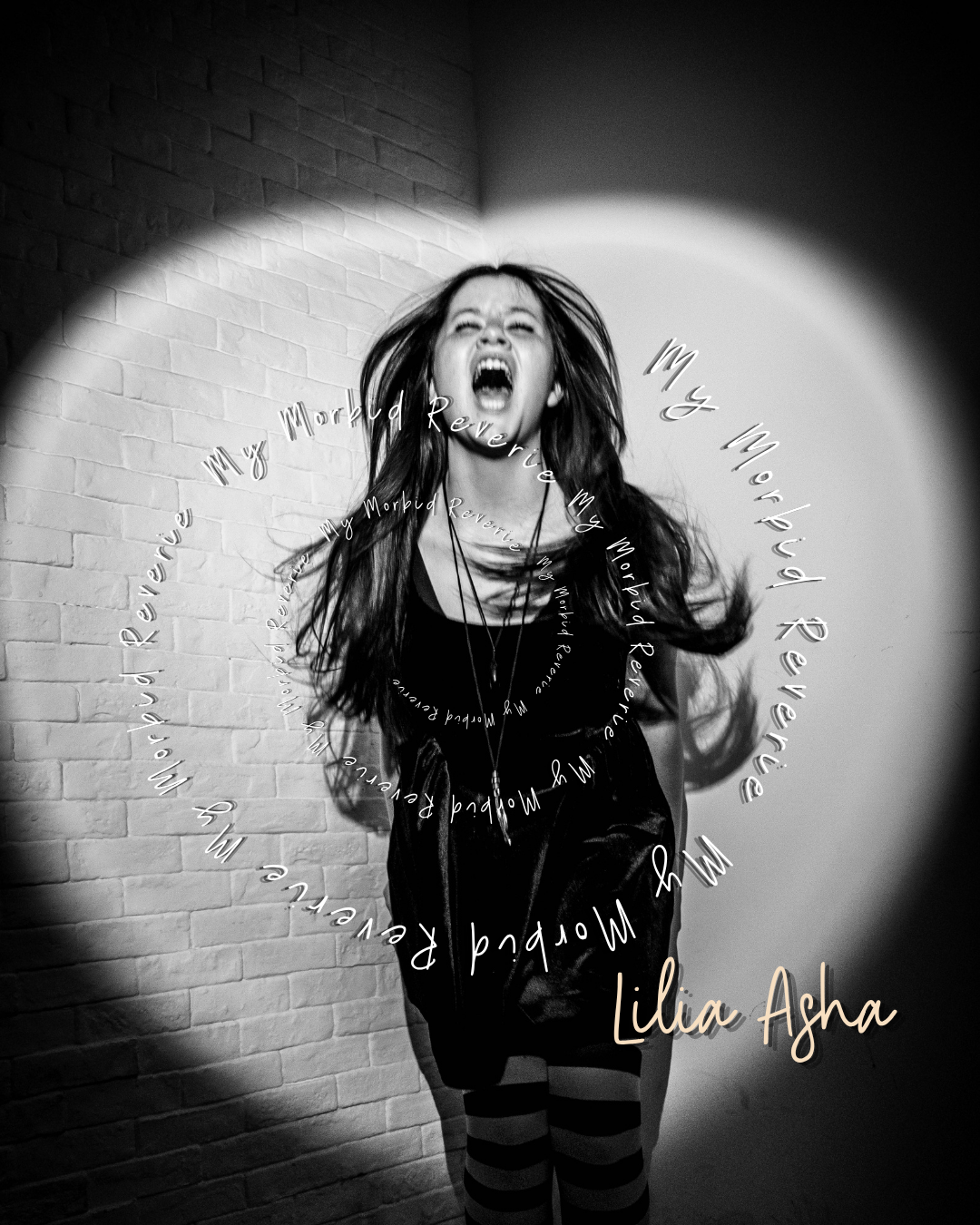
Written in a single sitting, the song carries the unmistakable charge of something that had to be got out rather than crafted from a distance, and that immediacy is audible in every bar. The vocal sits close to the microphone, almost uncomfortably so, as if Lilia Asha is narrating a private thought rather than performing it. This is where the Phoebe Bridgers and Conan Gray influences make themselves felt most clearly — not as borrowed mannerisms, but as a shared conviction that vulnerability, left unpolished, hits harder than anything sanded smooth for radio.
Production-wise, the track builds with real patience. What begins as a spare, intimate sketch slowly accumulates layers of atmosphere until the mix itself seems to mirror the narrator's unravelling — sound piling on sound the way intrusive thought piles on intrusive thought. Developed with the production team at Starcle Music in Shanghai and finished with a mix and master in Sydney, the record benefits from that dual geography: the rawness of the writing retains its edges, while the final polish gives the distortion room to breathe without ever tipping into noise for its own sake.
And then, at the close, the trick that makes the whole piece worth returning to: the tension doesn't resolve so much as dissolve, the layered distortion giving way, without warning, to birdsong. It's a bold choice for an artist this early in a catalogue, the sort of move that could easily read as gimmick in less careful hands. Here it lands as something closer to relief — a sudden window thrown open in a room that had been sealed shut for three minutes. The effect is genuinely disorienting in the best sense, leaving the listener suspended between the imagined world of the song and the ordinary morning outside it.
Thematically, "My Morbid Reverie" is unflinching. This is a song about feeling trapped inside one's own mind, about mourning an earlier version of oneself, and it never once reaches for a comforting shortcut to make that easier to sit with. That refusal to smooth things over is, ultimately, the song's great strength. Confessional songwriting lives or dies on whether the confession feels earned, and this one does — unhurried, unguarded, and entirely without vanity.
As an opening statement of intent, "My Morbid Reverie" suggests an artist already thinking in terms of a wider creative world rather than a single track: sound, lyric, and visual art bound together as one continuous act of storytelling. With a solo concert and an accompanying art exhibition already on the horizon, this single feels less like a finished thought than the first paragraph of something considerably larger. On this evidence, it will be worth following closely.