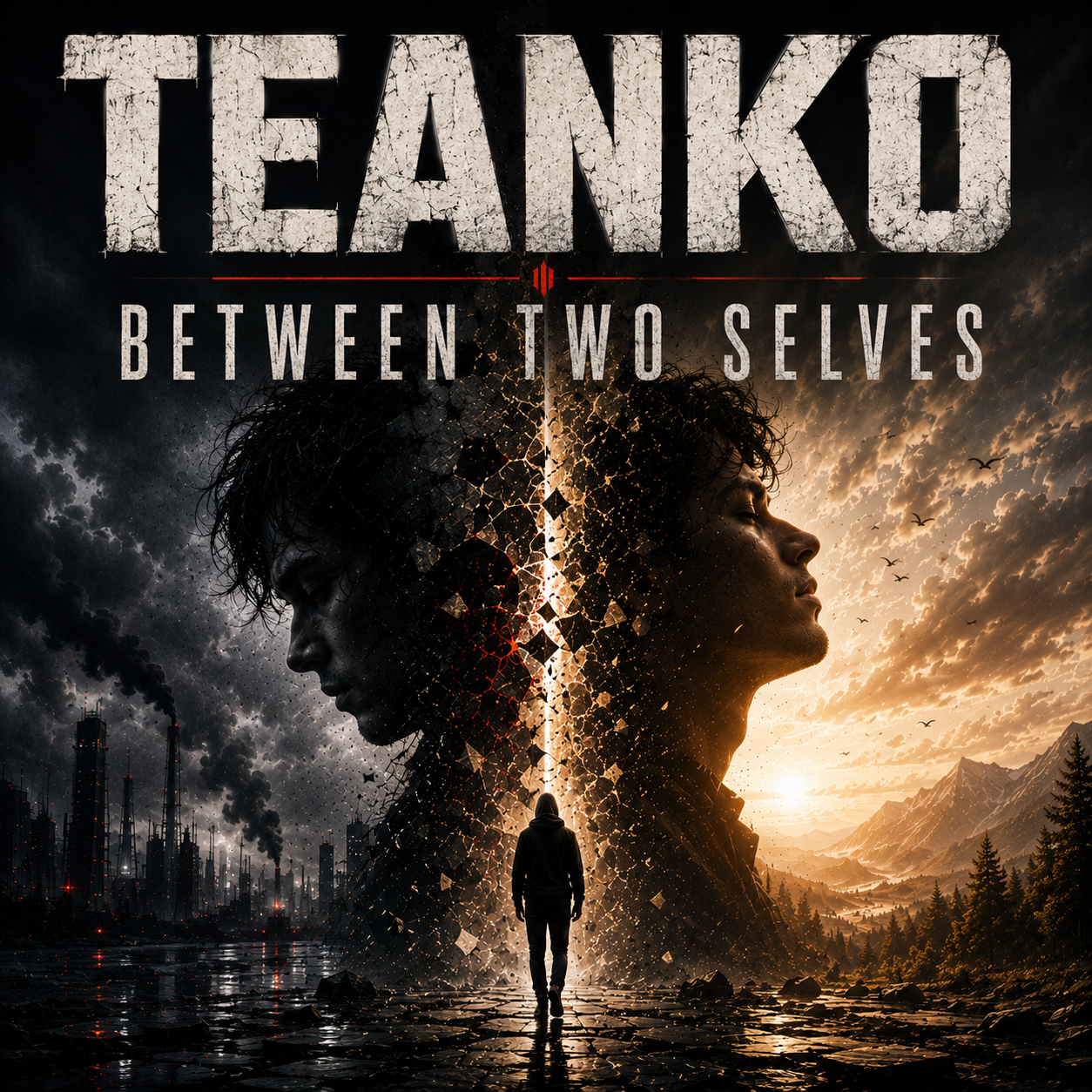
The premise is disarmingly simple. A man goes looking through old photographs, unearths a musical life scattered across boxes and drawers, and finds himself staring at a stranger who happens to share his face. Plenty of songwriters have mined this territory before, usually with a heavy hand and a minor-key piano to match. Teanko resists the temptation to wallow. Instead of treating the past as a debt to be mourned, he treats it as a conversation partner — someone worth listening to, not apologising to.
What makes this record work is its refusal of nostalgia's usual sentimentality. Teanko isn't interested in dressing up old photographs as a shrine. He's interested in the gap between selves — the space where identity gets renegotiated — and he lets that gap breathe rather than filling it with syrup. The song's emotional intelligence lies in its patience: it doesn't rush to resolve the tension between who he was and who he's become, because that tension is the point. Youthful urgency and present-day calm are allowed to sit in the same room without one shouting down the other.
Musically, this restraint pays off. A song built on such reflective terrain could easily lean on swelling strings and a big cathartic chorus to do its emotional heavy lifting. Teanko trusts the material enough not to need the fireworks. The arrangement gives the vocal room to think, which suits a lyric that's doing genuine thinking rather than performing feeling for an audience.
The real coup, though, is tonal. This could so easily have been a lament for lost momentum, the sound of a man mourning the loss of ambition. It isn't. Somewhere in the writing, urgency gets quietly reframed as choice. The absence of the next opportunity to chase isn't loss but liberation — a freeing-up of time and attention for work he actually wants to do, rather than work he feels obliged to chase. That's a genuinely difficult sleight of hand to pull off in under four minutes without sounding either glib or falsely serene, and Teanko manages it with real grace.
There's a lovely irony sitting at the centre of the record: a song ostensibly about looking backward turns out to be the most forward-facing thing here. The photographs and the old melodies aren't a resting place; they're scaffolding for what comes next. By the close, the past hasn't been erased or enshrined — it's been integrated, folded into a present that finally feels chosen rather than obligatory.
Records about growing older rarely manage to sound this unburdened. "Between Two Selves" isn't a song about running out of road. It's a song about finally choosing which direction to walk in — and sounding, for the first time in a while, glad of the choice.