The record wears its influences like a battered leather jacket — the scuffed urgency of late-80s garage rock, the loose-limbed swagger of early-90s skate punk, and a knowing wink toward early Faith No More that never tips into pastiche. It's a neat trick: nostalgic enough to make anyone who grew up on college radio feel a jolt of recognition, yet sharp enough that it never curdles into revivalist cosplay. Carlyle and Jordan aren't imitating a decade; they're settling accounts with it.
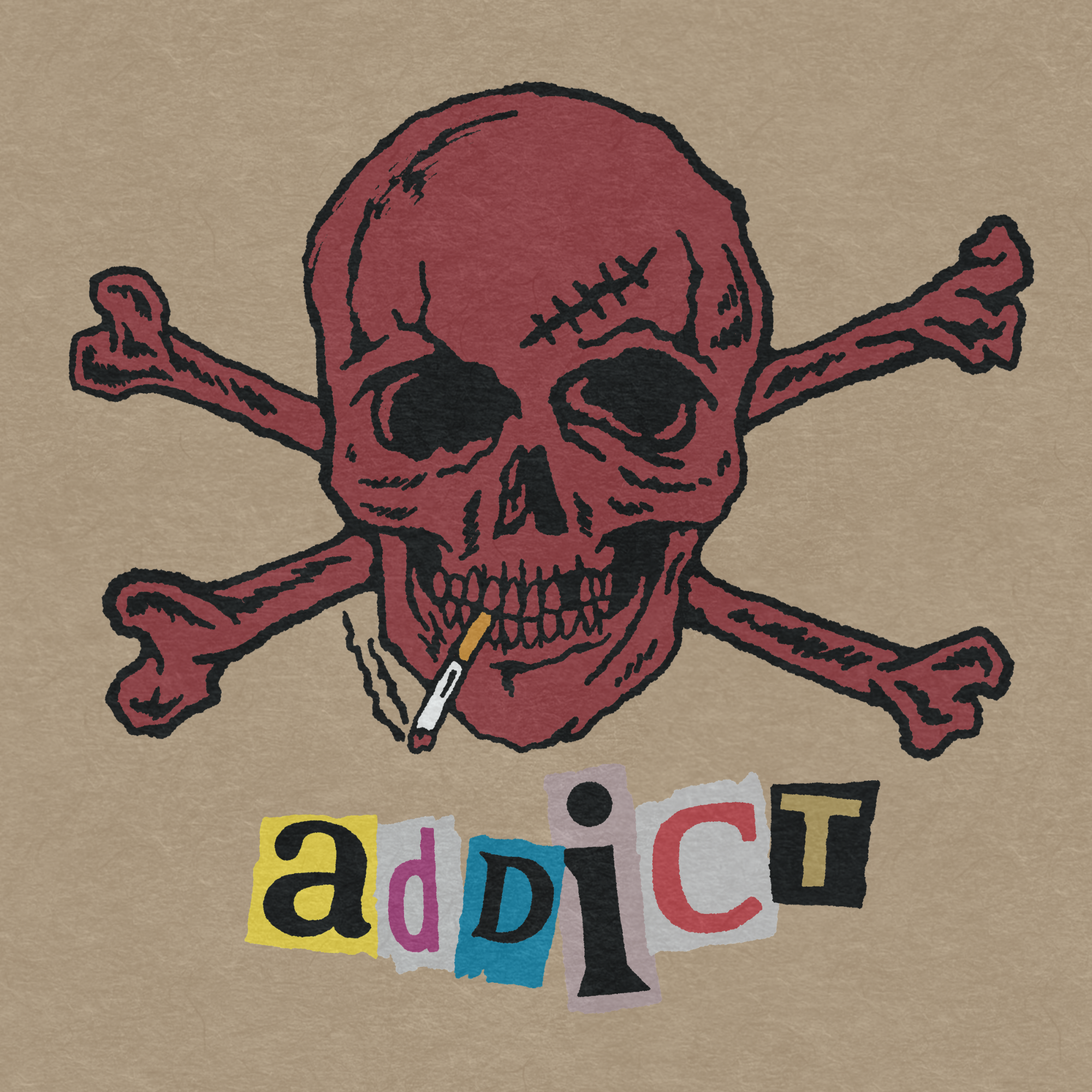
Lyrically, "Addict" refuses the easy redemption arc so many recovery songs reach for. Instead it sits in the mess, the contradiction, the thing nobody wants to admit out loud — that you can hate the thing that's killing you and mourn it in the same breath. The line "And now I'm sleeping in flames and I can't do nothing wrong, I'm burning twice as bright, but only half as long" lands with the kind of blunt, unpolished poetry that only comes from having actually lived it. It's not a lyric built for a T-shirt. It's a confession set to a riff.
What's remarkable is how the song refuses melodrama despite its subject matter. Carlyle and Jordan clearly know that addiction doesn't announce itself with strings and slow-motion tears; it hums along at the same tempo as everything else in life, which is exactly the tempo "Addict" chooses — driving, scrappy, unglamorous. That restraint is what separates this from a hundred other songs that try to wring catharsis out of pain and end up sounding like they're performing suffering rather than describing it.
Given they recorded this from separate home studios hundreds of miles apart, trading files across the distance between Washington and Ohio, the cohesion here deserves real credit. Long-distance collaboration usually leaves fingerprints — a seam, a mismatch, a moment where the song feels stitched rather than played. "Addict" has none of that. It sounds like two people in the same room, finishing each other's sentences the way only three decades of shared history allows.
What's already clear from the song alone is that Until They Burn Me haven't made a comeback record or a cautionary tale. They've made something closer to a scar that finally learned to sing — unflinching, unpolished, and all the more powerful for refusing to pretty itself up.