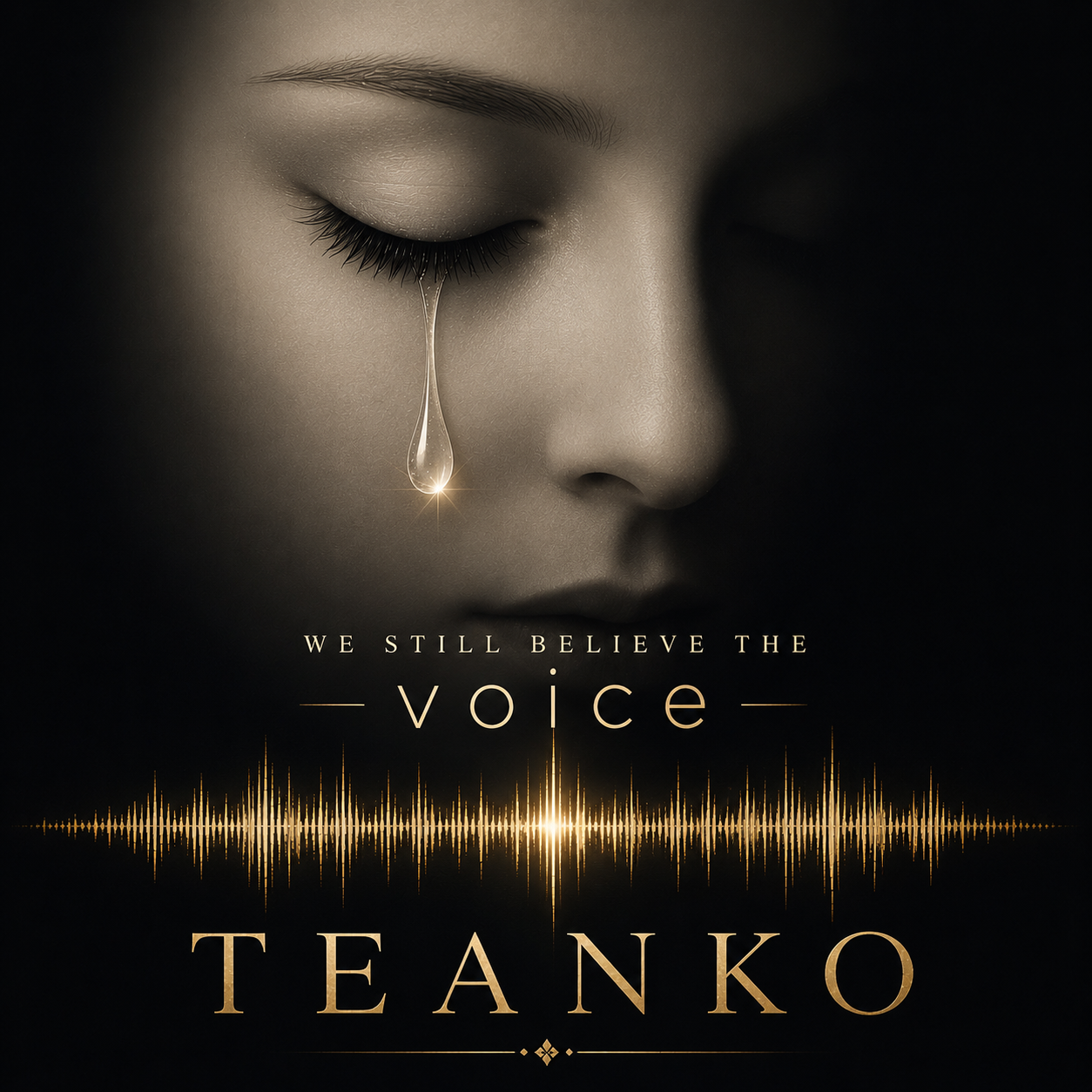
Musically, this sits comfortably in the lineage of melodic pop songwriters who know their way around a chorus without needing to shout about it — think warm, chiming guitars doing the emotional heavy lifting, a rhythm section that never crowds the room, and production polished enough to sound contemporary without sanding off the grain. The arrangement builds with patience. Verses stay conversational, almost hushed, before the chorus opens into something genuinely cinematic — strings or synths swelling just enough to lift the hook skyward without tipping into bombast. It's a trick many bigger-budget acts fumble; TEANKO nails the proportions.
And that voice. Whatever the technical scaffolding behind it, what reaches the ear is unmistakably lived-in: a slight rasp here, a phrasing choice there that feels like muscle memory rather than calculation. Vibrato that wavers at exactly the moment a real singer's would waver. If this is artifice, it's artifice built from forty years of actual singing, actual heartbreak, actual 2am studio sessions — and you can hear the difference between that and something conjured from nothing. The performance carries weight because the raw material carries weight.
Lyrically, the song wisely refuses to moralise. TEANKO isn't here to litigate the ethics of AI in six other verses' worth of preachiness — he simply poses the question and lets the music answer it emotionally rather than academically. "Can a voice still reach us?" isn't rhetorical scaffolding; it's the whole engine of the track, and by the second chorus you realise the song has already answered it, three times over, with feeling to spare.
There's a neat irony sitting at the heart of this release: a song ostensibly about the blurring of real and artificial turns out to be one of the more emotionally direct, unguarded pop records you'll hear this year. No irony, no distance, no knowing wink to the audience. Just warm guitars, a big open-hearted chorus, and a singer who sounds like he means every word — because, in the most literal sense possible, every syllable really did come from him.
Is it a touch tidy in its production for listeners who like their indie rougher round the edges? Perhaps. But tidiness isn't the enemy here — clarity is the point. TEANKO has made a case, quietly and tunefully, that authenticity was never about the recording chain in the first place. It was always about whether the person behind the voice actually felt something. On this evidence, he still does — and so, rather wonderfully, will you.