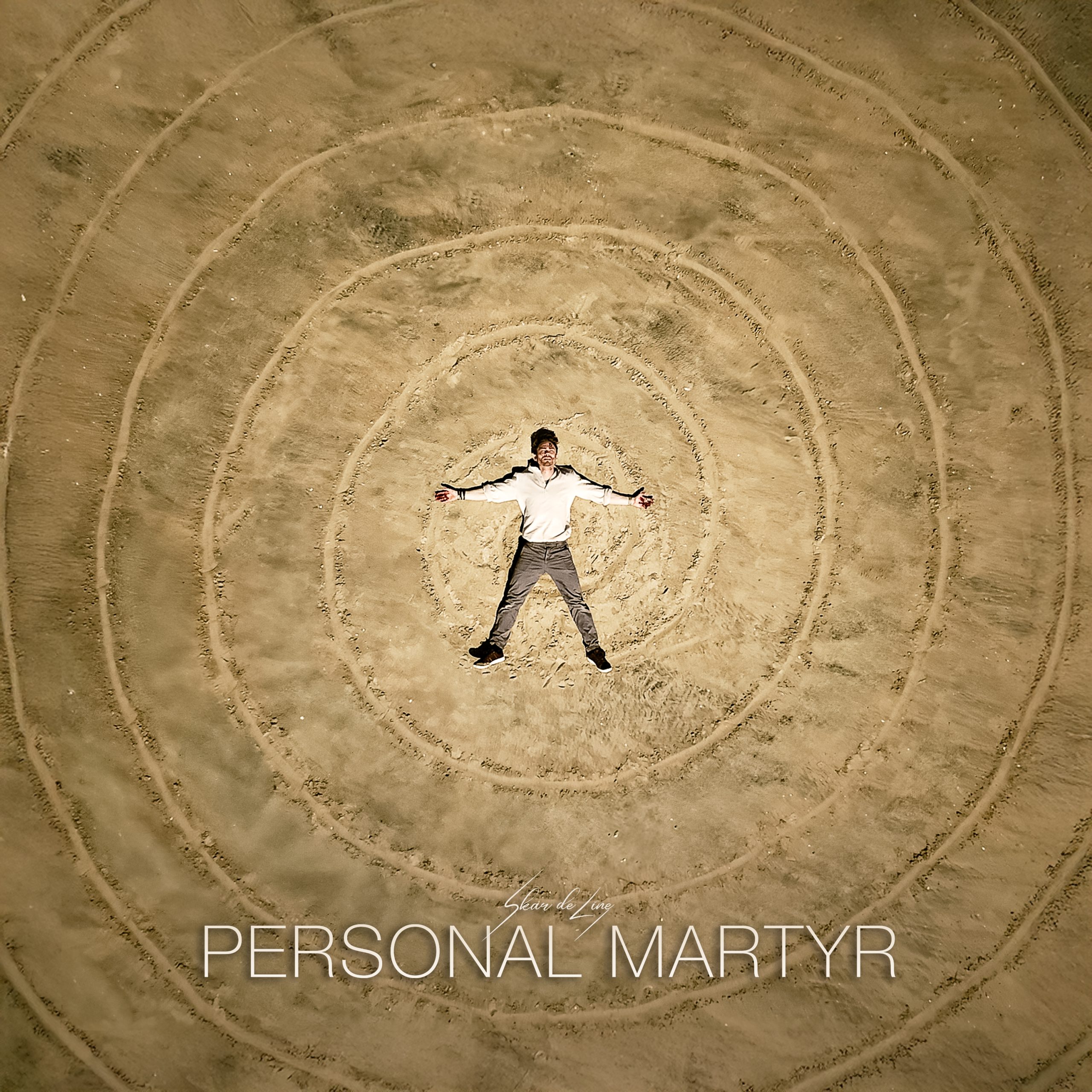
"Personal Martyr" opens on a hum rather than a hook — low, patient, almost embarrassed to be heard — before the drums arrive with the brisk efficiency of someone tidying up after a disaster. De Line sings the verses like a man reading his own obituary aloud and finding it flattering. There's a self-aware grandiosity to the whole exercise: martyrdom, after all, is the one form of suffering that insists on an audience, and he knows it. The lyric never quite confesses to wanting the attention, but the production — all that patient, swelling reverb pooling around his voice like tide around a body — gives the game away nicely.
What separates this from the standard catalogue of wounded-balladeer pop is the restraint of the arrangement. De Line resists the temptation to crescendo too early, holding the chorus back until the second pass, so that when it finally breaks it lands less like a hook and more like relief. The guitar line underneath, thin and slightly out of tune with itself, sounds almost accidental — a detail that suggests either a producer with nerve or a budget that ran out at exactly the right moment. Either way, it works in the song's favour: a polished martyrdom would be a contradiction in terms.
Lyrically he's playing a familiar game — sacrifice as currency, suffering as proof of feeling — but he plays it with a dry, faintly self-mocking edge that keeps the song from curdling into self-pity. "I lay myself down so you'd have somewhere to stand" is the kind of line that could be unbearable in lesser hands; here it's delivered with just enough flatness to read as commentary on the pose rather than an endorsement of it. The image of the man on the beach, ringed by those slow concentric grooves raked into the sand, becomes the whole song in miniature: a figure who has made his own suffering decorative, geometric, almost architectural, and is waiting patiently for someone to notice the artistry of it.