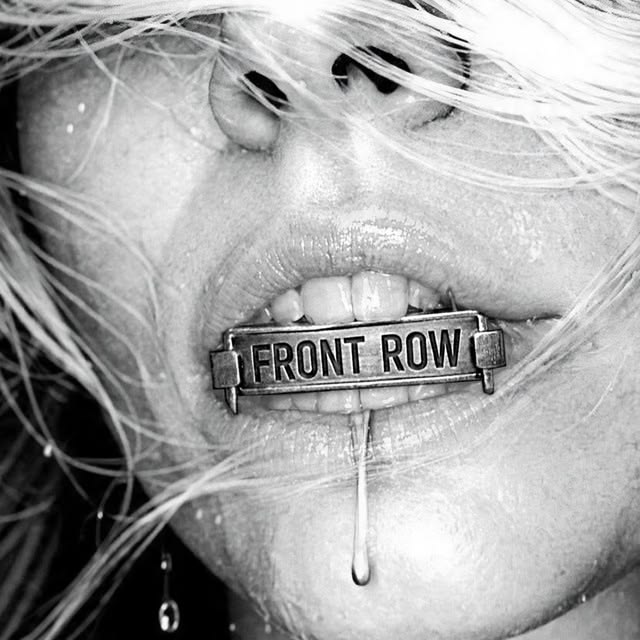
This is a song about being looked at, written by someone who has spent a career being looked at, and it knows exactly how strange that sentence is. Braid-Topcu, a dancer and showgirl long before she was a recording artist, treats the stage not as a backdrop but as a witness box. She's both defendant and prosecutor here, cross-examining her own appetite for applause with the kind of dry, knowing humour that keeps the track from collapsing into self-pity.
Musically, "Front Row" trades on tension rather than bombast. The verses are clipped and conversational, almost spoken, as though she's letting you in on a secret she's slightly too tired to whisper properly. Then the chorus arrives, wide-screen and glittering, and the contrast does the emotional heavy lifting a lesser songwriter would have left to the lyrics alone. It's a neat trick: intimacy in the verse, spectacle in the chorus, the two pulling against each other the way a dancer's smile pulls against her aching feet.
Lyrically, the song earns its theatrical billing. Compliments are described as currency rather than kindness, attention as something closer to a substance than a compliment, and the gaze itself becomes the song's true subject. None of this feels like posturing, mostly because the details are too specific and too unglamorous to be invented for effect — tired joints, the hush that follows a standing ovation, the particular loneliness of being adored by people who don't actually know you. Glamour, in Braid-Topcu's telling, isn't a costume so much as a kind of armour worn so long it starts to chafe.
What keeps "Front Row" from tipping into melodrama is her refusal to ask for sympathy outright. She's clearly enjoying herself even as she dissects the cost of the performance, and that double consciousness — pleasure and critique running side by side — gives the song its bite. Plenty of pop stars have written about fame's hollowness; fewer have managed to sound this entertained while doing it.
The production wisely stays out of her way. Nocturnal synths and a steady, almost theatrical pulse give the track its cinematic sheen without smothering the lyric's wit. It sounds expensive without sounding overworked, which is harder to pull off than it looks.
Braid-Topcu hasn't written a simple anthem about fame's price tag. She's written something closer to a ledger, tallying glamour against grief, control against exposure, and daring you to call the books balanced.
Heels on, curtain up, eyes wide open — she's not asking for your sympathy. She's just making sure you know exactly what you paid to watch.