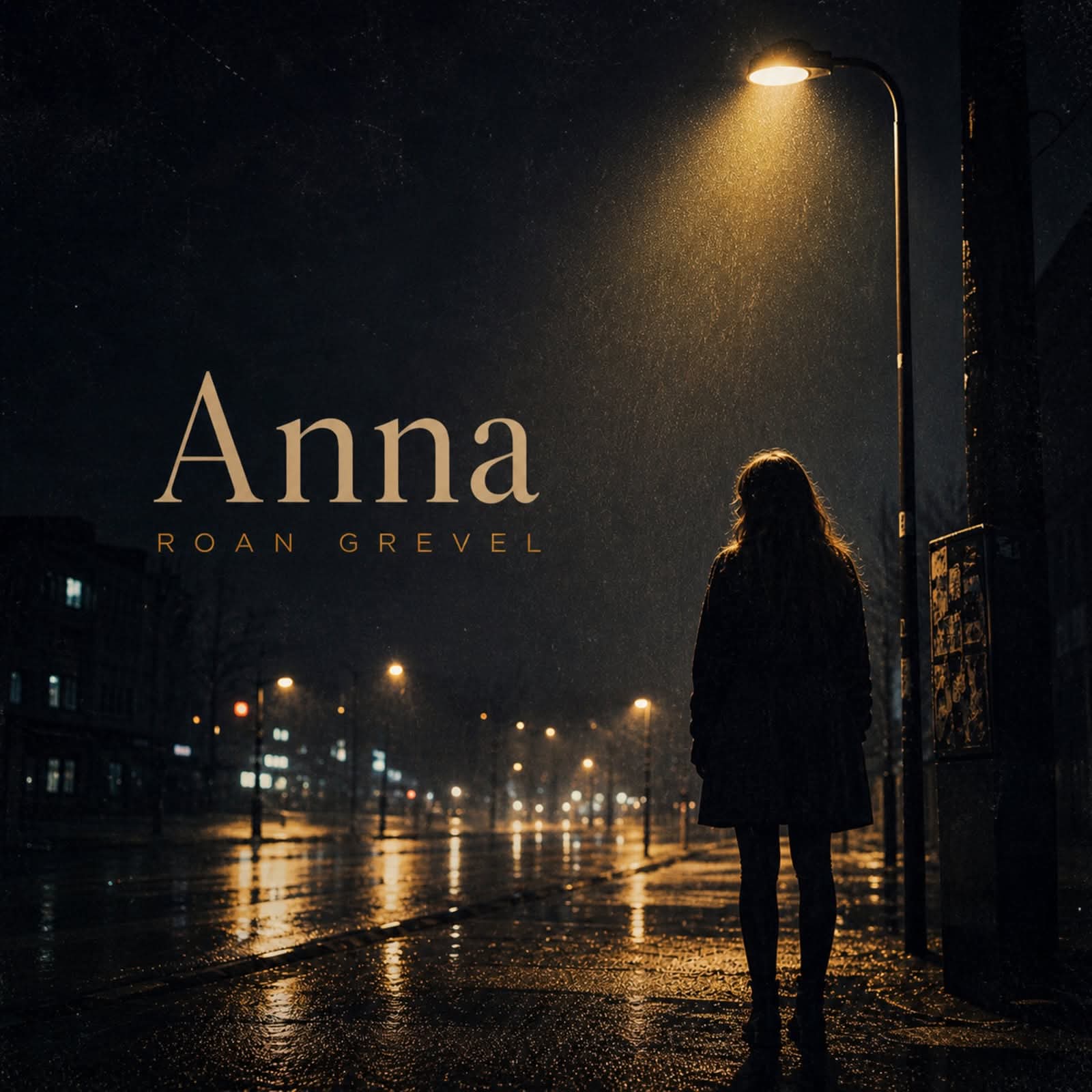
Grevel is French, which matters more than it might seem. The French alternative tradition carries a different emotional grammar than the Anglo-American one — less interested in catharsis as spectacle, more attuned to the slow burn, the contained wound. "Anna" wears that inheritance openly but never slavishly. It positions itself within European rock's lineage of bruised introspection while refusing to become a museum piece. The production is clean without being sterile, modern without the algorithmic sheen that blights so much contemporary rock. Someone here has made deliberate choices, and they show.
The track opens with melodic guitar work of the kind that immediately separates the architects from the decorators. These are not riffs deployed for momentum or atmosphere — they function as a kind of melodic argumentation, establishing a thesis the rest of the song will interrogate. The guitars breathe. They leave silence where lesser producers would have stuffed texture, and that silence is where the song's emotional intelligence lives.
Vocally, Grevel operates in a register that will be familiar to anyone who admires the school of performance that prizes control over exhibitionism. He is not unfeeling — quite the opposite. The contained quality of his delivery is itself the feeling, the way a held breath communicates more than a cry. Underneath the surface composure runs something rawer: a fragility that the instrumentation mirrors and occasionally pushes against. The tension between the two — the composed surface and the turbulent interior — is the engine of "Anna." When those forces briefly pull apart, usually at the track's structural pivots, the effect is genuinely arresting.
The percussion deserves its own sentence. The drumming does not function as timekeeping; it functions as counterargument, offering a physical urgency against the song's more contemplative passages. When the rhythmic and melodic elements align at full force, the track achieves something close to overwhelming without ever abandoning its elegance. That is harder than it sounds.
Then comes the moment after the three-minute mark. The electric guitar solo that emerges in the track's final stretch is one of the most satisfying things this writer has encountered in recent alternative rock — not for its technical ambition alone, but for its *placement*. It arrives precisely when the emotional architecture demands release. It is sharp, brilliant, and over too quickly, which is exactly right. The best solos always feel like that.
What "Anna" ultimately demonstrates is a sophisticated understanding of pacing as emotional syntax. The song knows when to hold back and when to pour forward, and that knowledge — that editorial instinct — cannot be faked or processed into existence. It has to come from someone who genuinely understands what they want the listener to feel and when.
Single debuts can be exercises in promising; this one is something more convincing. Roan Grevel, on this evidence, has not stumbled onto a sound — he has thought his way into one. The industry will be paying close attention to whatever follows.