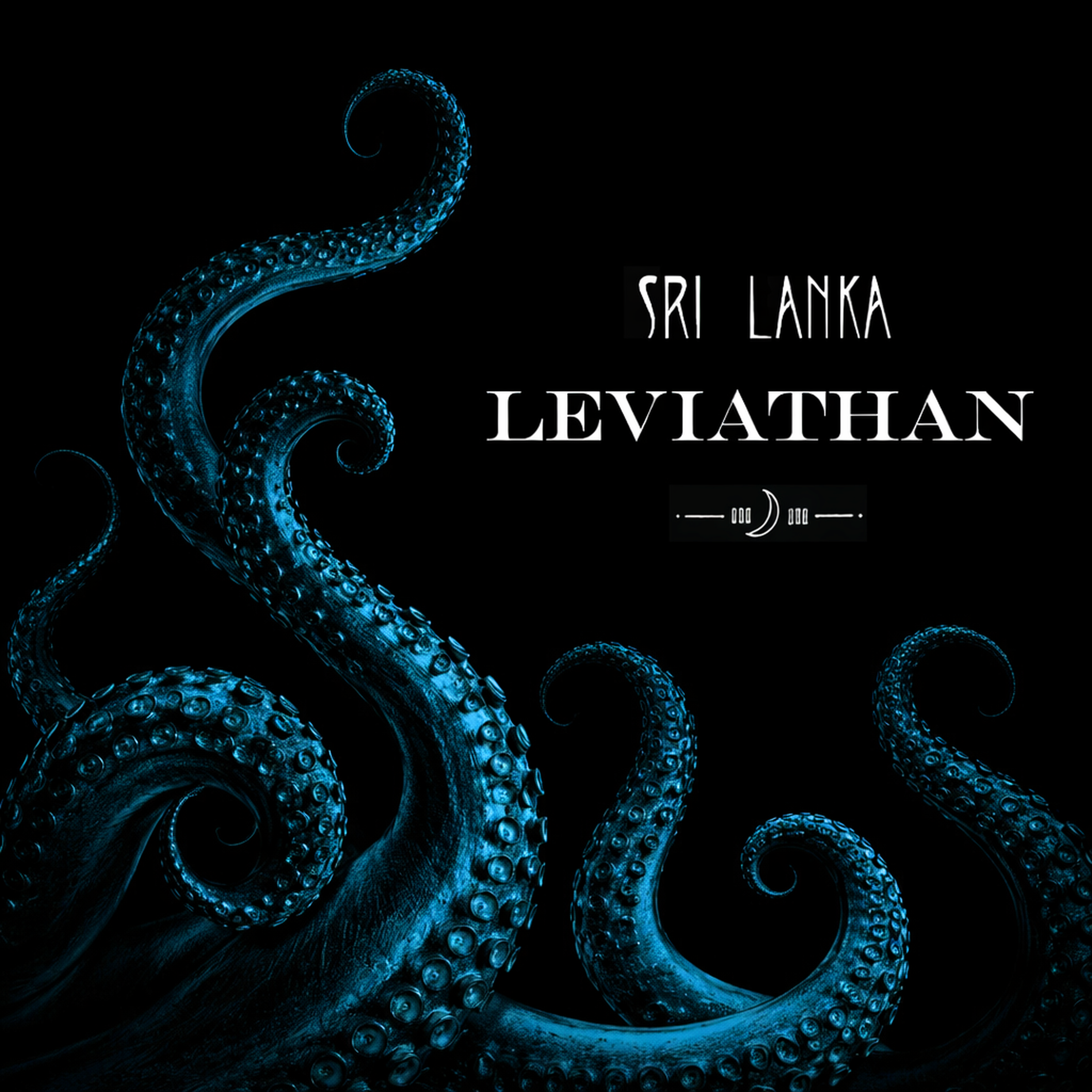
*Leviathan*, released on the first of May 2026, is the sound of that silence finally breaking.
The record opens with "Solstice," and whatever anxiety one might reasonably harbour about reunion albums — that peculiar modern phenomenon where nostalgia and commerce share an uncomfortably small bed — is dispatched within its first thirty seconds. The percussion arrives first, restless and panting, before a guitar line coils around it with the unhurried menace of something that has been waiting underground for precisely this long. When Jeffrey Erb finally enters — *the sparks ignite, the chill subsides* — the line lands with the offhand authority of someone who never actually stopped believing in what he was doing. The album's gothic rock identity is established immediately, but "Solstice" wears its darkness with a hooky, almost sly confidence that keeps it from calcifying into period-piece cosplay.
"The Haunting" follows and is, frankly, exactly what its title promises. Jangly guitar murk slides into heavier distortion; Erb navigates the melodic terrain with ghostly precision, the song's yearning refrain circling back with the obsessive logic of a recurring dream. The band demonstrates here — and sustains throughout — a compositional intelligence that distinguishes *Leviathan* from the more sentimental strain of comeback record. These are not men content to replicate. The reworkings of archival material that populate the album are genuinely reimagined, not merely buffed up; they carry the texture of experience rather than the gloss of restoration.
The title track itself is the record's centrepiece and its most ambitious gamble. Industrial in its undertow — a deep, suspenseful bassline that refuses to resolve — it builds with almost ritualistic patience, Erb adopting a spoken, oracular delivery that transforms the song into something approaching ceremony. *Leviathan* the creature, the biblical chaos-beast, the monster at the bottom of things: the band earns their metaphor. This is music about what persists beneath the surface of ordinary life, about grief and endurance and the strange dignity of continuing.
"Eventide" offers a moment of relative levity — playful rhythms, the sound of waves, before the song pivots into what can only be described as infectiously dark rock, with shades of Interpol's glacial cool. "Love Like Rust" reaches further back still, its lyric apparently cataloguing the markers of a specific musical era — the Jesus and Mary Chain, Cleopatra eyes — with an affection that borders on elegy but never tips into it. The past, for Sri Lanka, is not a sanctuary. It is simply where they came from.
"Elegy," the closing track, does what a proper closing track should: it earns its title. By the time the album ends, one has the sense of having moved through something, of geography traversed rather than time merely passed.
The production throughout is appropriately unshowy — the atmospherics dense without being suffocating, the space between instruments allowed to breathe and occasionally to ache. Electronic elements surface and recede with discretion; nothing here feels bolted-on or contemporised for its own sake.
What *Leviathan* ultimately offers is rarer than it sounds: the proof that a band can return to themselves without diminishment. The decades of silence were not, it turns out, a defeat. They were the pressure that made this possible — the weight of the deep turning something ordinary into something harder and stranger and worth the wait. Sri Lanka were always capable of this. It simply took them thirty years to find their way back to the water.