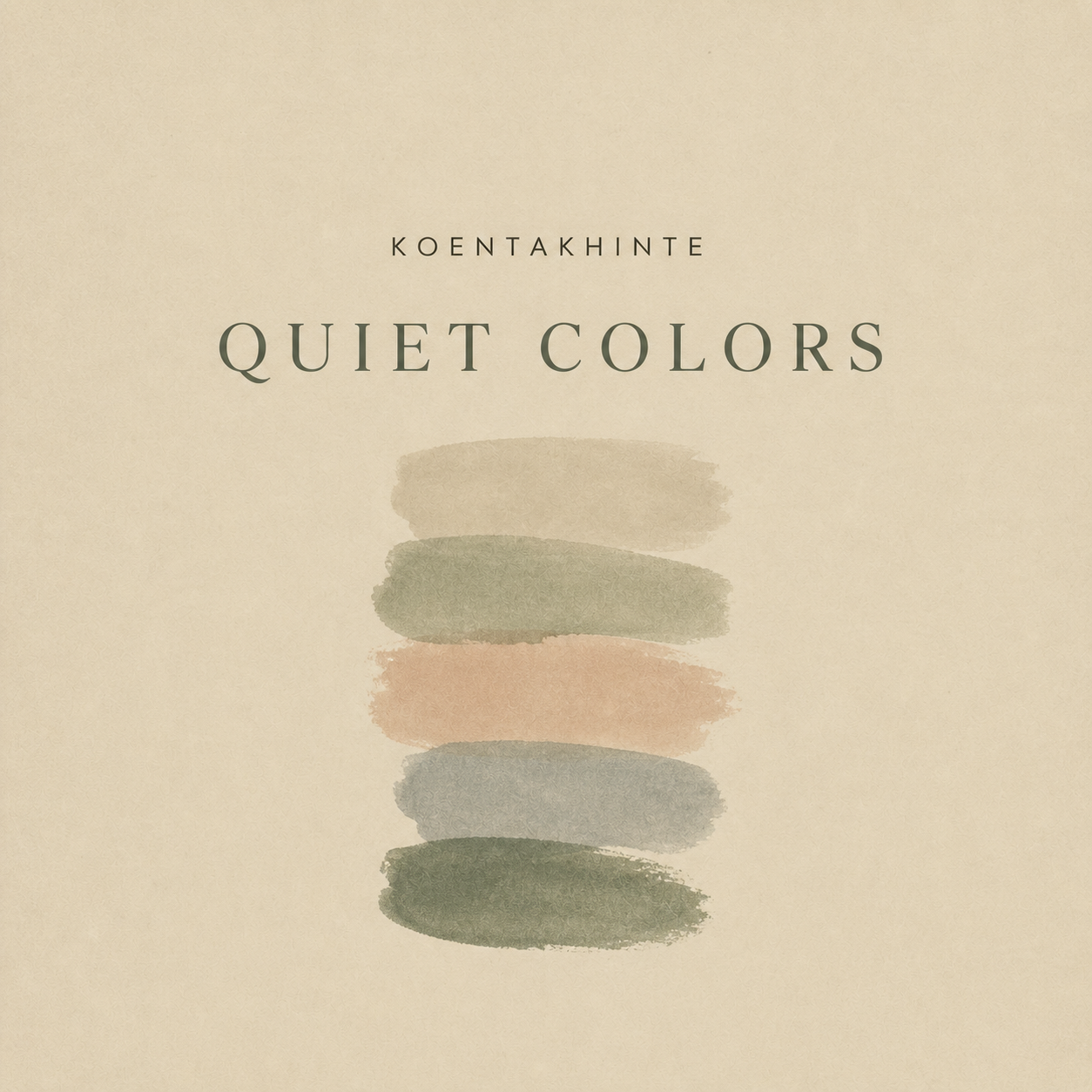
The premise is a familiar one — self-concealment, the exhausting performance of acceptability, the slow erosion of the self beneath layers of social nicety — yet Koentakhinte navigates this territory without the self-congratulatory melodrama that sinks so many of his contemporaries. Where lesser songwriters might reach immediately for the key change and the swelling orchestra, he trusts the lyric. That is a rarer discipline than it ought to be.
The song's central conceit — that identity is expressed not through bold declarations but through subdued, half-hidden hues — is rendered with genuine care. There is nothing heavy-handed in the metaphor. The "quiet colors" of the title speak to those aspects of the self that one has been conditioned to keep turned down, muted, tucked away from view. It is a telling image, and Koentakhinte earns it rather than simply deploying it.
Comparisons to Matt Simons and Dermot Kennedy are not without foundation, though they risk underselling what is distinctive here. Kennedy operates at a near-constant emotional boil; Simons at a kind of radio-ready warmth. Koentakhinte occupies different ground — quieter, more interior, more willing to sit with discomfort rather than resolve it too quickly. He is closer, perhaps, to a younger Gavin James before the arena instincts fully kicked in: voice-forward, lyric-led, and genuinely moved by his own subject matter without tipping into mawkishness.
What elevates Quiet Colors above the crowded field of emotionally earnest singer-songwriter output is its structural restraint. The song does not simply escalate. It turns inward precisely when you expect it to open outward, and that choice — presumably conscious, presumably fought for — gives the piece a quality of earned intimacy. You believe it because it has not been oversold to you.
The production is clean without being sterile. There is breathing room in the arrangement, which serves the vulnerability of the lyric rather than smothering it. One suspects these are songs written close to the bone, and the production has the good grace to leave them as such. When the vocal peaks, it does so with the feeling of something genuinely released rather than something manufactured for a streaming climax.
Thematically, the song touches on shame, fear, and the particular paralysis of knowing who you are but lacking the circumstances — or the courage — to express it. These are not new subjects, but Koentakhinte approaches them without the smugness of resolution. He is not telling his audience that everything will be fine. He is, rather, acknowledging that the journey from concealment to authenticity is long and non-linear and costs something real. That honesty is the song's greatest strength.
Quiet Colors is a confident, considered piece of songwriting from an artist who understands that emotional truth is not a shortcut — it is, in fact, the hardest road of all. In a landscape glutted with confessional pop that mistakes loudness for depth, here is a record that knows precisely when to whisper. One hopes the audience is paying sufficient attention to hear it.