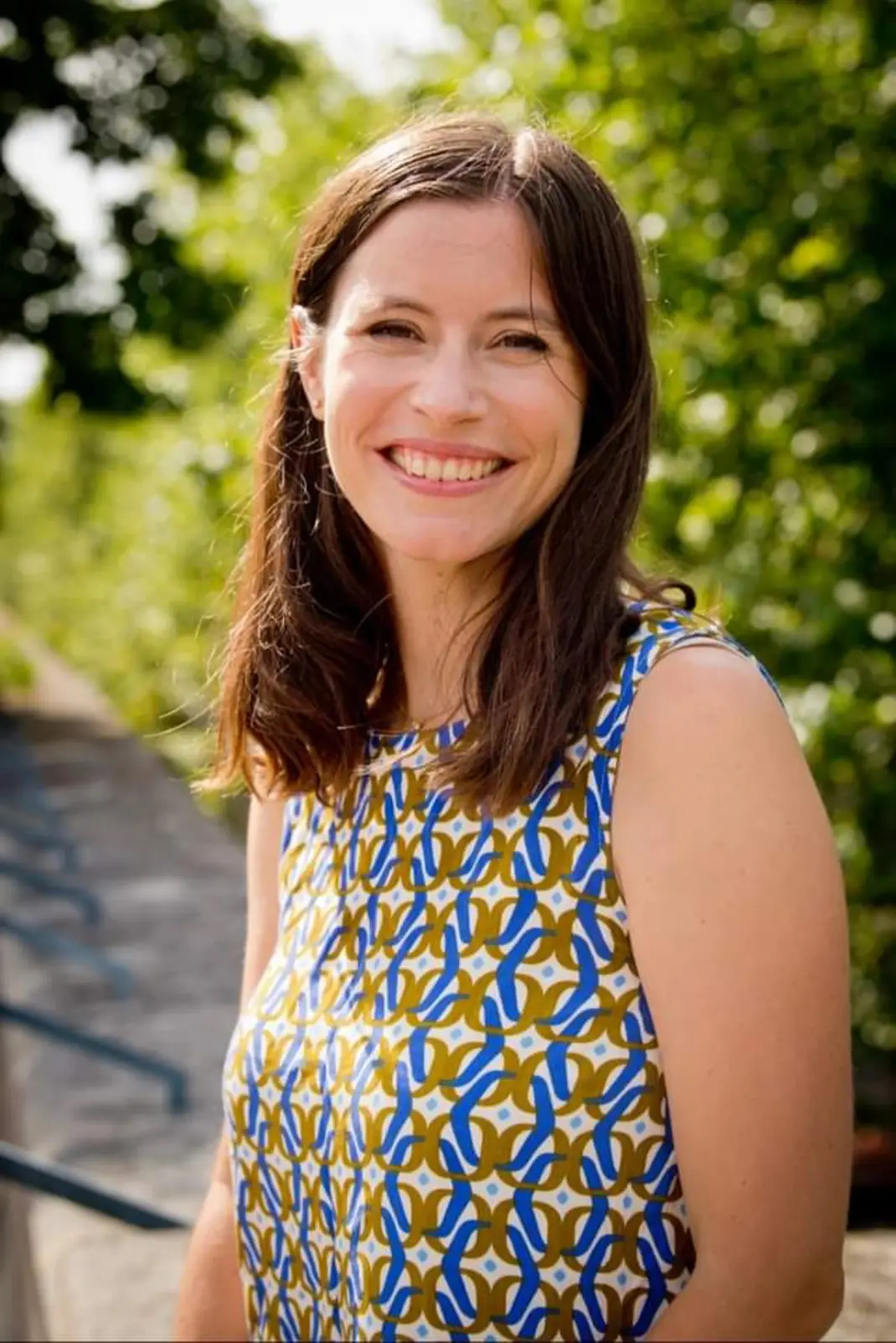
The premise alone is worth dwelling on. The title — roughly translatable as "So That You'd Stop Crying" — does not promise resolution. It does not claim that the singer soothes, calms, or conquers the tears. The construction is conditional, even slightly defeated: *so that you would stop.* Cicile, who trained for a decade in opera under the tutelage of tenor José Todaro before pivoting into medicine and motherhood, understands that the most honest songs do not tidy away their contradictions. Helplessness, she seems to suggest, is not a weakness to be edited out but an emotion deserving its own melody.
That melodic instinct is where Cicile's operatic formation reveals itself most productively. Her voice carries a disciplined warmth — technically grounded, capable of precision — yet she deploys it here with a restraint that feels deliberate and genuinely affecting. Opera trained her to project; parenthood, it seems, taught her to hold back. The result is singing that feels whispered even when it is not, intimate even through a recording. It draws you close rather than commanding your attention, and that relational quality — the sense of a private moment overheard — is precisely what gives the track its singular texture.
The arrangement, produced at Le Studio du Parc in Saint-Maur-des-Fossés, honours the emotional register of the vocal. Where other producers might have reached for orchestral swell or percussive momentum, the choices here are spare, soft, and luminous: acoustic elements assembled not to impress but to comfort. The studio collaboration evidently grew into something resembling genuine creative fellowship, and the music reflects that trust. Nothing feels imposed or overly polished. The production breathes.
Cicile has described her songs as "a family photo album in music," and the metaphor is apt without being coy. "Pour que tu arrêtes de pleurer" has the quality of a photograph taken not during a staged, smiling moment but during one of those unremarkable, slightly desperate domestic scenes that parents revisit for years afterwards: the late hour, the inexplicable tears, the improvised comfort. It is a song about parental love at its most unglamorous and, for that reason, at its most universal.
What distinguishes Cicile from the lineage she invokes — the Anne Sylvestres and Henri Dès of French children's music — is not a departure from their tradition of sincerity and emotional depth, but an extension of it into territory that is almost clinically precise about ambivalence. She is, after all, also a practising acupuncturist, a physician trained in the careful observation of human states. One suspects that professional formation informs her songwriting: she notices, she diagnoses, she refrains from offering easy cures.
Children's music that tells the truth to adults about adulthood, without losing the child in the process — that is the achievement. "Pour que tu arrêtes de pleurer" does not resolve into reassurance. It simply sits beside you in the difficulty, which is, of course, exactly what any good song should do.