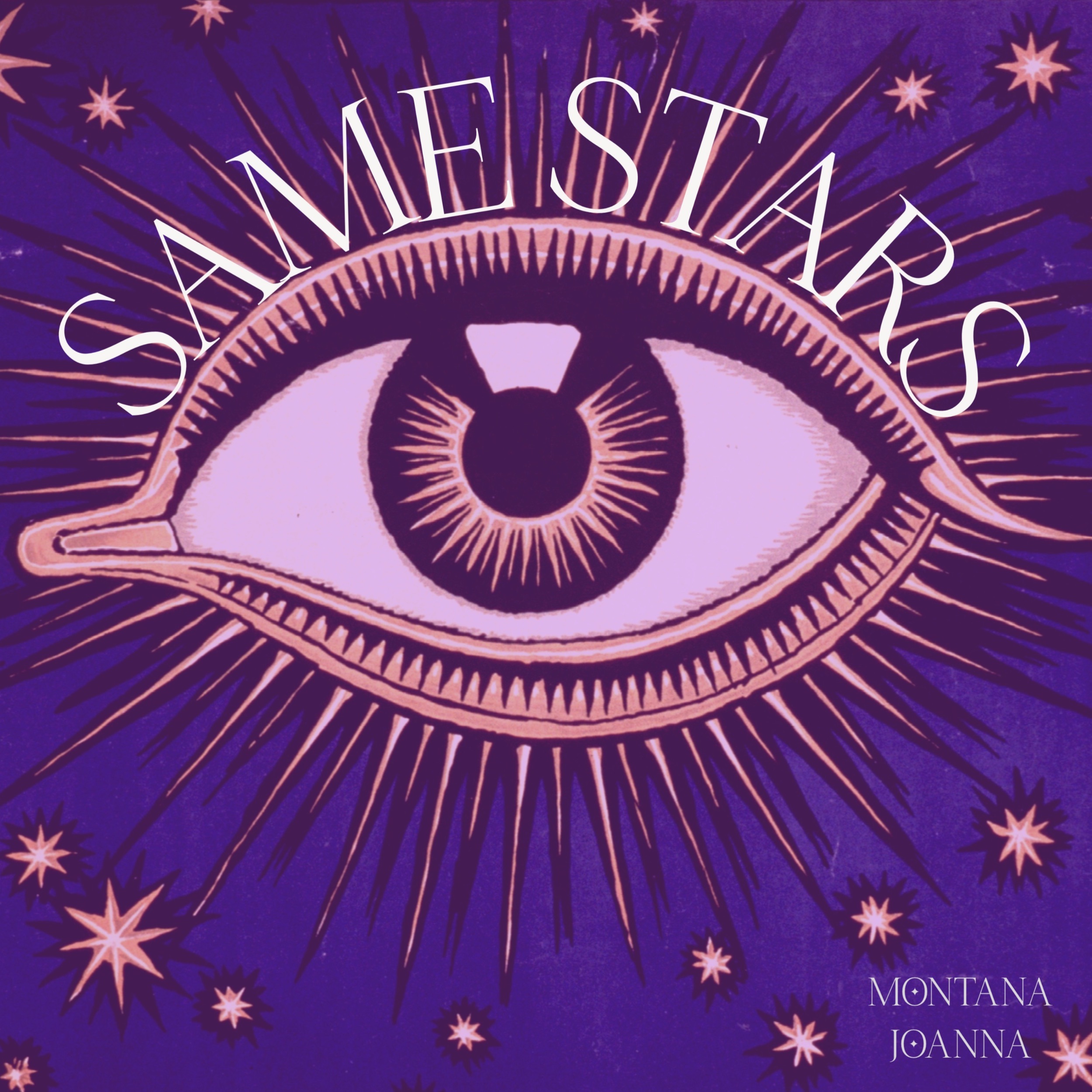
Let us begin with the premise, because it is genuinely delightful: you meet an alien, and — as one does — you find yourself attracted to them. Joanna plays this not for absurdist comedy, not for dystopian dread, but for the warm and recognisable flush of the early crush. The lyrics arrive thick with astrology vocabulary — rising signs, birth charts, the whole celestial apparatus of contemporary romantic research — and close on the quietly beautiful observation that we are, all of us, assembled from the same stardust. It sounds, written plainly here, like it should tip into either kitsch or pretension. It does neither. The wit is too dry and too fond of its own wordplay to become precious, and the sincerity is too genuine to become a joke. This is a small but significant tightrope to walk, and Joanna crosses it without a wobble.
The production announces its loyalties immediately. The soul music of the 1960s and 70s is the obvious lodestone — Stax-era warmth, horn writing that carries the memory of Memphis, a rhythmic sensibility that understands groove as a moral position rather than a decorative one. And yet the record does not simply replicate. Bobby Nelson — son of Cameo's keyboardist, which is itself a detail that could only be true — brings a J. Dilla-informed behind-beat lope to the drums that tilts the whole enterprise just slightly off the grid. It is precisely this tilt that prevents nostalgia from curdling into pastiche. The rhythm breathes, hesitates, and implies — it has listened to hip-hop as attentively as it has listened to James Brown, and the conversation between those two educations gives the track its distinctive, contemporary pulse beneath its vintage surface.
The ensemble assembled for this recording is, by any measure, exceptional company for a debut. Jamie Harrison's guitar and piano work carries the kind of idiomatic fluency that only comes from genuine stylistic conviction, while his clavinet playing injects precisely the right amount of funk into proceedings without ever tipping into period costume. The horn arrangement by trombonist Bryant Letellier, written for himself and saxophonist Randy Leago — the latter being the current horn player for The Beach Boys, a biographical footnote worth pausing over — is lean and purposeful. These are not horns deployed for ornamentation; they are horns that understand their structural role and occupy it with authority.
Joanna's vocal performance deserves particular attention. The voice is warm and direct, with the kind of phrasing that suggests a musician's ear — attentive to rhythm and counterpoint in ways that purely trained singers sometimes miss. One senses a person who heard these songs before they sang them, who felt the bass lines before the melodies, and whose vocal approach retains that deep bodily understanding of where music lives. The fact that she is also playing bass throughout — a fact that bears repeating, as the combination of singing bassist in a soul context remains genuinely unusual — lends a coherence to the whole enterprise. This is not a singer who hired musicians; this is a musician who invited collaborators.
Recorded at the Recording Center of New Mexico in Albuquerque — a room with a distinguished enough history to have hosted sessions for Breaking Bad — the record's acoustics honour the analog warmth that the material demands. No samples appear anywhere. Wind chimes are tracked live. The semi-hollow body bass that Joanna treats as her signature instrument sits in the mix with exactly the resonant, woody presence that separates a genuinely played instrument from its digital approximation. One hears, throughout, the evidence of a recording made with patience and genuine conviction — overdubbed across more than two years, assembled on an independent artist's budget through sheer refusal to compromise on the musicians or the environment.
None of this would much matter if the song itself were merely an admirable exercise. But "Same Stars" is not admirable — it is likeable, which is harder. It is the sort of record you find yourself returning to not because it demands critical engagement but because it offers something simpler and rarer: pleasure. The groove does what great grooves do and makes you want to move before you have consciously decided to. The lyric does what the best pop writing does and makes you feel recognised — yes, of course, we all google the astrology charts — before expanding toward something genuinely moving. We are all made of the same stars. It is a very old idea. Joanna makes it feel freshly discovered.
For a debut single from a solo project begun, by the artist's own account, only five years into her bass-playing life, this is a statement of remarkable assurance. The two further singles promised in its wake will be watched with considerable interest.