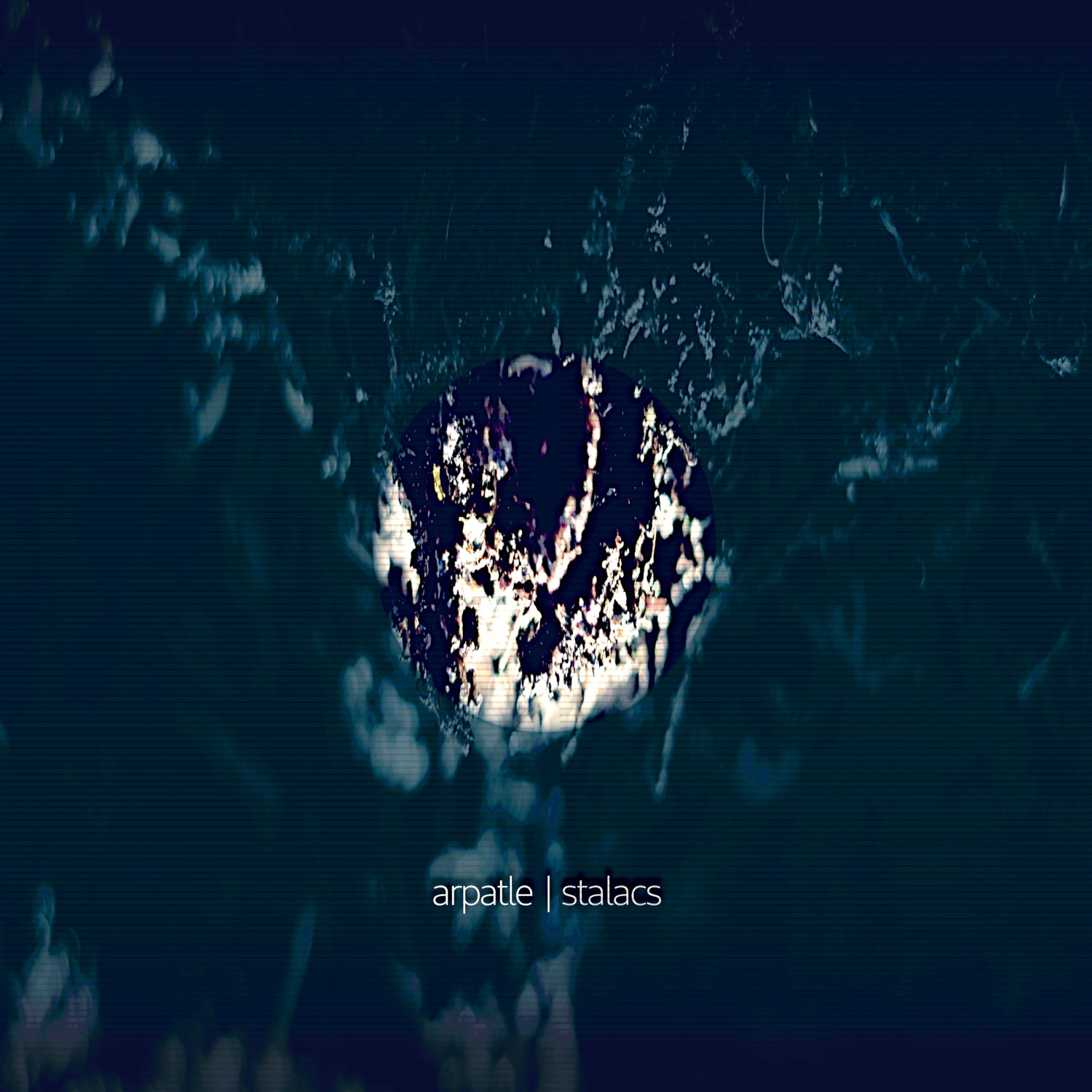
The title is a compression of *stalactites*, and the metaphor is not decorative. *Stalacs* concerns itself with drip, accumulation, and the architecture of patience. These are sounds that do not arrive so much as accrete. To listen is to submit to a timescale that is not human — and that, precisely, is the point.
*Mare Serenitatis* opens the record with an act of almost perverse maximalism: one thousand and twenty-four sine tones, stacked in a cluster, shimmering at the edge of coherence. It is the kind of gesture that should feel academic, laboratory-cold, the sort of thing demonstrated on a laptop at a university symposium and politely applauded. Instead, it breathes. Bossink understands that mass, when handled with sufficient care, becomes warmth. The sine tones don't cancel each other into noise — they negotiate, finding interference patterns that feel organic, almost aquatic. You think of bioluminescent deep-sea life pulsing in the dark. You think of the Sea of Serenity itself: that vast, ancient lunar plain named for a tranquillity that no human has actually experienced there. The name is borrowed beauty, and so is this music.
Running through every track is a repeating percussive marker — Bossink describes it as either a barely audible tick or a distinct bass note, and the ambiguity is deliberate. Is it a heartbeat? A stalactite releasing a single drop every few seconds into black water below? The pulse resists identification, which is precisely why it lodges itself so firmly in the chest. Drone music has always played games with biological rhythm, from Terry Riley's circular breathing onward, but Bossink's approach feels less theoretical than instinctive, as though he discovered the pulse rather than designed it.
*Aurora Stalactis* deepens the palette without departing from the record's essential restraint. The light suggested by *Aurora* is cold light — polar, mineral, the light that falls on ice rather than skin. The track hovers with the particular patience of music that has no interest in climax or resolution, only in the sustained fact of its own presence.
*Cavenon* is where the record stakes its most overt claim to a lineage. Vocal processing through extended delays recalls James Tenney's *Saxony* — and Bossink is right to name it, because avoiding the reference would have been dishonest. The comparison flatters and also illuminates: where Tenney was rigorously systematic, Bossink is more permissive, allowing accidents their due. Not turning down the monitors during the vocal recording introduced slow feedback tones to the session, and he kept them. This is the right decision. The feedback ghosts through the mix like the resonance of a cave long after the original sound has died, which is exactly what the track demands. A lower-pitched melodica drifts in eventually — a recurring Arpatle signature, apparently — and its presence is quietly extraordinary: the most human object in an inhuman landscape.
*Ignit* closes the EP with embers rather than flame. The title suggests ignition, combustion, but the track delivers something slower — the luminescence of decay rather than the violence of burning. It is a graceful conclusion that earns its silence.
At twenty-eight minutes and fifty-eight seconds, *Stalacs* is disciplined to the point of severity. It does not overstay and it does not explain itself. Bossink has made a record that rewards the kind of listening most people claim to want but rarely practise — full attention, lights low, the world temporarily set aside. The ambient genre has always promised transformation through immersion. *Stalacs* makes good on that promise with uncommon conviction.