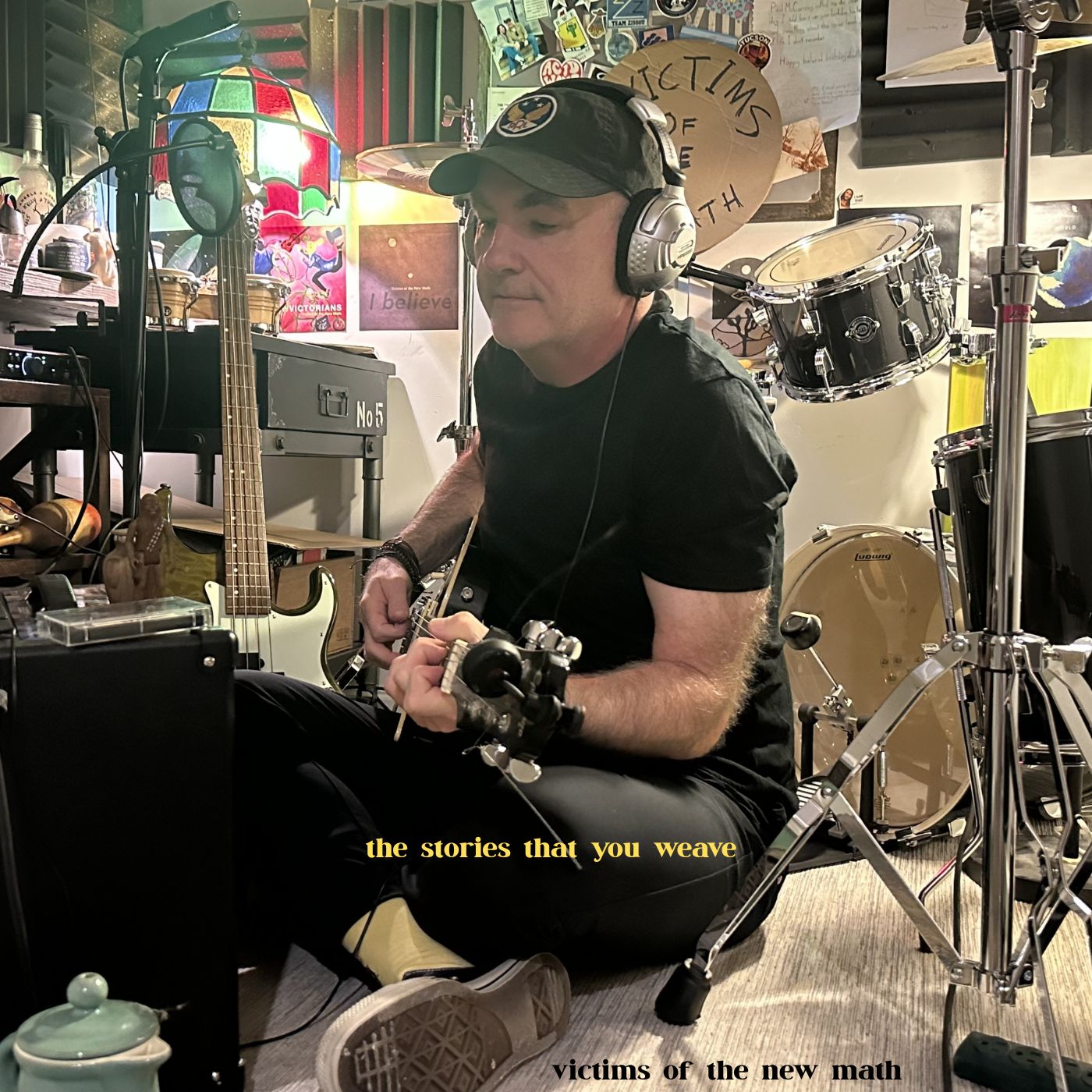
Let us be clear about what Young is doing here, because it would be criminally easy to dismiss it. This is not the studied, ironic primitivism of someone who owns a laptop full of plugins and is performing authenticity. This is the real thing — self-recorded, self-produced, rooted in the AM radio memories of a childhood spent with ears pressed to a transistor set, dreaming of something bigger and stranger than the world immediately on offer. That sincerity, that almost stubborn earnestness, runs through every track on this record like a copper wire carrying a steady current.
The album opens its arms wide. *You're a Star* arrives with the confident swagger of classic indie rock — the sort of track that Guided By Voices might have buried on a seven-inch but Young plants right at the front, because he knows a good hook deserves better than obscurity. There is something wonderfully unfashionable about it, and that is meant entirely as a compliment. Fashion is ephemeral; this sort of melodic certainty is not.
*Believe in Me* pivots beautifully into dreamy indie-pop — Young is shrewd enough to know that an album without contrast is merely a mood, not a journey. Here the guitars shimmer rather than churn, and the overall effect is of sunlight through a frosted window: warm, diffuse, gently disorienting. Then comes *It's You That Wanted More*, which raids the sixties garage rock canon with appropriate abandon. One can hear the Nuggets compilations lurking somewhere in its DNA, that raw, slightly desperate energy that no amount of modern production polish can convincingly replicate. Young doesn't attempt to replicate it. He simply *has* it, which is an entirely different matter.
But perhaps the most quietly affecting moment on the record is *Time Flies*, a ballad-like piece Young himself describes as a travel journal — and it is exactly that. Unhurried, reflective, bruised around the edges in the manner of all truly honest songwriting about the passage of time. The themes running through this album — the fleetingness of fame, the particular ache of love and loss, the effort required merely to remain hopeful in a world that increasingly seems designed to exhaust that hope — are handled without melodrama or self-pity. Young writes like a man who has thought carefully about these things and arrived at a kind of provisional peace with them.
It should be noted that the album was mastered by Todd Tobias, and the contribution is not a trivial one. Lo-fi is not synonymous with bad sound, and Tobias ensures that Young's recordings breathe, that the dynamics are preserved, that the whole enterprise sounds full-bodied and considered rather than merely rough. The result is an album that sounds simultaneously intimate and expansive — no mean feat.
Victims of the New Math has evolved considerably since its origins as a duo with Young and his brother Joe, born from a shared desire to bottle those great AM rock sounds from childhood. The band has absorbed glam rock, new wave, psychedelia, and the entire lo-fi tradition into something that resists easy categorisation — which is, of course, exactly where the most interesting music tends to live. Familiar enough to feel like recognition, strange enough to keep you genuinely attentive.
*The Stories That You Weave* will not trouble the streaming algorithms or appear on any editorial playlist curated by an intern in a Shoreditch co-working space. It doesn't care about any of that. It is music made for people who still believe that a well-constructed song, recorded with care and released with conviction, is one of the more worthwhile things a human being can do with their time. On the evidence here, Thomas Young is entirely right to believe it.